

The Georgia coast does not offer a single version of waterfront living. It offers many. Understanding the types of waterfront communities Georgia coast buyers can choose from is the real starting point for any serious property search. From resort-style planned developments with golf and spa amenities to quiet marsh neighborhoods where kayaks replace golf carts, each community type carries its own lifestyle, flood risk profile, and investment character. The choice you make shapes not just your home but your daily rhythm, your neighbors, and your long-term property value. This guide lays out what you need to know before you commit.
Table of Contents
- Key takeaways
- 1. Types of waterfront communities on the Georgia coast: an overview
- 2. Key criteria to evaluate before choosing a community
- 3. Resort-style planned waterfront communities
- 4. Gated river and marsh neighborhoods
- 5. Smaller island and town waterfront communities
- 6. Comparing waterfront community types side by side
- My honest take on choosing a Georgia waterfront community
- Discover waterfront living at Crane Island
- FAQ
Key takeaways
| Point | Details |
|---|---|
| Community type defines lifestyle | Resort, marsh, and island communities each offer fundamentally different daily experiences and amenities. |
| Flood risk varies by location | FEMA flood zone status, freeboard requirements, and marsh proximity all affect insurance costs and build rules. |
| Amenity timelines matter | New-build resort communities may require buyers to join before amenities are complete, affecting early lifestyle value. |
| Nature access is a Georgia strength | Georgia's coast is wilder and quieter than most East Coast alternatives, favoring nature-first buyers. |
| Comparison is the key tool | Weighing community types side by side on lifestyle, risk, and investment factors leads to more confident decisions. |
1. Types of waterfront communities on the Georgia coast: an overview
Georgia's waterfront real estate does not fit a single mold. Three primary community types define the coast: resort-style planned communities, gated river and marsh neighborhoods, and smaller island or town communities centered on barrier island living. Each type attracts a different buyer and delivers a different version of coastal life.
Two buyers can both say they want "waterfront living in Georgia" and end up in places that feel nothing alike. One might be sipping coffee on a golf course terrace overlooking a community marina. The other might be launching a kayak from a private dock into a tidal creek at sunrise. Neither is wrong. They are simply different types, and knowing which one fits your life is the foundation of a good decision.
The Georgia coast stretches roughly 100 miles and includes the Golden Isles region, the Savannah area, and the Cumberland Island corridor near St. Marys. Each zone carries its own mix of community types, price ranges, and character. Understanding the geography first makes every other decision easier.
2. Key criteria to evaluate before choosing a community
Before you fall in love with a view, build a framework for evaluation. The right waterfront community on the Georgia coast depends on several concrete factors, not just aesthetics.
Water access type is the first filter. Georgia offers river frontage, tidal creek and salt marsh access, Intracoastal Waterway frontage, and true oceanfront on barrier islands. Each type comes with different boating depth, tidal patterns, and ecological protections. Marsh-adjacent properties, for example, fall under the Georgia Coastal Marshlands Protection Act, which enforces a 25-foot no-touch buffer zone and requires permits from the Coastal Resources Division for many activities near the water.
Flood risk deserves serious attention. Georgia's coastal flood zones include over 177,000 residents, and expected annual losses from flooding total approximately $20.8 million statewide. FEMA flood maps are updated regularly, meaning a property's designation can change after you purchase. Chatham County, for instance, requires new construction to meet Base Flood Elevation plus one additional foot of freeboard. That adds cost and complexity to any build.
Other criteria worth evaluating include:
- Community density and HOA governance. Gated communities with active HOAs tend to preserve property values but come with monthly fees and rules about exterior modifications.
- Amenity offerings. Golf, marina access, fitness facilities, and dining vary widely between community types.
- Proximity to services. Some island communities trade convenience for seclusion. Know what you are giving up.
- Future development plans. A scenic marsh view today could become a construction zone tomorrow if adjacent parcels are not protected.
Pro Tip: Request the FEMA flood zone designation and the local freeboard requirement for any property before making an offer. Flood hazard maps update regularly, and what was low-risk five years ago may carry new insurance obligations today.
3. Resort-style planned waterfront communities
Resort-style communities are the most structured option on the Georgia coast. They are designed from the ground up to deliver a bundled lifestyle, with amenities, management, and water access woven into a single package.
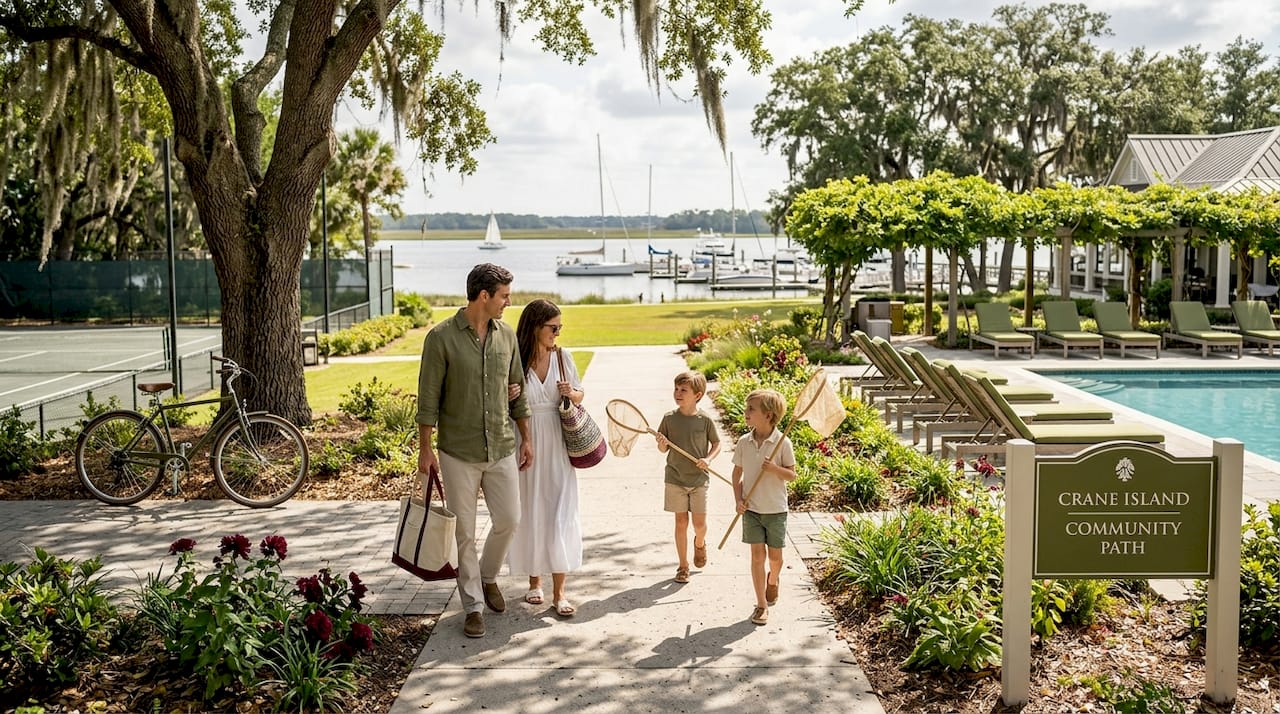
The Esplanade at St. Marys is a current example worth studying. Opening in 2026, it features an 18-hole golf course, spa, and water access with homes starting in the mid-$400,000s. Early buyers join interest lists before full amenity completion, which means the lifestyle you are buying into is partly a promise rather than a present reality. That is not necessarily a problem, but it requires patience and trust in the developer's track record.
These communities typically include:
- Shared community docks or a full marina with boat slips
- Professionally managed HOA handling landscaping, security, and common areas
- On-site dining, fitness centers, and organized social programming
- Proximity to the Intracoastal Waterway or tidal rivers for recreational boating
The appeal is convenience. You do not have to build a lifestyle from scratch. It arrives with the deed. For retirees or buyers relocating from urban areas, that turnkey quality is genuinely valuable. For buyers who prefer solitude and self-directed living, it can feel constraining.
Pro Tip: When evaluating a new resort-style community, ask for a phased amenity completion schedule in writing. Early buyers often pay full price for a community that will not reach its full lifestyle potential for two to three years.
4. Gated river and marsh neighborhoods
This community type is quieter, more residential, and deeply connected to the natural rhythms of the Georgia coast. Gated river and marsh neighborhoods prioritize homeowner dock access, tidal creek views, and low-density living over resort amenities.
The Golden Isles region, which includes Brunswick, Jekyll Island, St. Simons Island, and Sea Island, is the heart of this community type in Georgia. Southern Living has recognized the area for its wilder, quieter character compared to more commercialized coastal destinations further north or south.
Typical features of these neighborhoods include:
- Private or semi-private docks on tidal creeks and salt marsh waterways
- Larger lots with mature tree canopy and natural buffer zones
- Low traffic and minimal tourist presence year-round
- Easy access to kayaking, fishing, crabbing, and wildlife observation
The trade-off is flood exposure. Marsh-adjacent properties sit close to water by definition, and that proximity creates real insurance and permitting considerations. Buyers should layer their due diligence: FEMA flood zone status, local topography relative to creek proximity, and county-specific building rules all matter before signing anything.
These communities suit buyers who want to live in the coastal environment rather than beside it. The marsh is not a backdrop here. It is a living neighbor.
5. Smaller island and town waterfront communities
Georgia's barrier islands represent one of the most distinctive types of waterfront living on the entire East Coast. The Golden Isles coastline emphasizes natural preserves, public beach access, and a lifestyle that values access to wild places over dense commercial development.
Some of these communities are accessible only by boat. Little St. Simons Island, for example, operates as a private retreat with no bridge access. That level of seclusion is genuinely rare and genuinely appealing to a specific kind of buyer. St. Simons Island, by contrast, offers a historic lighthouse, walkable village, and a mix of permanent residents and vacation visitors.
Key characteristics of this community type:
- Barrier island geography limits development density by law and by geography
- Natural preserves and protected lands surround many residential areas
- Public beaches remain accessible without the commercialization common in Florida or the Carolinas
- Historic and cultural landmarks add depth to the community identity
These communities attract buyers who prioritize seclusion, natural habitat, and a slower pace of life. They are particularly well-suited to retirees seeking peace and to families who want children to grow up with real nature rather than a manicured version of it.
6. Comparing waterfront community types side by side
Choosing between community types becomes clearer when you lay the key factors next to each other.
| Community type | Lifestyle focus | Flood risk level | Amenity depth | Best fit |
|---|---|---|---|---|
| Resort-style planned | Bundled convenience, social | Moderate to high | High (golf, spa, marina) | Retirees, relocators |
| Gated river/marsh | Nature access, residential quiet | High (marsh proximity) | Low to moderate | Nature-oriented buyers |
| Barrier island/town | Seclusion, heritage, beach access | Moderate | Low to moderate | Families, retirees |
The flood risk column deserves a closer look. All three types carry some flood exposure on the Georgia coast, but the nature of that risk differs. Resort communities are often built on higher ground with engineered drainage. Marsh neighborhoods sit closer to tidal water by design. Barrier island properties face storm surge risk from the ocean side.
Investment timing also varies. Established marsh neighborhoods and island communities offer known quantities: existing infrastructure, mature trees, and a track record of property values. New resort-style communities like the Esplanade at St. Marys ask buyers to invest before the full picture is visible, which carries both upside potential and early-stage uncertainty.
For families, the island and town communities often win on school access, public beach proximity, and community events. For active retirees, resort communities deliver social programming and physical amenities without requiring a car for every activity. For buyers who simply want to live close to the water and left alone, the gated marsh neighborhood is often the truest expression of coastal living Georgia has to offer.
My honest take on choosing a Georgia waterfront community
I've worked with enough Georgia coastal buyers to know that the biggest mistakes rarely happen at the closing table. They happen six months before, when someone falls in love with a view and stops asking hard questions.
In my experience, flood risk is the most underestimated factor in waterfront real estate decisions. Buyers often check the current FEMA designation and move on. What they miss is that flood hazard maps update regularly, and a property's risk profile can shift meaningfully between purchase and resale. I've seen buyers purchase in what was labeled a moderate-risk zone, only to face a remapping that pushed them into a high-risk designation within three years. Insurance costs followed accordingly.
I've also seen buyers choose resort communities for the amenities and then rarely use them. The golf course sounds wonderful in a sales presentation. If you haven't played golf in a decade, it won't change your habits. What actually shapes daily life in a waterfront community is the quality of the neighbors, the ease of water access, and the character of the surrounding land.
What I find genuinely special about Georgia's coast is how much of it remains unbuilt and protected. That is not an accident. It reflects decades of environmental stewardship and regulatory discipline. Buyers who understand and respect that context tend to make better decisions and become better community members. The ones who fight the marsh buffer or resent the HOA restrictions often chose the wrong community type to begin with.
My practical advice: visit each community type in person, at different times of day, and in different seasons if you can. The marsh at low tide smells different than it does at high tide. The resort community on a Tuesday morning feels different than it does on a Saturday afternoon. Let the place tell you whether you belong there.
— John
Discover waterfront living at Crane Island
If your research has pointed you toward a community where nature and craftsmanship share equal standing, Crane Island deserves a close look. Located on Amelia Island with direct access to the Intracoastal Waterway, Crane Island offers luxury Intracoastal homes woven into preserved marshlands and maritime forest. With only 14 homesites available, each property is an opportunity to build something genuinely personal in a place that honors the coastal heritage of the region.
Residents enjoy porch living that frames the marsh and water as a true extension of the home, not just a backdrop. The community sits minutes from the cultural richness of historic Fernandina Beach, balancing seclusion with access. For buyers ready to explore available properties or discuss custom home design, the Crane Island team welcomes the conversation. This is the kind of place you visit once and spend years finding your way back to.
FAQ
What are the main types of waterfront communities on the Georgia coast?
Georgia's coast offers three primary community types: resort-style planned communities with bundled amenities, gated river and marsh neighborhoods focused on nature and private dock access, and smaller barrier island or town communities centered on seclusion and beach access.
How serious is flood risk for Georgia waterfront homebuyers?
Flood risk is significant and varies by community type. Over 177,000 residents live in mapped coastal flood zones in Georgia, and FEMA flood designations update regularly, which can affect insurance costs and building requirements after purchase.
Are there regulations that affect building near Georgia marshes?
Yes. The Georgia Coastal Marshlands Protection Act enforces a 25-foot upland buffer around coastal marshlands and requires permits from the Coastal Resources Division for many waterfront construction activities.
What waterfront community type suits retirees best?
Resort-style planned communities tend to suit retirees well because they offer social programming, on-site amenities, and managed HOA services. Barrier island communities are also popular for their quieter pace and natural setting.
How do I evaluate a new-build waterfront community before buying?
Ask for a phased amenity completion schedule, review the developer's track record, and confirm the FEMA flood zone status of the specific parcel. Early buyers in new communities often purchase before full build-out, so understanding the timeline protects both lifestyle expectations and investment value.