

Luxury real estate is often misread. Many buyers assume that price is a direct reflection of square footage, or that a $5 million home simply offers more of what a $1 million home provides. On Amelia Island, that assumption falls apart quickly. Understanding what distinguishes $5 million Amelia Island homes requires looking past the obvious and into the precise combination of micro-location, water access, architectural heritage, and lifestyle infrastructure that earns these properties their place at the top of the island's pricing hierarchy. With the median listing price around $715,000 as of early 2025, the leap to $5 million is not incremental. It is categorical.
Table of Contents
- Key takeaways
- What distinguishes $5 million Amelia Island homes by location
- Architecture and interiors that define the category
- Waterfront infrastructure and resilience planning
- Lifestyle and community amenities
- My perspective on what truly sets these homes apart
- Discover what Crane Island offers
- FAQ
Key takeaways
| Point | Details |
|---|---|
| Micro-location drives value | Oceanfront and dockable water positions command the strongest premiums, not size alone. |
| Architecture tells a story | Custom builders, Lowcountry aesthetics, and bespoke interiors define the character of top-tier homes. |
| Dock details matter | Lift capacity, Ipe decking, and certified water depth are critical lifestyle and resale factors. |
| Resilience shapes decisions | Flood risk planning and local government policy directly influence where and how $5M homes are built. |
| Community amenities add real value | Gated security, golf, beach clubs, and spa access translate into tangible lifestyle benefits for owners. |
What distinguishes $5 million Amelia Island homes by location
In any luxury real estate market, the phrase "location matters" is repeated until it loses meaning. On Amelia Island, however, location is not a vague truism. It is a precise and measurable variable. The luxury market emphasizes micro-location over raw square footage at the $5M level, and two homes of identical size can carry dramatically different price tags based on whether one faces unobstructed ocean and the other faces a road.
The three tiers of premium positioning
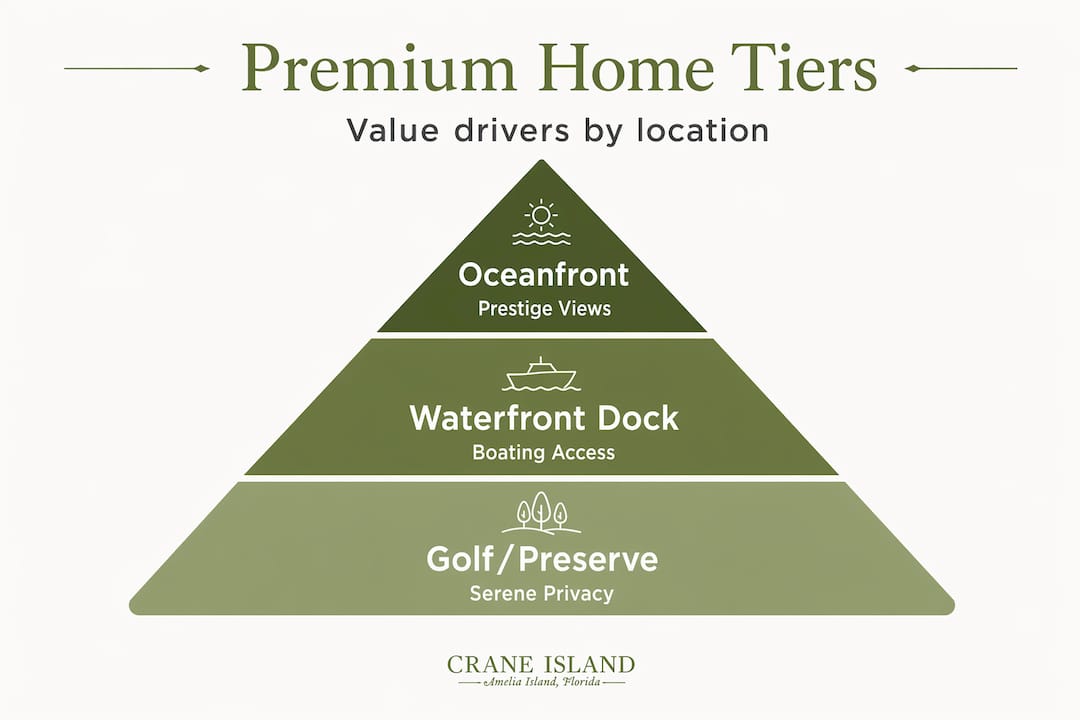
Buyers at this price point generally encounter three distinct micro-location categories, each carrying its own value proposition:
- True oceanfront: Direct beach access, panoramic Atlantic views, and the prestige of irreplaceable frontage. Supply is finite. Demand does not soften with market cycles the way interior lots do.
- Dockable deep water: Homes positioned on tidal creeks or the Intracoastal Waterway with sufficient depth for private boat docks. This category is arguably the most coveted among active boaters and those who prioritize functional, daily water access.
- Resort-integrated communities: Properties within master-planned developments like Long Point, Summer Beach, and Amelia Island Plantation, where the value lies not just in the land but in the institutional amenities surrounding it, including golf courses, private beach clubs, and resort-grade security.
The distinction between these tiers matters financially. A home at Summer Beach with unobstructed ocean views will price differently than a comparably built home a quarter mile inland, even within the same gated community. Luxury buyers pay measurable premiums for proximity to resort amenities, and the data on top-tier listings consistently reflects that.
| Location Type | Primary Value Driver | Typical Buyer Profile |
|---|---|---|
| True oceanfront | Views, prestige, irreplaceable frontage | Legacy buyers, seasonal residents |
| Deep-water dockable | Boating access, Intracoastal lifestyle | Active boaters, year-round residents |
| Resort-integrated | Amenities, security, managed community | Part-time owners, lifestyle seekers |
Nassau County's property tax rate of 0.68% to 0.74% gives Amelia Island a modest but real cost advantage over comparable Florida beach markets, and that figure is not lost on investors comparing carrying costs across properties.
Architecture and interiors that define the category
At $5 million, buyers are not simply acquiring more square footage. They are acquiring a physical expression of craft, intention, and legacy. The homes that earn this price point are typically designed by recognized architects who understand both the regional vernacular and the expectations of discerning buyers.
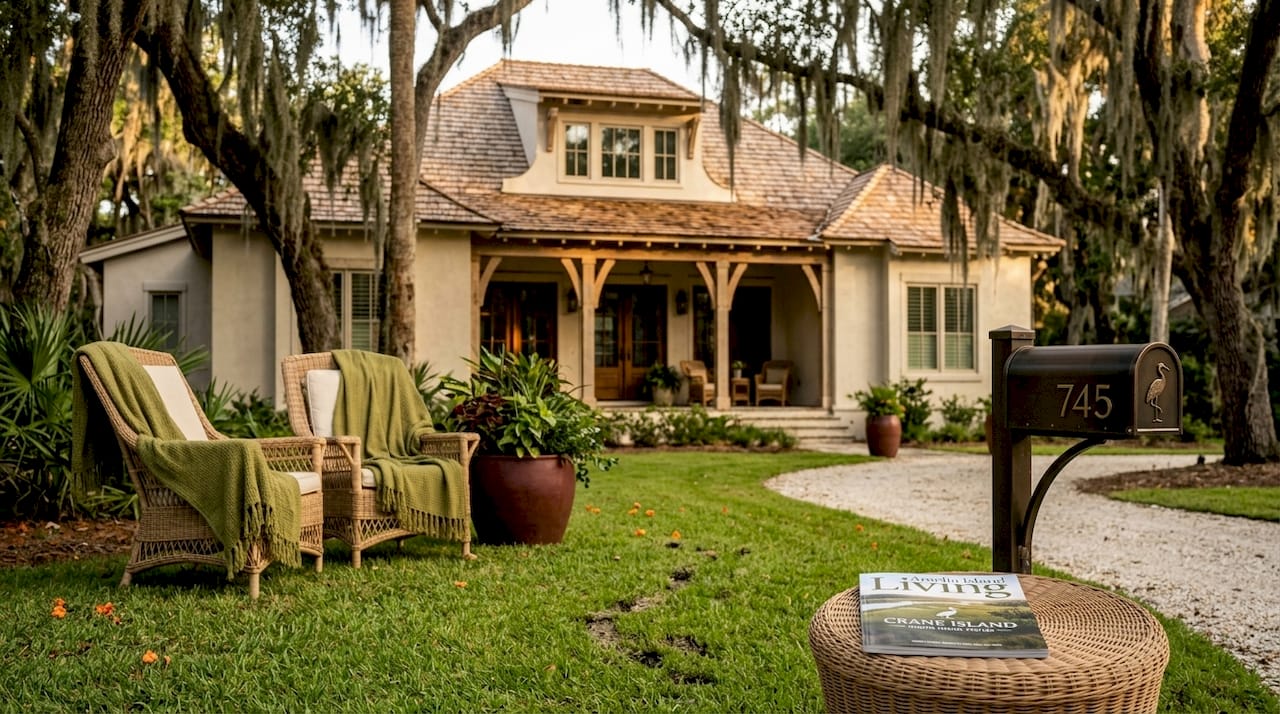
The Lowcountry architectural tradition that defines much of Amelia Island's most beloved streetscapes is not merely decorative. It is a philosophy of building. Deep wraparound porches frame the landscape and become true living rooms. Metal rooflines and board-and-batten siding weather gracefully in the salt air. The home is woven into its natural setting rather than imposed upon it.
Inside these homes, the standard of finish tells its own story. You will find bespoke millwork, wide-plank oak flooring sourced from artisanal mills, and cabinetry built to commission rather than selected from a catalog. Natural light is treated as a design material. Great rooms open to outdoor living areas with retractable glass walls, and the kitchen no longer functions purely as a workspace but as the social anchor of the floor plan.
$5 million homes often include resort-grade systems such as multi-zone entertaining spaces, climate-controlled wine storage, whole-home elevators, and walk-in cellars built to professional specification. These are not vanity features. For part-time residents and seasonal owners, they are convenience infrastructure.
- Custom-designed elevator systems for multi-story oceanfront homes
- Lutron lighting and climate control integrated across all living zones
- Walk-in wine cellars with humidity regulation and display storage
- Outdoor kitchens with commercial-grade appliances and covered dining pavilions
- Smart home systems managing security, audio, and climate from a single interface
Pro Tip: When evaluating architectural quality on a walk-through, look at transitions. The quality of a home reveals itself not in the grand gestures but in the places where materials meet: the threshold between tile and wood, the profile of a window casing, the way cabinetry corners are resolved. A $5 million home should have no rough edges.
Waterfront infrastructure and resilience planning
A waterfront address is one thing. Waterfront infrastructure is another entirely. The distinction matters more than most buyers initially appreciate, and it separates a home worth $5 million from one that merely sits near water.
Here is what experienced buyers examine when they evaluate a waterfront property in this price tier:
- Dock certification and water depth: The dock should carry documented certification specifying length, lift capacity, and navigable water depth at mean low tide. Dock certifications specifying water depth are among the most scrutinized technical details at resale.
- Lift capacity and compatibility: A dock rated for a 16,000-pound boat lift designed for a 35-foot vessel, as seen in the Long Point listing at $5.395 million, communicates a specific lifestyle capability. A dock rated for a small skiff does not.
- Decking material: Ipe wood is the gold standard for marine dock decking, prized for its density, rot resistance, and longevity in salt water environments. Composite alternatives are acceptable but priced and perceived differently.
- Flood zone designation: FEMA flood zone classification directly affects insurance costs and construction requirements. A home built above base flood elevation with a positive elevation certificate carries measurably lower risk.
- Climate resilience features: Impact-rated windows, reinforced rooflines, whole-home generators, and elevated mechanical systems distinguish homes built to endure from homes built merely to impress.
Local governments are now steering new development away from flood-risk areas through resilience-focused master plan amendments. This policy shift is meaningful for buyers. Homes built in compliant, low-risk zones are better positioned for long-term value retention as climate awareness becomes a standard part of purchase due diligence.
| Feature | Why It Matters | What to Ask For |
|---|---|---|
| Dock lift capacity | Determines boat size and usability | Written certification with weight rating |
| Water depth at MLT | Access at all tide levels | Survey showing depth at mean low tide |
| Elevation certificate | Insurance rates and storm risk | FEMA-compliant elevation documentation |
| Impact windows and roof | Storm protection and insurability | Product ratings and installation permits |
Pro Tip: Ask the listing agent for the elevation certificate before your second showing. If it is not immediately available, that absence tells you something important about how seriously the sellers and their builder took resilience planning.
Lifestyle and community amenities
The physical home is only part of the story. At the $5 million tier, buyers are purchasing a life, and the community surrounding the home shapes that life profoundly. Gated communities on Amelia Island offer security, jogging paths, pools, and playgrounds as part of a managed lifestyle environment that part-time and full-time residents both depend on.
For many buyers at this level, the amenity infrastructure is as important as the home itself. Consider what becomes available within a resort-integrated community:
- Golf: Championship courses designed for resident access, often with preferred tee times and private membership structures
- Beach clubs: Private beach access with attended service, equipment rentals, and food and beverage
- Spa and wellness facilities: On-property or affiliated resort spas, fitness centers, and aquatic facilities
- Dining: Resident-access restaurants and private event spaces that eliminate the need to leave the community for social occasions
- Managed security: 24-hour gated entry, security patrols, and community cameras
For part-time owners, particularly those spending three to six months per year on the island, the managed community model is genuinely practical. Lawn care, exterior maintenance, and seasonal property checks are built into the HOA structure, which means the home stays ready to inhabit without demanding a permanent caretaker.
The community amenities contribute directly to both desirability and pricing. A $5 million home in a community offering golf, beach access, and resort dining is a fundamentally different asset from a $5 million home that sits in isolation, regardless of its architectural merit.
My perspective on what truly sets these homes apart
I have looked at a lot of luxury listings, and I will be direct about what I have found: buyers who focus on square footage almost always regret it. In my experience, the homes that hold value, command genuine admiration, and deliver real satisfaction are the ones where micro-location and water access were treated as non-negotiable, and everything else followed from that.
What I have learned is that the hidden details do the heavy lifting. The elevation certificate. The dock certification. The flood zone classification. These are not bureaucratic formalities. They are the documents that determine your insurance costs, your resale flexibility, and your peace of mind during storm season.
The architecture matters too, but in a specific way. I am not talking about square footage or bedroom count. I am talking about the relationship between the home and its land. The best homes at this price point feel as though they belong to their setting. The porches work. The sightlines are intentional. The natural light is part of the design, not an accident.
What seasoned buyers understand, and first-time buyers at this tier sometimes need to hear, is that custom-designed homes built with a real understanding of place are worth considerably more than mass-produced luxury. The legacy of the craftsmanship, the authenticity of the architecture, and the alignment with the natural environment are what you are really paying for at $5 million.
— John Hillman
Discover what Crane Island offers
If you are actively researching the Amelia Island real estate market at the $5 million level, Crane Island represents a rare opportunity to build a custom home within a community that takes every one of these principles seriously. Only 14 homesites are available, each positioned along the Intracoastal Waterway with direct access to dockable water and surrounded by preserved marshlands.
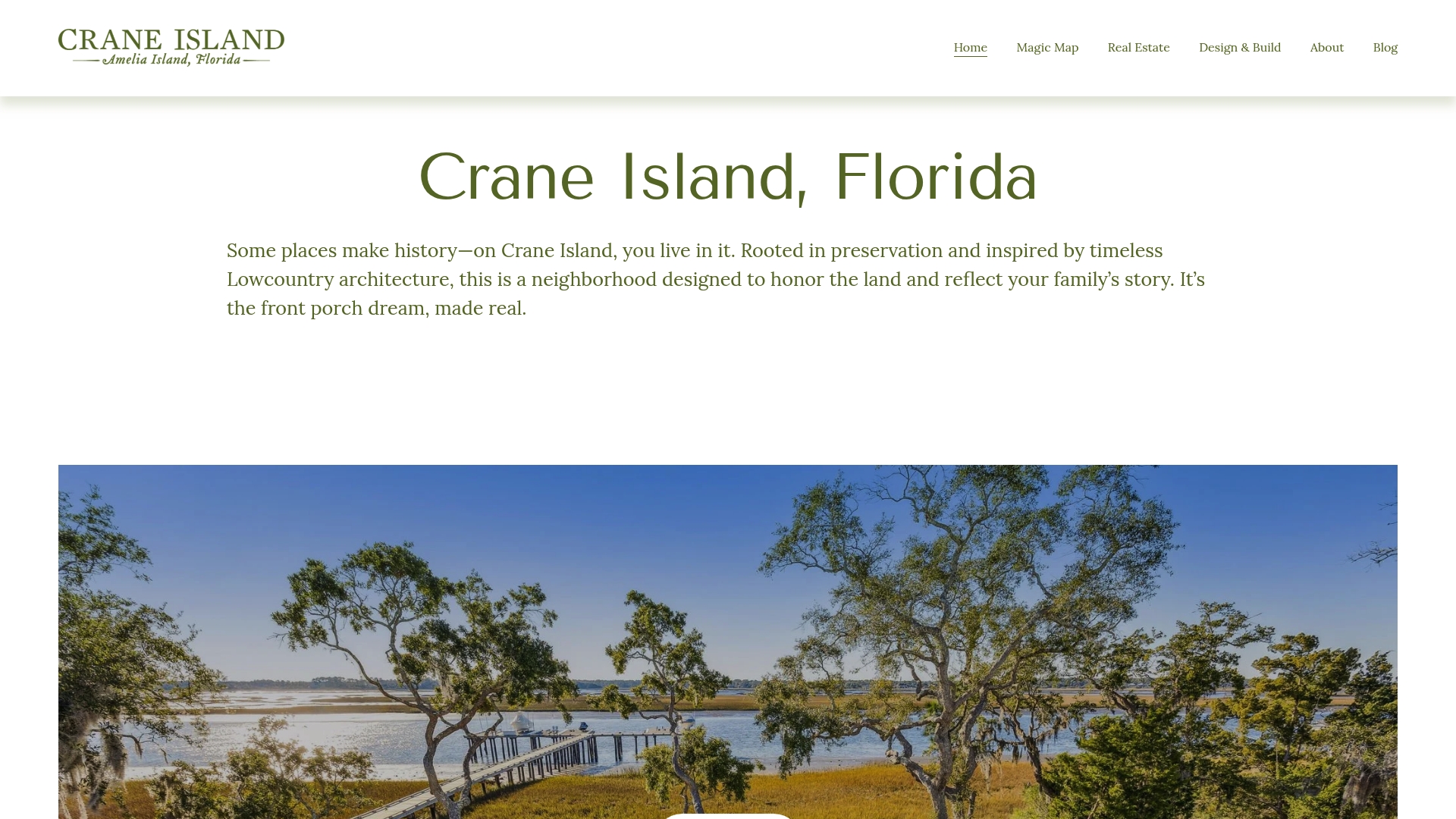
Crane Island integrates authentic Lowcountry design traditions with a genuine commitment to environmental stewardship. The community is gated, the architecture is custom, and the land itself is treated as a living part of the home. Explore available luxury homesites on Amelia Island or learn more about the Crane Island story at craneisland.com.
FAQ
What makes a $5 million Amelia Island home different from a $1 million one?
The difference is not scale. It is category. $5 million homes on Amelia Island offer true oceanfront or deep-water dockable positions, resort-grade amenity access, and custom architectural craft that $1 million properties in the same market simply cannot replicate.
How important is dock infrastructure when buying a luxury waterfront home?
Critically important. Dock certifications specifying lift capacity, decking material, and navigable water depth are among the most scrutinized details at resale, directly affecting both lifestyle value and long-term property pricing.
What neighborhoods command the highest prices on Amelia Island?
Long Point, Summer Beach, and Amelia Island Plantation consistently attract the island's top-tier buyers. Each offers a distinct combination of water access, resort amenities, and community infrastructure that supports prices at and above $5 million.
How does flood risk affect Amelia Island luxury property values?
Flood zone designation shapes insurance costs, construction requirements, and resale flexibility. Local government policies are actively steering new development toward low-risk zones, making elevation certificates and resilience features increasingly important to buyers.
What architectural styles define high-end homes in Amelia Island?
Lowcountry architecture, characterized by deep wraparound porches, metal rooflines, and natural material palettes, defines the most respected homes on the island. The best examples feel woven into their natural settings rather than placed upon them.