
Few coastal markets in the Southeast combine geographic scarcity, lifestyle depth, and regulatory character the way Amelia Island does. Understanding what makes Amelia Island real estate unique goes well beyond ocean views or warm weather. The island sits at the northern tip of Florida as a true barrier island, bounded by the Atlantic Ocean, the Intracoastal Waterway, and tidal marshlands that cannot be filled or built upon. That physical reality, layered with conservation law, historic district oversight, and a buyer community drawn by championship golf and 13 miles of pristine beach, produces a market with forces unlike almost anything else on the Florida coast.
Table of Contents
- Key Takeaways
- What makes Amelia Island real estate unique starts with scarcity
- Micro-location and what it actually means here
- Historic district regulations and property value
- Lifestyle amenities that sustain buyer demand
- Practical considerations for buyers and investors
- My perspective on this market after years of working it
- Explore luxury homesites with Craneisland
- FAQ
Key Takeaways
| Point | Details |
|---|---|
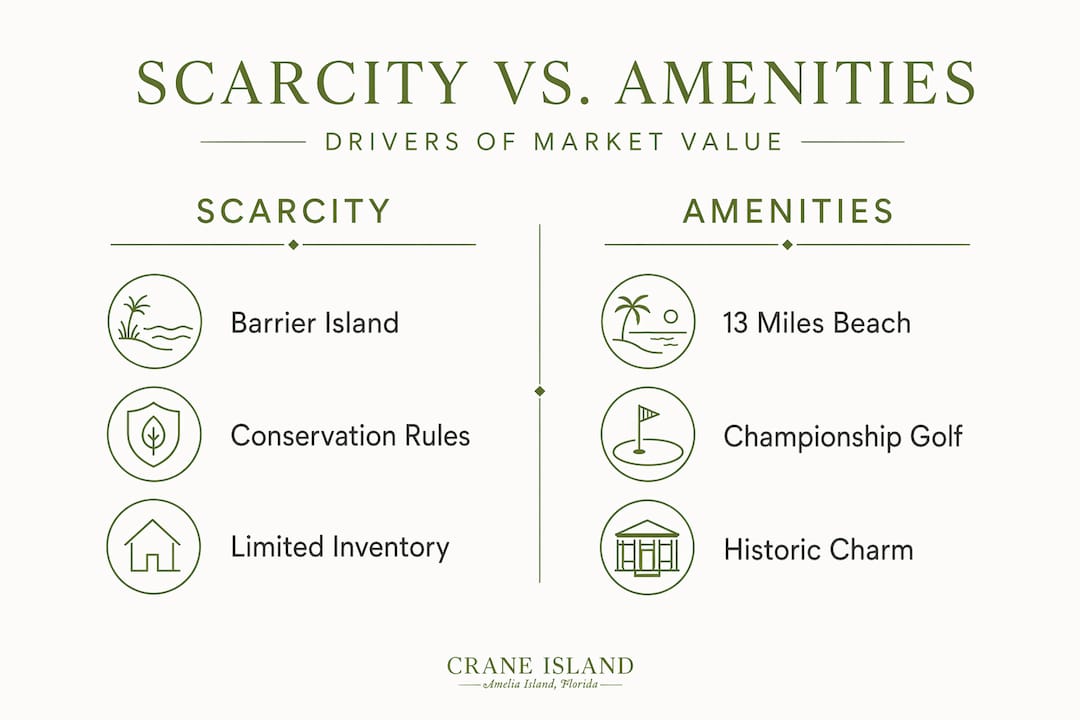
| Scarcity drives value | Barrier island geography and conservation rules tightly restrict new inventory, keeping prices supported over time. |
| Micro-location shapes pricing | Proximity to beaches, golf courses, downtown Fernandina Beach, and the airport affects desirability more than raw square footage. |
| Historic district adds complexity | Exterior changes in Fernandina Beach's historic district require city approval, affecting renovation budgets and timelines. |
| Lifestyle amenities sustain demand | Thirteen miles of Atlantic beach, five championship golf courses, and a walkable downtown create year-round buyer interest. |
| Due diligence must include regulations | Flood risk, coastal construction standards, and zoning constraints are pricing factors, not background details. |
What makes Amelia Island real estate unique starts with scarcity
The term most real estate professionals use for the structural supply constraint here is "land-locked inventory." Amelia Island cannot expand outward. It is surrounded by water on all sides, and Nassau County's coastal setbacks and conservation zones strictly limit where new homes can be built. That is not a temporary policy condition. It is a permanent geographic reality reinforced by state and local law.
What this produces in practice is a market where inventory stays thin relative to demand. When a well-positioned property sells, there is rarely a comparable replacement coming to market six months later. That scarcity supports prices through economic cycles in ways that inland suburban markets simply cannot replicate.
Nassau County has made this framework explicit. Vision 2050 is the county's long-range growth management plan, and it explicitly prioritizes protecting the island's character over maximizing development density. Zoning approvals and permitting timelines on the island are measured in months, not weeks. For buyers, that friction is actually a feature. It is what keeps the market from being overbuilt.
Here is what that scarcity picture looks like in practical terms:
- Conservation areas and tidal wetlands legally remove large parcels from development eligibility
- Coastal construction setback rules push buildable envelopes well back from the water's edge
- Environmental impact reviews add time and cost to any significant new project
- The island's total land area is roughly 13 square miles, with much of it already built or protected
Pro Tip: If you are evaluating a vacant lot or teardown opportunity, always confirm whether the parcel is subject to any conservation easement or FEMA flood zone restriction before making an offer. Those two factors alone can change the buildable area significantly.
Micro-location and what it actually means here
Many buyers approach Amelia Island thinking in terms of oceanfront versus non-oceanfront. That framing misses what actually drives value in this market. The real differentiator is proximity to key activity nodes, and nothing on the island is more than 15 minutes from its major amenities. That compactness means the premium is less about being "on the water" and more about your relationship to the combination of things buyers come here for.
The five core amenity magnets buyers weigh are:
- Atlantic beaches accessible for daily use, not just weekend excursions
- Championship golf courses, including the Ritz-Carlton Golf Club at Amelia Island
- Downtown Fernandina Beach, specifically Centre Street's walkable restaurants and cultural events
- State and county parks, particularly Fort Clinch State Park in the north
- Jacksonville International Airport, roughly 30 miles south, connecting the island to national and international travel
How neighborhoods compare for luxury buyers
When comparing Amelia Island neighborhoods for luxury buyers, the conversation centers on which activity nodes matter most to a specific buyer's lifestyle. A retiree prioritizing daily golf and quiet evenings may gravitate toward a gated community adjacent to a course. A second-home buyer wanting walkable dining and weekend culture may pay a meaningful premium for proximity to Centre Street. A vacation rental investor will weigh beach access most heavily because it drives nightly rates.
| Buyer Type | Primary Priority | Secondary Priority |
|---|---|---|
| Retiree | Golf access, low-maintenance living | Proximity to medical services and airport |
| Second-home buyer | Beach and downtown walkability | Quality of community and neighborhood character |
| Vacation rental investor | Oceanfront or near-beach location | Rental permit eligibility and HOA rules |
| Remote worker | Quiet environment, reliable connectivity | Airport access for travel convenience |
Proximity to activity nodes rather than waterfront status alone is what experienced buyers and agents here use to benchmark value. That insight takes most newcomers to the market by surprise.
Historic district regulations and property value
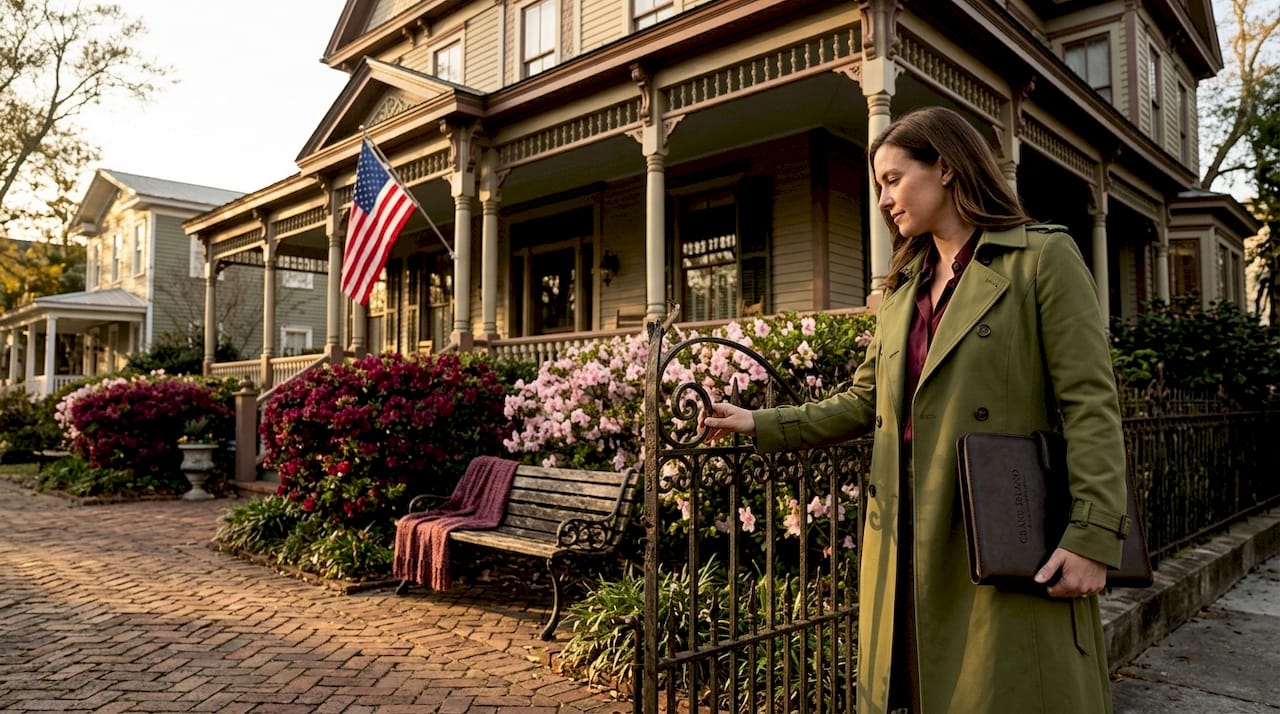
Fernandina Beach's Historic District represents one of the most distinctive forces shaping how the luxury market works on Amelia Island. Properties within the district carry a character and heritage that genuinely sets them apart, but that character comes with oversight. Any exterior modification to a historic district property requires a certificate of appropriateness from the city's Historic District Council. This is not a rubber stamp. It is a genuine review process with real timelines.
For buyers and investors, this has several practical implications:
- Budget for approval time. A facade renovation or garage addition that might take six weeks in a standard residential neighborhood can take three to five months once design review is factored in.
- Use historic-sensitive contractors. Tradespeople who know the district's standards move through approvals faster. Those who do not create costly revision cycles.
- Understand what "exterior changes" covers. Parking configurations, window replacements, roofing materials, fence styles, and paint colors can all fall under review. Interior renovations are typically exempt.
- Treat approval friction as a protective barrier. The same process that slows your renovation protects your investment by preventing neighbors from making changes that would erode the district's character and property values.
Exterior changes in historic zones affect marketing too. A well-executed historic renovation, done in compliance and with quality craftsmanship, often commands a premium over comparable non-historic properties. Buyers drawn to the district are not deterred by its rules. They are attracted precisely because those rules exist.
Pro Tip: Before closing on any historic district property you plan to renovate, walk your full scope of work by the Historic District Council informally. This pre-application conversation costs nothing and can save you from designing changes that will not be approved.
Lifestyle amenities that sustain buyer demand
The lifestyle offering on Amelia Island is specific and layered in ways that are genuinely hard to replicate. The island's 13 miles of Atlantic-facing beach remain relatively uncrowded even during peak season, partly because the island lacks the mass tourism infrastructure of more commercialized Florida destinations. That restraint is deliberate and deeply valued by residents.
The five championship golf courses across the island total 99 holes, giving avid golfers more variety within a few minutes' drive than most dedicated golf communities offer. The Ritz-Carlton property alone hosts two signature courses. This depth of golf access is one of the clearest reasons why Amelia Island home prices justify a premium compared to coastal markets with comparable beach access but no serious golf culture.
Beyond beach and golf, the island's lifestyle pillars include:
- Historic Fernandina Beach downtown: A walkable Centre Street district with independent restaurants, galleries, and year-round events including the Isle of Eight Flags Shrimp Festival
- Fort Clinch State Park: 1,400 acres of preserved land with trails, birding, kayaking, and Civil War-era living history programs
- Water access: The Intracoastal Waterway runs along the island's western edge, providing boating, kayaking, and fishing opportunities with direct access to Georgia's coastal waters
- Year-round usability: Unlike more northern coastal markets, Amelia Island's mild climate supports outdoor recreation in every month, which supports both full-time residence and vacation rental income year-round
Proximity to Jacksonville adds a dimension that is easy to undervalue. The metro area's international airport, hospital network, professional sports, and urban amenities sit roughly 40 minutes away. That relationship attracts diverse buyer segments including remote workers, retirees, and second-home buyers who want genuine quiet without complete geographic isolation.
Practical considerations for buyers and investors
Understanding the market intellectually is one thing. Buying wisely in it requires translating that understanding into due diligence and financial planning. A few factors deserve specific attention.
Coastal construction in Florida carries higher standards for wind resistance and flood mitigation. Developers and custom builders target higher price points specifically because compliance costs are real, not nominal. For buyers, this means that a home built to current coastal standards carries genuine resilience value. It also means that older homes may require significant capital to bring up to modern standards before insurance carriers will offer competitive terms.
Flood zone designation is not a detail to review after an offer is accepted. It is a first-filter consideration that affects insurance premiums, financing options, and long-term value trajectory. Properties in FEMA-designated high-risk zones carry ongoing costs that should be modeled alongside purchase price.
"Zoning, coastal, and historic district constraints are not background issues in this market. They are core pricing variables that informed buyers treat with the same rigor they give square footage and condition."
Rental income potential varies significantly by micro-location and HOA rules. Not all communities permit short-term rentals, and those that do produce meaningfully different revenue profiles depending on beach proximity and property configuration. Verify rental eligibility explicitly before structuring any investment case around rental income.
The Crane Island blog regularly covers market updates and regulatory changes that affect buyers across all of these dimensions. It is a practical resource for staying current on the factors that make this market work the way it does.
My perspective on this market after years of working it
I have worked with buyers across multiple Florida coastal markets, and I keep returning to the same observation: Amelia Island is the one where casual assumptions cost people money most reliably.
Buyers arrive thinking the premium is for ocean views. It is not, at least not entirely. The premium is for a rare combination of scarcity, lifestyle depth, and protected character that very few markets in the Southeast can claim simultaneously. When conservation zones and setbacks limit supply permanently, prices do not behave like they do in markets where developers can simply build their way to equilibrium.
What I have learned working with buyers here is that the historic district is misread more than any other factor. People hear "approval required" and assume obstacle. The buyers who thrive in this market hear "approval required" and understand protection. The oversight is why those streets look the way they do. It is why the character holds. It is a feature that generational wealth buyers, in particular, recognize immediately.
The micro-location piece surprises nearly everyone. A buyer I worked with spent months fixated on oceanfront properties, then toured a home two blocks from the beach with a broad porch facing preserved marsh. She made an offer that day. The lifestyle fit was better than she had imagined possible at a lower price point than she had budgeted. That is the market working as it should.
My honest counsel: bring your financial discipline and your lifestyle clarity to this market at the same time. Do not lead with one and hope the other follows.
— John Hillman
Explore luxury homesites with Craneisland
At Craneisland, we have spent years studying every dimension of what makes Amelia Island an irreplaceable luxury market, and we have built a community that reflects those insights directly. With only 14 homesites available along the Intracoastal Waterway, surrounded by preserved marshland and old-growth forest, Crane Island is designed for buyers who want custom homes woven into the land rather than placed on top of it. Our Lowcountry architecture and design-build expertise means we understand the island's regulatory context from the ground up. When you are ready to explore what ownership here can look like, browse our available homesites and listings and connect with our team for a personal conversation.
FAQ
What makes Amelia Island real estate hold its value?
Barrier island geography, conservation regulations, and Nassau County growth policies permanently restrict new supply, which keeps demand supported even through broader market cycles.
How does micro-location affect pricing on Amelia Island?
Proximity to beaches, golf courses, downtown Fernandina Beach, and Jacksonville's airport shapes desirability and pricing more than waterfront status alone, because the island's compact size puts all major amenities within 15 minutes.
What should buyers know about the Fernandina Beach Historic District?
Exterior renovations require a certificate of appropriateness from the city's Historic District Council, affecting timelines and budgets. Working with historic-sensitive contractors and doing informal pre-application reviews accelerates the process.
Why do Amelia Island home prices justify a premium?
The combination of irreplaceable lifestyle amenities, including 13 miles of beach and 99 holes of championship golf, permanent supply constraints, and protected architectural character supports prices in ways that conventional coastal markets cannot match.
Is Amelia Island a good market for vacation rental investors?
It can be, but rental eligibility varies by community and HOA rules. Investors should verify short-term rental permits explicitly and model insurance and coastal construction costs before finalizing any investment analysis.