
Fort Clinch is a 19th-century coastal fortification built to guard Fernandina's deepwater port and the entrance to the St. Marys River on Amelia Island, Florida. Understanding the role of Fort Clinch history on Amelia Island means tracing a structure that shaped American coastal defense strategy, witnessed the Civil War without firing a shot, and survived long enough to become one of Florida's most compelling historic landmarks. Its story spans construction challenges, shifting military priorities, and a remarkable preservation effort that turned a crumbling fort into a living piece of American heritage.
Why was Fort Clinch built on Amelia Island?
Construction of Fort Clinch began in 1847 as part of the U.S. Third System of coastal defenses, a nationwide program launched after the War of 1812 exposed how vulnerable American ports were to naval attack. The Third System produced dozens of masonry forts along the Atlantic and Gulf coasts, each designed to deter enemy warships before they could threaten inland waterways or commercial harbors.
The location on Amelia Island was deliberate. Fernandina's deepwater port was one of the few natural harbors on the northeastern Florida coast capable of handling large vessels. Controlling the St. Marys River entrance meant controlling trade and troop movement between Georgia and Florida. A fort here was not optional from a military planning standpoint.
The design reflected serious ambition. Fort Clinch was built in a pentagon shape using brick construction, and approximately five million bricks went into its walls. That scale of material investment reflects how seriously the U.S. Army Corps of Engineers treated this position. The fort was designed to house up to 500 soldiers and mount heavy artillery capable of stopping warships at range.
- Pentagon shape: Five walls allowed overlapping fields of fire, eliminating blind spots along the shoreline.
- Brick masonry: Thick walls absorbed cannon fire better than wood or earthworks.
- Elevated gun platforms: Artillery positions gave defenders a height advantage over approaching ships.
- Designed capacity: Up to 500 soldiers could garrison the fort at full strength.
Despite the ambition, incomplete construction before the Civil War left the fort only about two-thirds finished. Redirected materials and shifting military priorities were common limitations across 19th-century U.S. coastal forts, and Fort Clinch was no exception.
Pro Tip: If you visit the fort today, look for the unfinished sections of the wall. They tell the story of interrupted construction more vividly than any exhibit panel.
What role did Fort Clinch play during the Civil War and other conflicts?
Fort Clinch's military history across multiple conflicts is best understood as a story of strategic presence rather than battlefield action. The fort served no combat role despite multiple wars. Its value was deterrence and control, not direct engagement.
The Civil War timeline unfolded in four clear stages:
- 1861, Confederate occupation: Confederate forces moved into Fort Clinch shortly after Florida seceded from the Union. They recognized the same strategic value the U.S. Army had identified in 1847.
- Early 1862, Confederate withdrawal: Confederate forces withdrew per orders from General Robert E. Lee, who judged the position difficult to defend given Union naval superiority in the region.
- March 1862, Union capture: Union forces took control of Fort Clinch without opposition. The fort then served as a Union base for the remainder of the Civil War, supporting operations along the Florida coast.
- Post-Civil War: The fort was maintained but saw no further active conflict during the 19th century.
The Spanish-American War brought renewed attention to Fort Clinch. Guns were installed and improvements were made, but the conflict ended quickly and the fort again saw no combat. After that war, the site was largely neglected until the next global crisis.
The U.S. Coast Guard occupied Fort Clinch from 1942 to 1944 during World War II, using it for communication and patrol duties. The Atlantic coast faced real submarine threats during those years, and Amelia Island's position made the fort a practical surveillance post. No battle was ever fought at Fort Clinch. That fact makes it unusual among American military installations of its era, and it also explains why the structure survived largely intact.
How was Fort Clinch preserved and transformed into a state park?
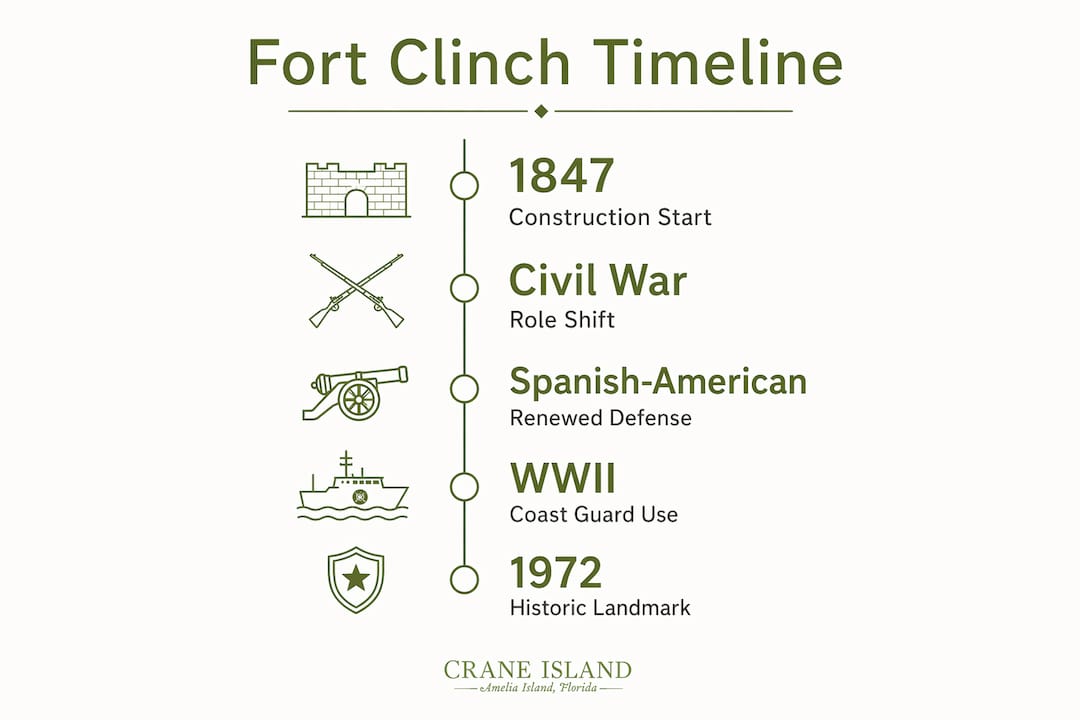
After World War II, the site was largely neglected until state acquisition and restoration efforts gave it a second life. Florida purchased the 256-acre site in 1935, and the timing proved fortunate. The Great Depression had created both the need for public works projects and the workforce to carry them out.
The Civilian Conservation Corps, known as the CCC, took on the restoration. The CCC's work saved Fort Clinch from ruin, building roads, constructing museum structures, and clearing decades of debris. This was not simple cleanup. The CCC created the infrastructure that made Fort Clinch State Park a functioning public destination. Their labor represents a second layer of historical significance woven into the site.
| Milestone | Year | Significance |
|---|---|---|
| Construction begins | 1847 | Part of Third System coastal defense program |
| Union capture | 1862 | Held as Union base through Civil War |
| Florida purchase | 1935 | Enabled public preservation and CCC restoration |
| National Register listing | 1972 | Recognized as a site of national historic importance |
| Park open year-round | Present | Accessible to visitors for education and recreation |
Fort Clinch was placed on the National Register of Historic Places in 1972. That designation formalized what the CCC had already demonstrated: this fort was worth protecting for future generations. The park now encompasses 1,400 acres including trails, beaches, and fishing areas, making it one of the most complete historic state parks in Florida.
Pro Tip: The park's beach access on the Atlantic side offers some of the least crowded shoreline on Amelia Island. Pair a fort tour with a morning walk on the beach for a full half-day experience.
What can visitors experience today at Fort Clinch?
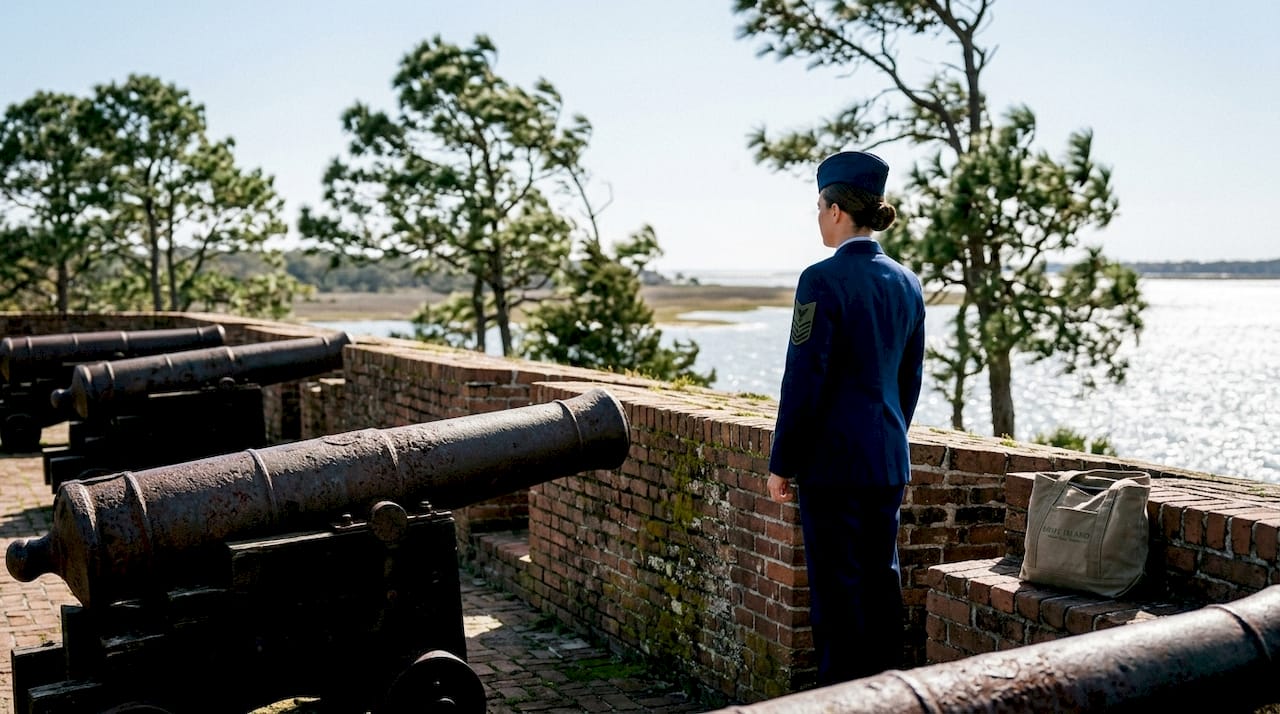
Fort Clinch functions as a living landmark, not a static museum. Visitors can explore self-guided tours, living history reenactments, and facilities like the bakehouse and blacksmith shop to understand what garrison life actually looked like in the 1860s. The fort's structures are preserved well enough to feel inhabited rather than abandoned.
The self-guided tour covers the full interior of the fort:
- Barracks: The sleeping and living quarters for enlisted soldiers, furnished to reflect period conditions.
- Jail cell: A sobering reminder that military discipline was enforced strictly in 19th-century garrisons.
- Blacksmith shop: Demonstrations show how essential metalworking was to daily fort operations.
- Bakehouse: Bread was baked on site, and the bakehouse gives visitors a concrete sense of how soldiers were fed.
- Gun platforms: The elevated artillery positions offer panoramic views of the St. Marys River and Cumberland Sound.
Living history programs take place on the first weekend of each month. Costumed interpreters portray 1864 garrison life, including period cooking, blacksmithing, and military drills. These events transform a visit from observation into participation. Reenactments include period cooking, blacksmithing, and garrison duties, giving visitors a tactile connection to history that no exhibit can fully replicate.
The surrounding park adds natural depth to the experience. Hiking trails wind through maritime forest, the Atlantic beach is accessible year-round, and fishing draws visitors who may not have come for the history at all. Fort Clinch sits at the intersection of Amelia Island's military past and its present identity as a place where nature and culture share the same ground.
Key Takeaways
Fort Clinch is the most complete example of Third System coastal fortification in the American South, and its preservation through CCC labor and state ownership makes it a rare site where military architecture, living history, and natural environment exist together on Amelia Island.
| Point | Details |
|---|---|
| Strategic construction | Built in 1847 to guard Fernandina's deepwater port as part of the U.S. Third System of coastal defense. |
| No combat, full presence | Fort Clinch served through four conflicts as a deterrent and base, never firing a shot in battle. |
| CCC preservation | The Civilian Conservation Corps restored the fort during the 1930s, creating the park infrastructure still in use today. |
| National recognition | Listed on the National Register of Historic Places in 1972, confirming its national historical importance. |
| Living history visits | First-weekend monthly reenactments offer the richest visitor experience, reflecting 1864 garrison daily life. |
Fort Clinch deserves more credit than it gets
Most people who visit Fort Clinch come expecting a battlefield story. They leave with something more interesting: the story of a fort that changed hands twice without a single shot fired, survived neglect and two world wars, and was ultimately saved by Depression-era laborers who had no military connection at all.
What strikes me most about Fort Clinch is how it reframes the idea of military significance. We tend to measure historic forts by the battles fought there. Fort Clinch never had one. Its significance came from what it prevented, the ships that turned away, the occupations that ended quietly, and the strategic calculations it forced on both Confederate and Union commanders. That kind of deterrence rarely gets the attention it deserves in popular history.
The CCC restoration adds another layer I find genuinely moving. Young men from across the country, unemployed and far from home, rebuilt a fort they had no personal connection to because the work mattered. Their labor is as much a part of Fort Clinch's story as any military event. When you walk those restored walls, you are walking on their work as much as on 19th-century brickwork.
My honest recommendation: plan your visit around a first-weekend living history event. Reading about garrison life and watching a costumed interpreter demonstrate period blacksmithing are completely different experiences. The fort's Fort Clinch historical significance becomes personal when you can smell the forge and hear the drills. That is when Amelia Island's military past stops being abstract and starts feeling real.
— John Hillman
Living near history: Amelia Island homes at Craneisland
Amelia Island's character runs deeper than its beaches. The same island that preserved Fort Clinch for nearly two centuries also draws people who want to live somewhere with genuine roots. Craneisland sits within that tradition, offering luxury waterfront homesites on the Intracoastal Waterway just minutes from Fernandina Beach and the historic landmarks that define this place.
With only 14 homesites available, Craneisland is built for those who want a custom home woven into the land rather than placed on top of it. Lowcountry architecture, preserved marshlands, and direct water access create a lifestyle that honors the island's legacy. If you are drawn to Amelia Island's history and want to make it part of your daily life, explore custom design-build options at Craneisland and see what it means to live where the past and present share the same shoreline.
FAQ
What is Fort Clinch and where is it located?
Fort Clinch is a 19th-century masonry coastal fortification on the northern tip of Amelia Island, Florida, near Fernandina Beach. It was built starting in 1847 to protect the deepwater port and St. Marys River entrance.
Was any battle ever fought at Fort Clinch?
No battle was ever fought at Fort Clinch. The fort changed hands between Confederate and Union forces during the Civil War without any armed conflict, and it served surveillance and communication roles in later wars.
When did Fort Clinch become a state park?
Florida purchased the 256-acre site in 1935 and used the Civilian Conservation Corps to restore it. The fort was listed on the National Register of Historic Places in 1972 and is open to the public year-round.
What are the best times to visit Fort Clinch?
The first weekend of each month features living history reenactments with costumed interpreters demonstrating 1864 garrison life, including blacksmithing, period cooking, and military drills. These events offer the most complete visitor experience.
How large is Fort Clinch State Park?
The park encompasses 1,400 acres and includes the historic fort, hiking trails, Atlantic beach access, and fishing areas, making it one of the most complete historic state parks in Florida.
Recommended
- The Amelia Island Lifestyle Explained for New Residents
- Beyond 30A: Why Amelia Island and Crane Island Offer the Coastal Life You Were Actually Looking For — craneisland
- Why Amelia Island Avoids Overdevelopment
- Custom Intracoastal Homes on Amelia Island: A Guide to Gated Waterfront Living in Fernandina Beach — craneisland