
The Amelia Island lifestyle is defined by a rare convergence of coastal natural beauty, living history, and a community spirit that feels genuinely unhurried. This is not a vacation mindset dressed up as permanent living. It is a daily rhythm built around 13 miles of Atlantic shoreline, a 52-block Victorian downtown, and neighbors who still wave from their porches. Whether you are a family seeking roots, a retiree ready to slow down, or a remote worker craving a backdrop that inspires rather than drains, the Amelia Island lifestyle explained here covers every dimension of what makes this place worth calling home.
What natural features shape the Amelia Island lifestyle?
Amelia Island's physical environment is the foundation of everything residents love about living here. The island stretches roughly 13 miles along Florida's northeastern Atlantic coast, and its beaches are wide, uncrowded, and backed by dunes rather than resort towers. That distinction matters enormously for daily life. You can walk the shoreline on a Tuesday morning and feel like you have it to yourself.
Beyond the beach, the island's interior offers a layered natural world that most coastal destinations simply cannot match. Maritime forests, tidal marshes, and freshwater creeks create habitats for osprey, roseate spoonbills, and loggerhead sea turtles. The Amelia Island Trail winds through this terrain, giving cyclists and walkers a dedicated path that connects neighborhoods to nature without requiring a car. Kayaking through the marsh creeks at sunrise is not a weekend excursion here. It is a Tuesday.
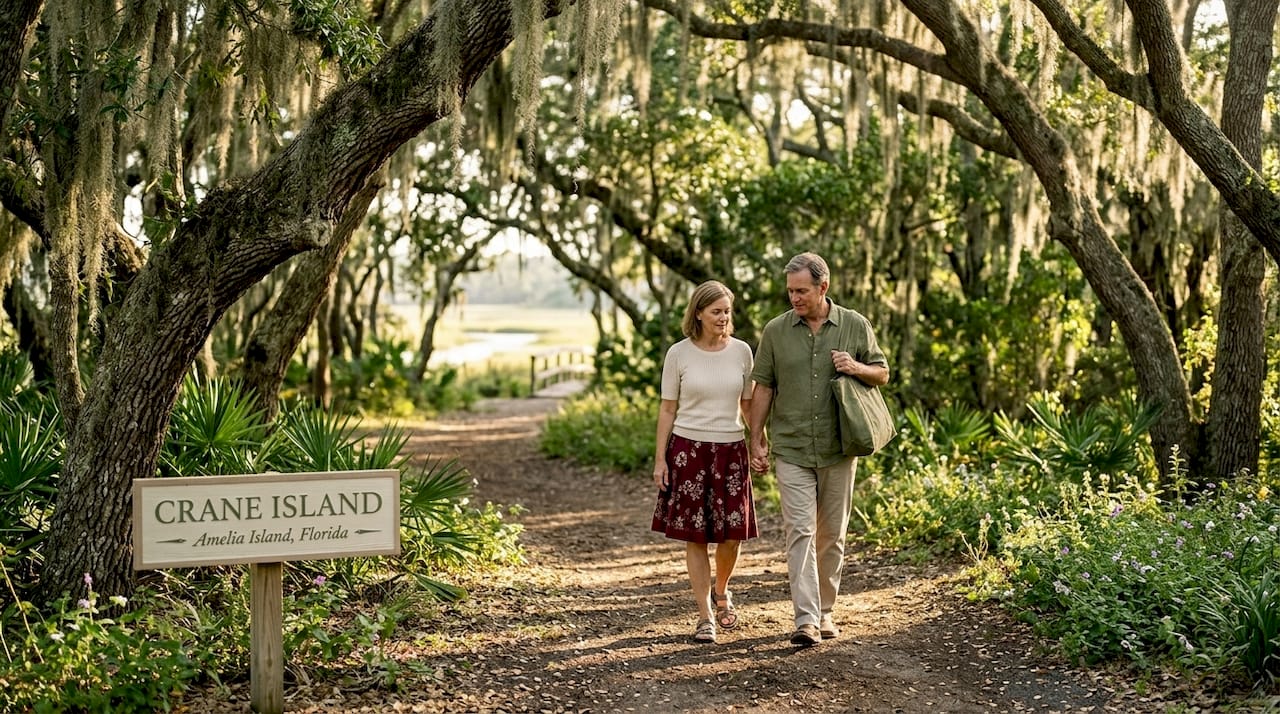
One of the most distinctive Amelia Island lifestyle features is the climate. Unlike most of Florida, the island experiences four distinct seasons: cool winters with temperatures that occasionally dip into the 40s, mild and flower-filled springs, warm but sea-breeze-tempered summers, and crisp autumns that feel genuinely autumnal. This seasonal rhythm shapes how residents plan their outdoor lives and gives the year a satisfying cadence that flat, perpetually warm climates cannot offer.
The Amelia Island lifestyle benefits tied to this environment are concrete and daily:
- Beach access for morning walks, paddleboarding, and surf fishing within minutes of most neighborhoods
- The Amelia Island Trail for cycling and running through maritime forest and along the coast
- Kayak and canoe launches into the Intracoastal Waterway and tidal creeks
- Bird-watching corridors through Egans Creek Greenway, one of the most accessible urban wildlife preserves in northeast Florida
- Fort Clinch State Park for hiking, shoreline fishing, and wildlife spotting within a preserved natural and historic setting
Pro Tip: Plan your first month around the seasonal calendar. Spring and fall offer the most comfortable temperatures for exploring the trail system and marshes, and you will meet more neighbors outdoors during those months than at any community event.
How does the historic and cultural environment shape daily life?
History on Amelia Island is not preserved behind velvet ropes. It is woven into the streets you walk and the buildings where you eat dinner. Fernandina Beach's 52-block historic district anchors the island's cultural identity with Victorian-era storefronts, brick sidewalks, and architecture that has survived eight flags of governance. The district functions as a genuine downtown, not a tourist simulation, with independent bookshops, art galleries, and restaurants operating inside buildings that are over a century old.
The cultural calendar reinforces this sense of place throughout the year. The Isle of Eight Flags Shrimp Festival, held annually in Fernandina Beach, draws tens of thousands of visitors and celebrates the island's deep maritime heritage. The local shrimping industry shaped the island's economy and cuisine for generations, and its legacy shows up in everything from eco tours of the shrimp docks to the menus at restaurants like Salty Pelican and David's Restaurant, which holds an AAA Four Diamond rating. That culinary range, from a casual dockside shack to a nationally recognized dining room, reflects the island's character: unpretentious but quietly excellent.
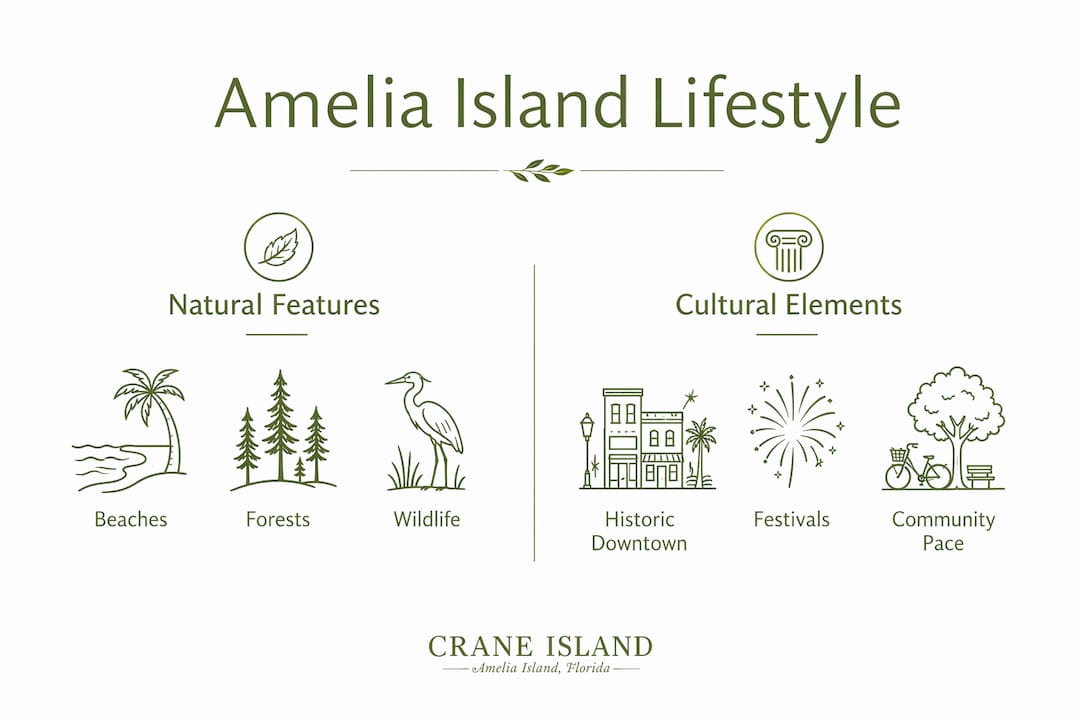
Fort Clinch State Park adds another dimension to Amelia Island community life. The Civil War-era fort offers living history tours alongside hiking trails, beach access, and wildlife corridors. Residents treat it as a backyard park rather than a tourist attraction, and that attitude captures something true about the island. The history here is lived in, not roped off.
Key cultural touchstones that define the Amelia Island experience:
- The Amelia Island Museum of History, housed in the former Nassau County Jail, offering guided tours and community lectures
- Centre Street, the main artery of historic Fernandina Beach, lined with galleries, boutiques, and locally owned restaurants
- The Isle of Eight Flags Shrimp Festival, one of Florida's longest-running outdoor festivals
- Fort Clinch State Park, combining preserved Civil War history with diverse natural habitats
What is community life like for families and retirees?
Amelia Island community life operates at a pace that most American suburbs have forgotten. The island's population skews toward retirees, which gives the community a relaxed, unhurried quality that families and younger residents often find refreshing rather than limiting. Personal relocation accounts consistently describe a neighbor-driven culture where invitations to cookouts, beach walks, and local events arrive quickly after you move in. The social fabric here is real, not performative.
For families, the practical infrastructure supports a high quality of life. Nassau County schools serve the island with a reputation for strong academics and manageable class sizes. The walkable streets of Fernandina Beach mean children can move independently in ways that car-dependent suburbs do not allow. Parks, playgrounds, and the beach itself function as the community's shared backyard.
Retirees find that the island's pace matches their own. Medical facilities in nearby Jacksonville, roughly 35 miles away, provide specialist care without requiring a move to a larger city. Local fitness studios, golf courses, and the Amelia Island Club offer structured social activity for those who want it. The community does not segregate by age. Families and retirees share the same trails, the same farmers markets, and the same front-porch conversations.
Practical steps for integrating into Amelia Island community life:
- Attend the Fernandina Beach Farmers Market on Saturday mornings. It is the single best place to meet neighbors across all age groups within your first weeks.
- Join a trail group or paddling club through the Amelia Island Plantation or local outfitters. Shared outdoor activity builds friendships faster than any social event.
- Introduce yourself on Centre Street. The independent business owners know everyone, and a conversation at a local coffee shop can open more doors than a formal welcome committee.
- Volunteer with local organizations like the Amelia Island Lighthouse or the Nassau Humane Society. Community investment signals permanence, and residents respond warmly to it.
Pro Tip: If you are younger than the median resident age, lean into it rather than around it. Retirees on Amelia Island are often well-traveled, intellectually curious, and genuinely interested in people with different life stages. The age gap becomes an asset once you stop treating it as a barrier.
How does Amelia Island support the remote work lifestyle?
The slowmad lifestyle describes a remote worker who settles into a place long enough to build real routines rather than just passing through. Amelia Island suits this approach better than most coastal destinations because the infrastructure is reliable and the environment actively reduces the stress that kills productivity. High-speed internet is available across the island's residential areas, and several cafes in Fernandina Beach provide the kind of quiet, well-lit working environments that remote professionals need.
Time spent outdoors measurably improves focus and reduces stress, which means the island's natural setting is not just a lifestyle perk. It is a productivity tool. A 30-minute walk on the beach between morning calls and an afternoon work block is a routine that Amelia Island makes genuinely easy, not aspirational.
A typical remote-work day on the island might look like this:
- Morning: Coffee at a Centre Street cafe, two hours of focused work before the tourist foot traffic picks up
- Midday: Lunch at a local restaurant or a packed meal on the beach, followed by a walk or a quick kayak session
- Afternoon: Return to a home office with natural light and marsh views, finishing the workday before sunset
- Evening: Dinner at a local restaurant, a porch conversation with neighbors, or a walk along the Amelia Island Trail as the light fades
The Amelia Island lifestyle benefits for remote workers extend beyond the physical setting. The community's relaxed social culture means after-work socializing happens organically, at the farmers market, on the beach, or at a Centre Street wine bar, without the pressure of a city's networking culture.
Key takeaways
The Amelia Island lifestyle combines four distinct seasons, 13 miles of uncrowded beaches, a living Victorian downtown, and a neighbor-driven community that welcomes families, retirees, and remote workers equally.
| Point | Details |
|---|---|
| Four-season coastal climate | Amelia Island's distinct seasons set it apart from typical Florida and shape a rich outdoor calendar. |
| Historic downtown Fernandina Beach | The 52-block Victorian district provides genuine cultural depth, not a tourist simulation. |
| Neighbor-driven community | Social integration happens quickly through shared outdoor spaces, markets, and local events. |
| Remote work compatibility | High-speed connectivity and a low-stress environment make the island a natural fit for slowmad living. |
| Family and retiree amenities | Strong schools, walkable streets, and proximity to Jacksonville healthcare support residents at every life stage. |
What I have learned about settling into island life
My perspective on the Amelia Island lifestyle comes from watching people make this move and observing what separates those who thrive from those who quietly leave within a year.
The ones who stay are the ones who stop trying to replicate what they had before. They do not spend their first months looking for the same gym, the same restaurant format, or the same social scene. They walk the trail, they show up at the farmers market, and they let the island's rhythm replace their old one. That transition takes about three months, and it is not always comfortable. But on the other side of it is a daily life that most people spend their careers dreaming about.
The age-gap concern is real for younger residents, and I will not minimize it. If you are in your 30s or 40s, you will need to be intentional about building neighbor relationships early. The community will not come to you automatically the way it might in a younger suburb. But the relationships you build here tend to be deeper and more durable because the pace of life allows for actual conversation.
The historic downtown is not a novelty that wears off. After years of watching residents interact with Fernandina Beach, I am still struck by how much the physical beauty of the place sustains daily life. Walking Centre Street on a weekday morning, with the Victorian facades catching the morning light, does not become ordinary. That sustained quality of place is rare, and it is worth factoring into any relocation decision.
The practical advice I give every prospective resident is simple: visit during a weekday in February, not a weekend in May. See the island at its quietest and most honest. If you love it then, you will love it always.
— John Hillman
Discover your place on Amelia Island with Craneisland
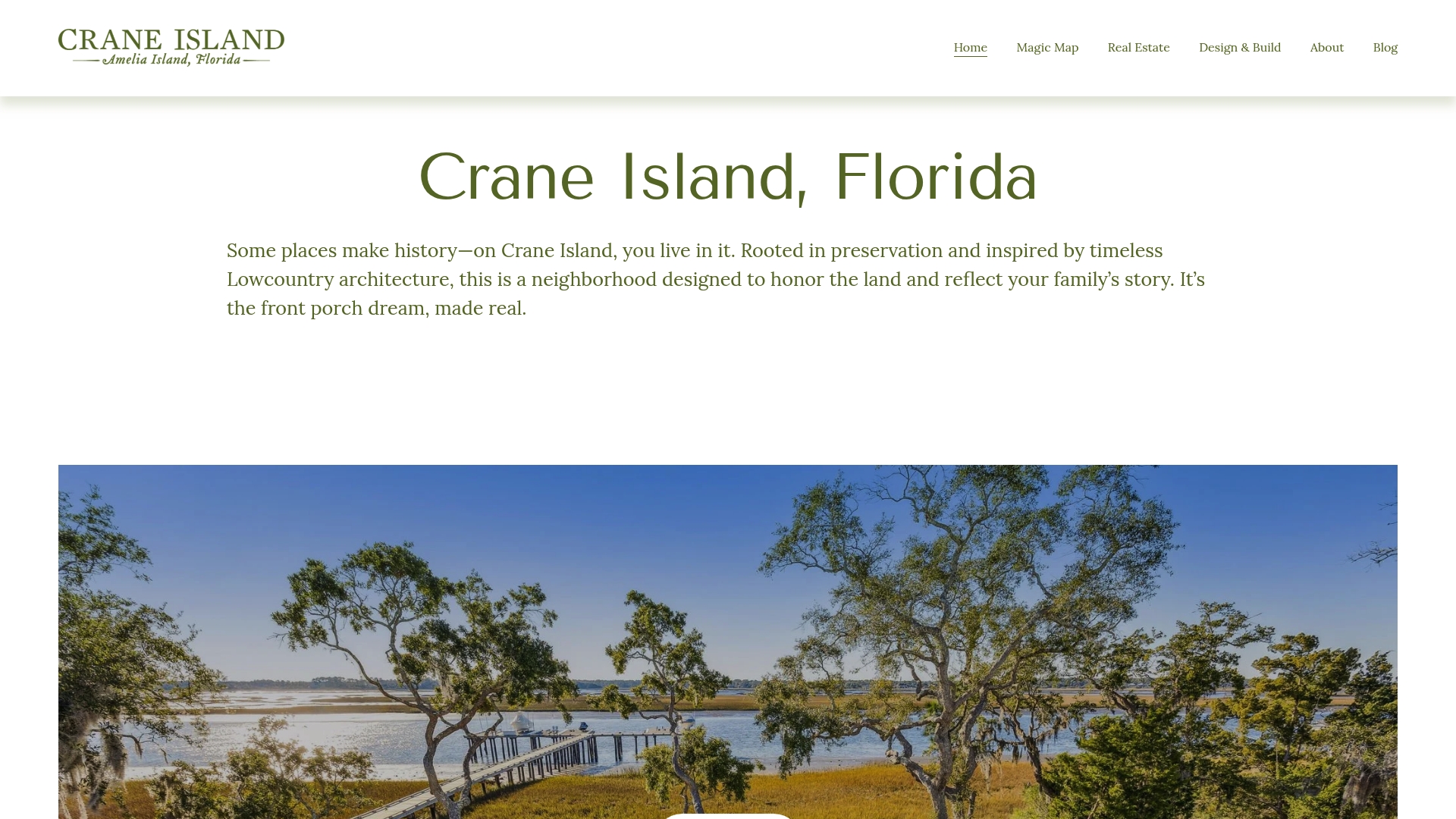
Craneisland represents the Amelia Island lifestyle at its most considered. With only 14 homesites along the Intracoastal Waterway, each home is custom-built to honor both the owner's vision and the island's natural character. Lowcountry architecture, preserved marshlands, and a genuine porch-living culture create a community where the environment and the home are inseparable. Residents walk to the water, cycle the trail system, and reach historic Fernandina Beach within minutes. If you are ready to explore what luxury coastal living looks like on Amelia Island, or you want to design a home from the ground up through Craneisland's custom design-build process, the next step starts with a conversation. This is a place built for people who want their home to mean something.
FAQ
What is the Amelia Island lifestyle in simple terms?
The Amelia Island lifestyle centers on coastal living with direct beach access, a walkable historic downtown in Fernandina Beach, and a relaxed community culture that suits families, retirees, and remote workers. It is defined by outdoor activity, genuine neighborly connection, and a pace of life that prioritizes quality over speed.
Does Amelia Island have four seasons like the rest of the country?
Yes. Unlike most of Florida, Amelia Island experiences cool winters, mild springs, warm summers, and crisp autumns, giving residents a genuine seasonal rhythm that shapes outdoor activity and community life throughout the year.
Is Amelia Island a good place for families with children?
Amelia Island offers family-friendly amenities including Nassau County schools, walkable neighborhoods, and abundant outdoor space. The combination of beach access, safe streets, and a tight-knit community makes it a strong choice for families seeking a high quality of life outside a major metro area.
Can remote workers live comfortably on Amelia Island?
Remote workers thrive on Amelia Island through the slowmad lifestyle, which blends reliable high-speed internet, productive cafe environments in Fernandina Beach, and a natural setting that measurably reduces stress and improves focus.
What are the main cultural attractions on Amelia Island?
The primary Amelia Island attractions include the 52-block Fernandina Beach Historic District, Fort Clinch State Park, the Isle of Eight Flags Shrimp Festival, and the Amelia Island Museum of History. Together they form a cultural foundation that gives daily life on the island genuine depth and character.