

Nassau County Florida real estate operates through a dual regulatory framework, an ad valorem property tax system, and two distinct market segments that together define every transaction in the county. Understanding how Nassau County Florida real estate works means grasping three interlocking systems: who controls your permits, how your taxes are calculated, and which submarket your property belongs to. Get these right before you sign anything, and you will avoid the costly surprises that catch too many buyers off guard. We at Craneisland have watched buyers lose time and money by treating Nassau County as a single, uniform market. It is not.
How Nassau County Florida real estate works: jurisdiction and zoning explained
The first thing every buyer must understand is that Nassau County is not one regulatory zone. It is a patchwork of unincorporated and incorporated areas, each with its own permitting authority, zoning rules, and appeal processes. This distinction shapes what you can build, how fast you can get permits, and who you call when something goes wrong.

Unincorporated Nassau County falls under the Nassau County Building Department and the Board of County Commissioners (BOCC). Incorporated cities, including Fernandina Beach and Callahan, manage their own zoning codes and issue their own building permits entirely independently. A parcel on one side of a city boundary can face completely different setback requirements, use restrictions, and permit timelines than a parcel on the other side.
Here is what that means in practice:
- Unincorporated areas: Permits issued by Nassau County Building Department; zoning decisions made by BOCC; appeals go through county processes.
- Fernandina Beach: City manages its own historic district overlays, setbacks, and design review; permits issued by city building department.
- Callahan and Hilliard: Each incorporated town controls its own zoning and permitting independently of the county.
- Yulee: Largely unincorporated, so county rules apply, but growth pressure has created active rezoning activity worth monitoring.
Validating parcel jurisdiction before purchase is not optional. It is the single most important due diligence step in the Nassau County property buying process. Request the parcel's official jurisdiction status from the Nassau County Property Appraiser's office or the relevant city clerk before making an offer.
Pro Tip: Ask your real estate attorney to pull the parcel's official jurisdiction record and confirm which building department governs permits. A five-minute check can prevent months of regulatory confusion after closing.
How does the Nassau County property tax system work?
Florida's property tax system is built on the ad valorem model, meaning taxes are calculated as a percentage of assessed value. In Nassau County, the property appraiser sets valuation as of January 1 each year. That single date determines your taxable value for the entire coming tax year, which means the timing of your purchase relative to January 1 has real financial consequences.
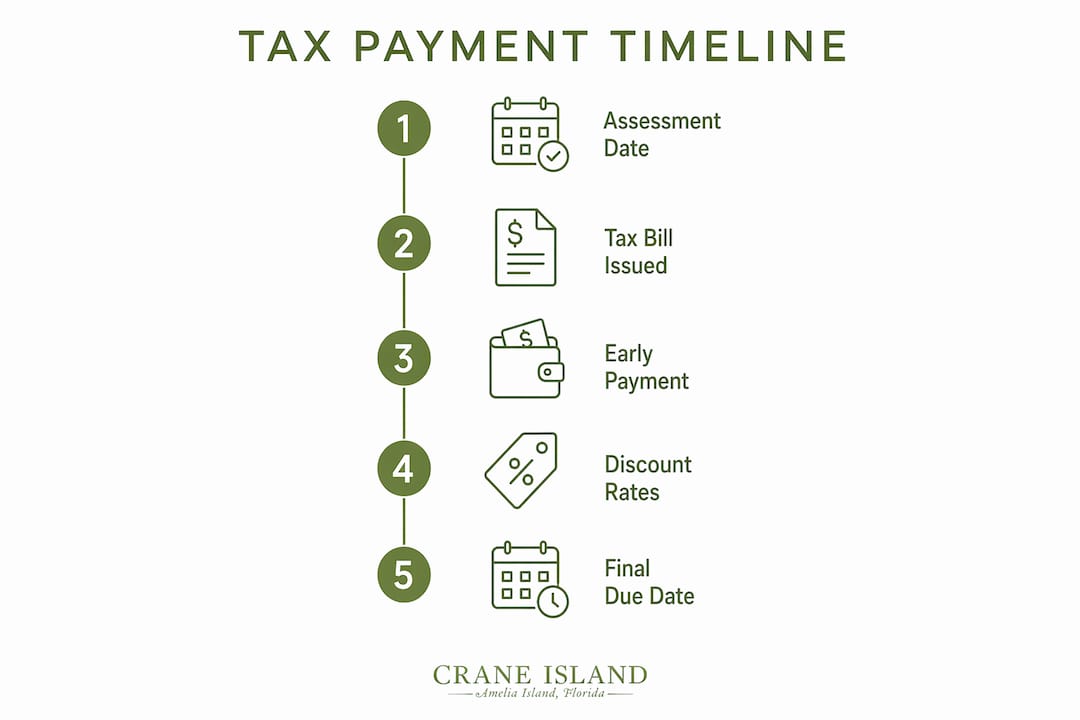
Taxes are due November 1 each year, with a structured early payment discount schedule that rewards prompt payment. Pay in November and you receive a 4% discount. December earns 3%, January earns 2%, and February earns 1%. Payments made in March are due in full with no discount. This schedule is not a minor detail. On a $490,000 property with a 1% effective rate, the November discount saves you roughly $196 compared to paying in March.
| Payment month | Discount rate | Effective savings on $490,000 assessed value |
|---|---|---|
| November | 4% | ~$196 |
| December | 3% | ~$147 |
| January | 2% | ~$98 |
| February | 1% | ~$49 |
| March | 0% | $0 |
The Homestead Exemption and Save Our Homes cap are the two most powerful tools for reducing your ongoing tax burden. The Homestead Exemption reduces your assessed value by $25,000 for all taxing authorities and an additional $25,000 for non-school levies. The Save Our Homes cap then limits annual assessment increases to 3% or the Consumer Price Index, whichever is lower. For a property that appreciates 10% in a strong market year, that cap is worth real money.
One cost that surprises many new owners is the supplemental tax bill. New construction or improvements trigger a separate prorated tax assessment for the remainder of the tax year. A $100,000 addition at a 1.5% effective rate generates roughly a $1,000 supplemental bill, billed separately from your annual tax notice. If you are financing, mortgage lenders collect monthly escrow payments equal to one-twelfth of your annual tax estimate and maintain a two to three month reserve at closing. Supplemental bills can temporarily disrupt escrow balances, so expect a lender adjustment in the months following any major improvement.
Pro Tip: File for your Homestead Exemption by March 1 of the year following your purchase. Missing this deadline means waiting a full additional year for the exemption to take effect, costing you thousands in unnecessary tax exposure.
What are the distinct housing submarkets in Nassau County?
Nassau County's housing market divides into two fundamentally different submarkets: the coastal premium zone anchored by Amelia Island and Fernandina Beach, and the mainland growth corridor centered on Yulee. The countywide median price reached $490,250 in April 2026, with approximately 4.2 months of inventory supply. That countywide figure, however, masks a wide spread between the two submarkets.
Amelia Island and Fernandina Beach represent Nassau County's most established and highest-value residential market. Properties here carry premium pricing driven by barrier island scarcity, proximity to the Intracoastal Waterway, historic district character, and the cultural richness of Fernandina Beach's downtown. Buyers drawn to Amelia Island's distinctive real estate are purchasing into a market where supply is structurally constrained by geography. You cannot build more island.
Yulee, by contrast, is Nassau County's growth engine. Located along the I-95 and US-1 corridor, Yulee attracts buyers priced out of coastal areas and investors seeking appreciation driven by population growth and commercial development. Median prices here run meaningfully below the coastal market, and new construction inventory is far more available.
Key distinctions between the two submarkets:
- Amelia Island/Fernandina Beach: Higher median prices, limited inventory, strong resale demand, historic district overlays, and premium waterfront premiums.
- Yulee mainland: Lower entry price points, active new construction, growth-driven appreciation, and fewer regulatory overlays.
- Investment implication: Submarket differences mean a countywide median price tells you almost nothing useful. Always analyze comparable sales within the specific neighborhood, not the county as a whole.
Comparing Fernandina Beach to other coastal towns reveals that its combination of historic character, natural preservation, and Intracoastal access places it in a rare category among Florida's coastal communities.
How do property tax appeals and exemptions work in Nassau County?
The Nassau County property tax appeal process follows a strict procedural timeline that forgives no delays. Every August, the Property Appraiser mails the Truth in Millage (TRIM) notice to all property owners. This notice states your proposed assessed value, applicable exemptions, and estimated tax bill. You have 25 days from the TRIM mailing to file a petition with the Value Adjustment Board (VAB) if you believe your assessment is incorrect. Miss that window and you forfeit your legal right to contest the assessment for that tax year.
A successful appeal requires evidence, not just disagreement. Gather recent comparable sales data, an independent appraisal if the value difference justifies the cost, photographs documenting property condition issues, and any documentation of errors in the appraiser's property record. The VAB process is quasi-judicial, meaning you present your case to a special magistrate who weighs your evidence against the appraiser's methodology.
Beyond the appeal process, several exemptions reduce taxable value for qualifying owners:
- Homestead Exemption: Up to $50,000 reduction in assessed value for primary residences; apply by March 1.
- Senior Exemption: Additional exemption for qualifying low-income seniors aged 65 and older; income limits apply.
- Veteran's Exemption: Disabled veterans may qualify for partial or full exemptions depending on disability rating.
- Portability: Florida allows you to transfer your accumulated Save Our Homes savings to a new Florida homestead, preserving years of capped assessment growth.
Assembling valuation evidence and exemption documentation immediately after purchase is the smartest preparation you can make. The 25-day appeal window arrives faster than most buyers expect, and gathering comparable sales data under deadline pressure is far harder than doing it methodically in advance.
Pro Tip: If you purchase after January 1, your first full tax bill will reflect the prior owner's assessed value and exemptions. Your new assessment, potentially much higher, takes effect the following January 1. Budget for this reset in your first full year of ownership.
Key takeaways
Nassau County Florida real estate requires buyers to verify parcel jurisdiction, understand the ad valorem tax timeline, and analyze their specific submarket rather than relying on countywide averages.
| Point | Details |
|---|---|
| Confirm jurisdiction before purchase | Determine whether your parcel falls under county or city authority to avoid permit and zoning surprises. |
| Use the early tax payment discount | Paying in November saves up to 4% on your annual tax bill compared to the March deadline. |
| File for Homestead Exemption by March 1 | The Save Our Homes cap and exemption together are the most effective tools for controlling long-term ownership costs. |
| Know your submarket, not just the county median | Amelia Island and Yulee operate as separate markets; comparable sales analysis must be neighborhood-specific. |
| Act within 25 days of your TRIM notice | Missing the Value Adjustment Board petition window permanently forfeits your right to appeal that year's assessment. |
What I have learned from watching buyers navigate Nassau County
I have seen buyers walk into Nassau County transactions armed with countywide data and walk out confused by costs they never anticipated. The pattern repeats itself, and it almost always traces back to the same three oversights.
The first is jurisdiction blindness. Buyers focus on the property and ignore the regulatory envelope around it. A beautiful lot in what feels like "Nassau County" may actually sit within Fernandina Beach's historic district, carrying design review requirements and permit timelines that add months to a renovation. Check the parcel jurisdiction on day one, not after you are under contract.
The second is tax timing naivety. The January 1 valuation date creates a specific dynamic for buyers who close in the second half of the year. You may close in October, pay a prorated tax based on the prior owner's assessed value, and then face a significantly higher assessment the following January when the appraiser resets your value to your purchase price. I have watched buyers budget carefully for year one and then feel blindsided in year two. The property tax planning discipline that protects coastal buyers is not complicated. It just requires knowing the calendar.
The third is submarket confusion. Investors who buy based on countywide median prices often overpay in Yulee or underbid on Amelia Island because they are using the wrong reference point. The coastal and mainland markets have different demand drivers, different buyer pools, and different appreciation trajectories. Treat them as separate markets, because they are.
Nassau County rewards buyers who do their homework with a depth of lifestyle and investment quality that is genuinely rare on Florida's Atlantic coast. We believe the buyers who thrive here are the ones who understand the rules of the place before they fall in love with it.
— John Hillman
Discover your place at Craneisland on Amelia Island
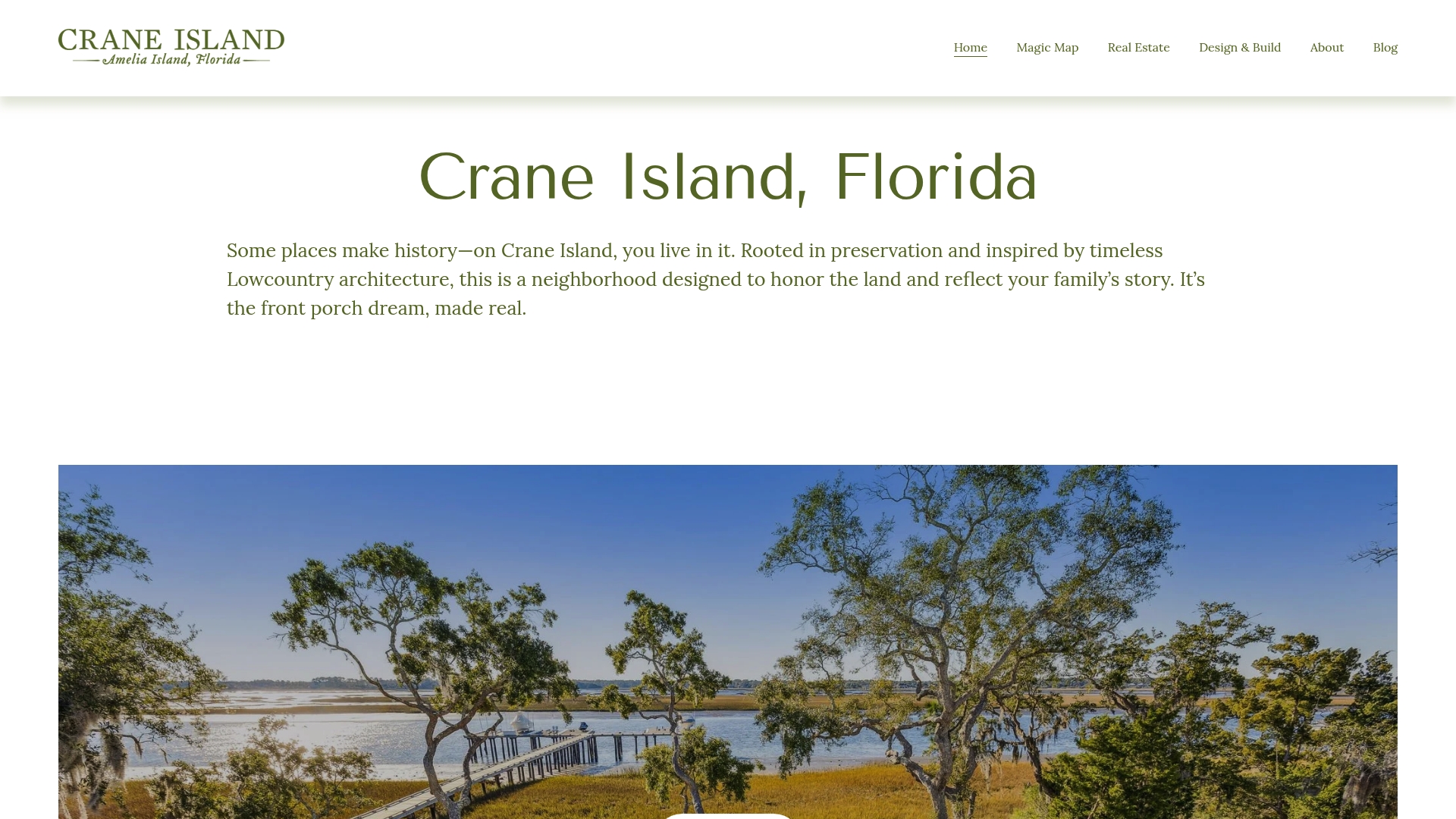
Craneisland sits at the intersection of everything that makes Nassau County's coastal market exceptional: direct Intracoastal Waterway access, preserved marshlands and maritime forest, and the warmth of Fernandina Beach's historic community just minutes away. With only 14 homesites available, each offering the opportunity to build a custom home woven into the natural character of the island, this is a community where legacy and place are built together.
Whether you are exploring luxury intracoastal homes for the first time or ready to begin the custom design process, Craneisland's team brings deep local knowledge of Nassau County's market, tax structures, and regulatory landscape to every conversation. We also offer custom design and build services for buyers who want a home that truly reflects their vision and the island's heritage. Reach out to begin a conversation about what life here looks like for you.
FAQ
How does zoning work when buying property in Nassau County?
Zoning authority depends on whether your parcel is in unincorporated Nassau County or within an incorporated city like Fernandina Beach or Callahan. Always confirm parcel jurisdiction with the Nassau County Property Appraiser before purchase, since each authority has distinct permit processes and land use rules.
When are Nassau County property taxes due?
Property taxes are due November 1, with early payment discounts ranging from 4% in November down to 1% in February. Payments made in March carry no discount, and taxes become delinquent after March 31.
What is the Save Our Homes cap and who qualifies?
The Save Our Homes cap limits annual increases in a homestead property's assessed value to 3% or the Consumer Price Index, whichever is lower. It applies automatically once you receive your Homestead Exemption, protecting owner-occupants from sharp tax increases during periods of rapid appreciation.
What is the deadline to appeal a Nassau County property tax assessment?
You must file a petition with the Value Adjustment Board within 25 days of the TRIM notice mailing in mid-August. Missing this deadline forfeits your right to contest that year's assessment entirely.
Is Amelia Island or Yulee a better investment in Nassau County?
Amelia Island offers structurally constrained supply and premium coastal demand, making it a strong long-term hold for buyers seeking stability and lifestyle value. Yulee offers lower entry costs and growth-driven appreciation potential, better suited for buyers prioritizing near-term price movement over coastal scarcity.