

The fastest way to transform a patio into a real outdoor living room is to add six things: a defined conversation area, a weatherproof sectional or modular seating, layered lighting, fixed shade, a focal fire feature, and an outdoor rug with side surfaces for every seat. Small budgets should start with the rug and lighting. Larger budgets should start with shade, since selecting shade that requires zero setup increases use more than any single furniture upgrade. If any part of your seating sits more than the minimum height requiring a guardrail, check guardrail requirements before you build.
- Defined conversation area with seating that faces inward
- Weatherproof sectional or a matched set of deep lounge chairs
- Layered lighting: ambient, task, and accent
- Fixed shade (pergola, roof extension, or permanent awning)
- A focal fire feature, whether a firepit or fire table
- An outdoor rug plus a surface within reach of every seat
Key Takeaways
A usable outdoor living room depends on conversation-distance seating, layered lighting, fixed shade, and code-compliant guardrails above 30 inches of elevation.
| Point | Details |
|---|---|
| Start with zoning | Set conversation distances of 7 to 10 feet before choosing any furniture. |
| Prioritize fixed shade | Pergolas and roofed extensions reduce daily friction more than portable umbrellas. |
| Layer three light types | Combine ambient, task, and accent lighting with warm 2700 to 3000K bulbs. |
| Check elevation before building | Guards are required above 30 inches, at 36 inches high, with openings under 4 inches. |
| Match materials to upkeep tolerance | Choose aluminum or composite for low maintenance, teak or rattan for hands-on care. |
Table of Contents
- Plan Your Outdoor Living Room Ideas Around Zones, Not Furniture
- Choose Weatherproof Furniture and Materials That Survive Real Life
- Match Shelter and Shade to How Often You'll Actually Use the Room
- Layer Your Lighting So the Room Works After Dark
- Heating, Fire Features, and Cooling: What to Install Where
- Ground the Room With Durable Flooring and a Good Rug
- Use Plants to Frame Views, Buffer Sound, and Build Privacy
- Add the Small Objects That Make a Room Feel Lived In
- Maintenance and Safety Rules Every Outdoor Room Needs
- Budget Tiers for Outdoor Living Room Projects
- Porch-Living and Placemaking: Crane Island's Perspective
- What Actually Matters in Outdoor Living Room Design
- Sources
- FAQ
Plan Your Outdoor Living Room Ideas Around Zones, Not Furniture
Furniture comes second. Zoning comes first, and it's the single most overlooked piece of outdoor living room ideas that actually get used season after season.
- Measure conversation distance. Keep seating 7 to 10 feet apart, edge to edge so nobody has to raise their voice or lean in awkwardly.
- Separate primary and secondary zones. A dining table is one zone, a lounge cluster is another. Designers often build in a second seating area so there are two distinct reasons to go outside.
- Zone with materials, not walls. A rug, a change in paving, or a row of planters can define a room's edges as clearly as any wall.
- Run the "would I sit here inside" test. If a chair placement feels awkward indoors, it will feel worse outside where there's nothing to lean on.
- Scale to your footprint. A corner porch might fit one tight cluster of two chairs and a side table. A sunken lounge or open pavilion can support a full sectional plus a separate dining zone.
Choose Weatherproof Furniture and Materials That Survive Real Life
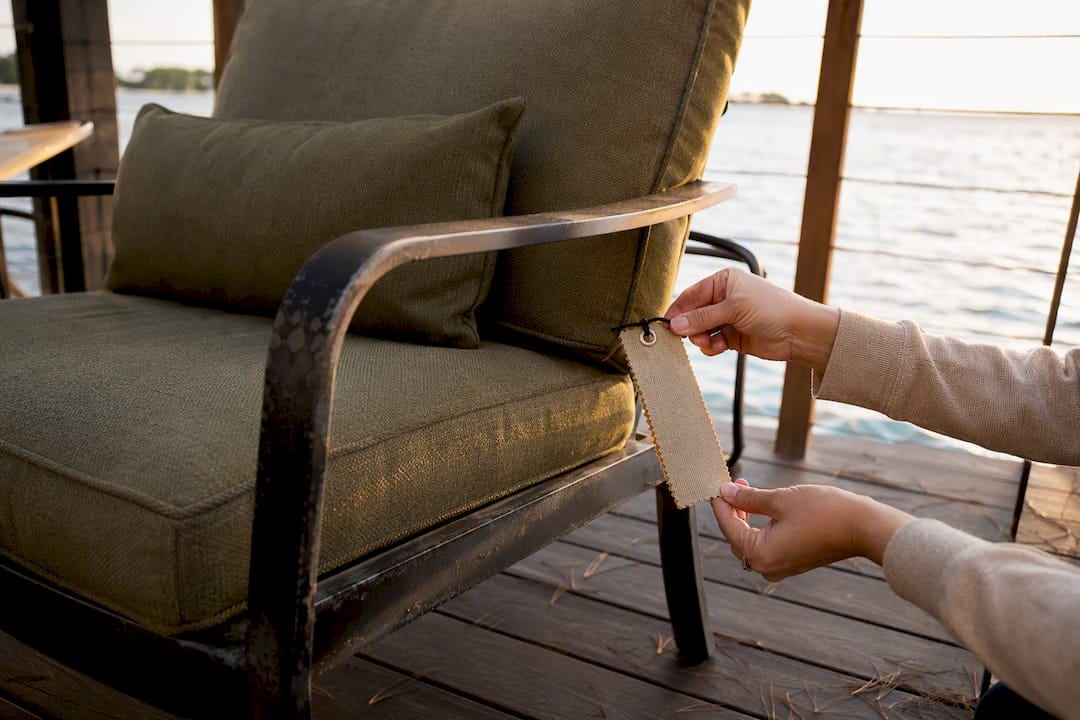
Materials decide whether your outdoor room looks good in June or looks tired by August. Performance fabrics (solution-dyed acrylics, quick-dry outdoor foam) resist mildew and fade far longer than indoor textiles pressed into outdoor service. Cushions with zippered, storable covers cut weekend maintenance to almost nothing.
Frame material shapes both look and workload:
- Aluminum — lightest maintenance, resists rust, ideal for coastal humidity
- Teak — ages into a silver patina, needs occasional oiling if you want to keep the original tone
- Resin wicker — strong value, but check weave quality since cheap versions crack under UV exposure
Scale matters too. A single large sectional often works better than scattered chairs because it anchors the conversation area, but every seat, sectional or standalone, needs a table or ledge within arm's reach for a drink or a book.
Pro Tip: Before buying a fabric sight unseen, ask for a swatch and leave it outside for a week. Check the warranty specifically for fade and mildew coverage, not just tear strength.
Match Shelter and Shade to How Often You'll Actually Use the Room
Fixed shade wins on usability. A pergola, a roofed porch extension, or a permanent awning means you never have to decide whether it's worth setting up shade for twenty minutes outside. Umbrellas and shade sails cost less and move with the sun, but that flexibility means someone has to deploy them every time.
- Fixed pergola or roof: instant shade, higher upfront cost, least daily friction
- Umbrella or sail shade: lower cost, portable, requires setup each use
- Retractable screens: control insects without blocking a water view
- Permanent screening: best for consistent bug pressure in humid coastal climates
Shade placement also changes what happens indoors. A roof extension that shadows a kitchen window will dim your interior daylight, so plan the depth of any fixed structure with those sightlines in mind.
Layer Your Lighting So the Room Works After Dark
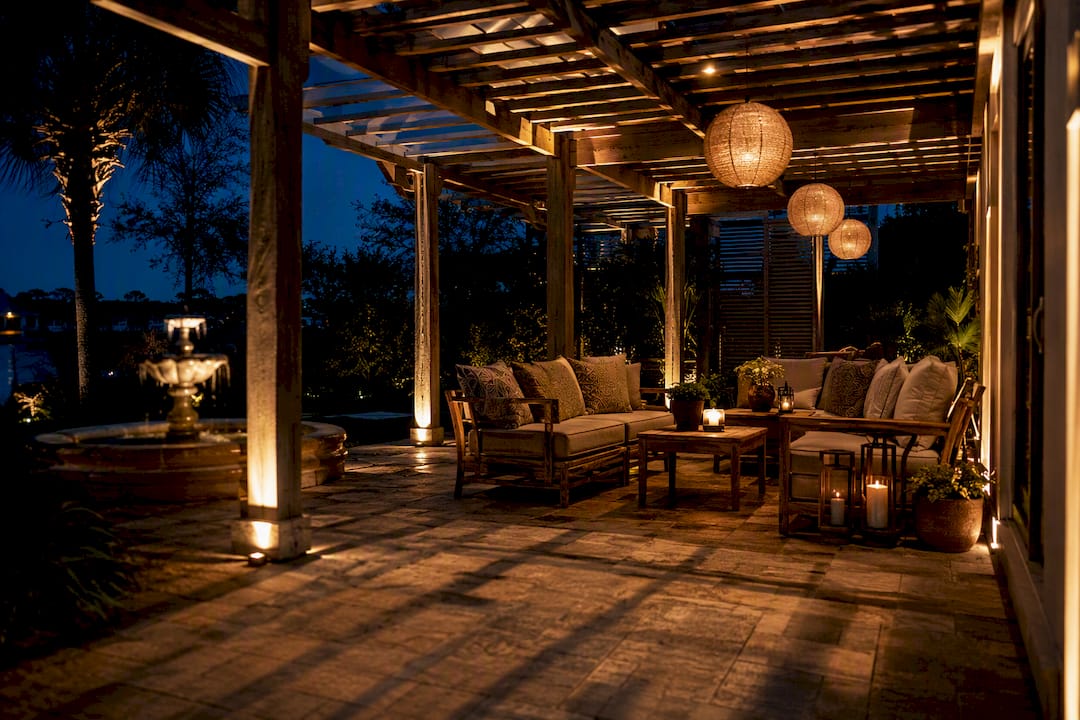
A patio without evening lighting shuts down at sunset. A true outdoor living room keeps working. The layered model borrowed from interior design applies outside just as well: ambient light for general glow, task light for reading or cooking, and accent light for depth and drama.
- Ambient: string lights or an overhead fixture for overall coverage
- Task: a lamp or directional fixture near reading chairs or a dining table
- Accent: uplights on trees, step lights, or low path lighting
Stick to warm bulbs in the 2700 to 3000K range for an inviting glow instead of a stark, commercial look, and aim fixtures downward to cut light pollution for neighbors and stargazers alike. Sound matters just as much. Layered lighting paired with a background sound source is one of the most overlooked drivers of after dark use, whether that's a portable Bluetooth speaker, integrated outdoor speakers wired to a patio zone, or a small fountain masking street noise.
Heating, Fire Features, and Cooling: What to Install Where
A fire feature often becomes the visual anchor of the whole room and stretches your usable season by months. A simple firepit costs less and stays portable. A built-in fireplace demands real construction but needs almost no seasonal upkeep beyond a chimney check. A gas fire table splits the difference, offering push-button ambiance with minimal cleanup.
- Keep portable heaters at least three feet from furniture, plantings, and structures
- Anchor permanent fire features on a noncombustible surface with clearance per manufacturer specs
- Ceiling fans and shade placement handle heat better than any single cooling gadget
- Dense plantings on the prevailing wind side can cut afternoon heat naturally
Ground the Room With Durable Flooring and a Good Rug
Flooring is what makes a patio feel finished instead of makeshift. Pavers and composite decking both resist weather well; sealed concrete costs less but can turn slick when wet, so check slip ratings before you commit.
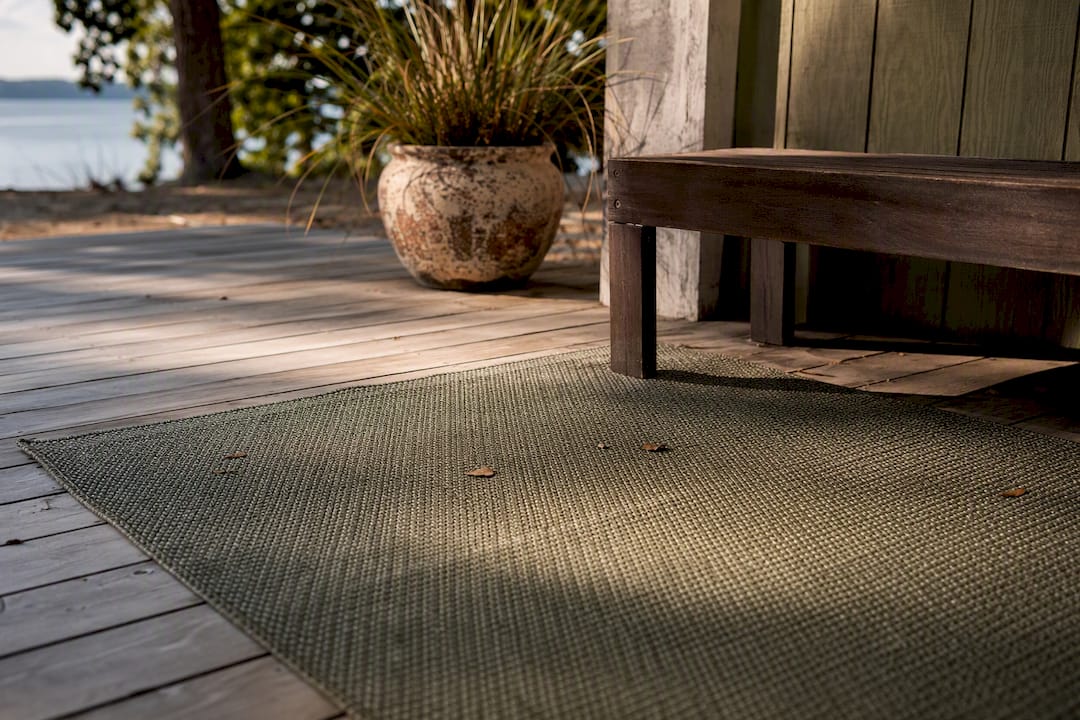
An outdoor rug in polypropylene or PET does more to make a patio feel like a room than almost any other single purchase, and both materials shrug off rain and UV without fading fast. Anchor a rug with furniture legs or rug tape so wind doesn't turn it into a sail. A soft surface underfoot, even a synthetic one, measurably increases how often people choose to sit down and stay.
Use Plants to Frame Views, Buffer Sound, and Build Privacy
Plantings do triple duty: they screen neighbors, soften hard edges, and swallow noise that would otherwise bounce across a patio. A tall hedge along a property line solves privacy in one move. Container trees work faster and can be repositioned as your layout evolves. A trellis with a climbing vine adds green without eating floor space.
- Choose species by real sun exposure, not by what looked good at the nursery
- Match plant choice to how much upkeep you're willing to do (drought-tolerant natives cut watering time significantly)
- Use dense, broad-leafed plantings near seating areas to absorb street or neighbor noise
- Position taller plantings to block sightlines into the conversation zone specifically, not the whole yard
Add the Small Objects That Make a Room Feel Lived In
Furniture gets you seating. Objects get you a room. A tray for drinks, a stack of lanterns, a folded throw on the arm of a chair, these details signal that the space is used, not staged.
- A surface within reach of every seat, no exceptions
- Weatherproof textiles: throws, pillow covers, table linens rated for outdoor use
- A deck box or wall hooks to store cushions and throws when weather turns
- Scent, sound, and a few personal objects on display, the same test you'd apply to a living room indoors
Pro Tip: Walk your space at dusk and count how many surfaces hold a lit candle, a drink, or a book. If most seats come up empty, you're missing the small objects that make a room feel occupied.
Maintenance and Safety Rules Every Outdoor Room Needs
Match materials to how much time you actually want to spend maintaining them. Aluminum and composite decking reward busy homeowners; teak and natural rattan reward people who enjoy the upkeep ritual.
Safety is not optional once a platform gets elevated. Per the International Residential Code, a guard is required whenever a walking surface sits more than 30 inches above grade, and the standard required height for most one and two family homes is 36 inches. Any openings in that guardrail need to satisfy the 4 inch sphere rule, meaning a 4 inch sphere should never be able to pass through.
If your deck, porch, or raised patio sits more than 30 inches off the ground, a code-compliant guard at 36 inches with openings smaller than 4 inches is not a design choice. It's the baseline before furniture, lighting, or anything else gets planned.
- Confirm elevation before finalizing furniture layout or built-ins
- Check local amendments, since some jurisdictions require 42 inch guards instead of 36
- Inspect existing railings for gaps that exceed the sphere rule before adding seating nearby
Budget Tiers for Outdoor Living Room Projects
Costs scale fast once hardscaping and built-ins enter the picture, and full outdoor living spaces with utilities and permanent features often reach into five figures depending on site conditions and scope.
- Entry-level: A quality rug, string lighting, and two comfortable chairs with a side table. This tier transforms usability fastest for the least money.
- Mid-range: A weatherproof sectional, a pergola, and a gas fire table. This is where most outdoor rooms become genuinely four-season spaces.
- High-end: Built-in fireplaces, full hardscaping, integrated lighting and sound systems, and custom shade structures designed into the architecture itself.
Porch-Living and Placemaking: Crane Island's Perspective
At Craneisland, porch living is not an accessory to the home. It's the room where neighbors gather, where marsh views frame every conversation, and where the architecture itself, rooted in Lowcountry tradition, treats the porch as a true living room rather than an afterthought.
- Fixed shade and deep porches reduce daily friction the same way a pergola does on a smaller lot
- Seating arranged to face gathered neighbors and preserved marshland, not the driveway
- Low-maintenance, native-forward planting that echoes the surrounding preserved forest
Explore more on front porch living and the art of placemaking that shapes every homesite at Crane Island.
What Actually Matters in Outdoor Living Room Design
Most advice on outdoor living rooms treats furniture as the starting point, and that's backward. The research behind this piece points to zoning and shade as the real determinants of whether a space gets used daily or sits empty after the first month of ownership. A gorgeous sectional on a patio with no shade and bad lighting will collect dust by August.
The conventional wisdom oversells fire features and undersells lighting layers. A firepit photographs well, but it's the warm 2700K bulb and the background hum of a fountain that keep people outside past sunset on an ordinary Tuesday, not just for a planned gathering. If you're prioritizing one thing first, prioritize fixed shade and a lighting plan over any single furniture purchase.
The safety piece gets treated as fine print in most design content, and that's a mistake for anyone building elevated seating or a raised platform. Code compliance on guardrail height and opening size isn't a suggestion. It's the difference between a beautiful room and a liability.
Sources
- IRC2018 — Chapter 3 Building Planning — R312.1.2
- 4-inch sphere rule — Viewrail resources
- How to create an outdoor living room that actually gets used — Bobby Berk
- How to design an outdoor living room — Homes & Gardens
FAQ
What do you call an outdoor living room?
It's most often called an outdoor living room or outdoor living space, describing a patio, porch, or deck furnished and organized like an interior room with defined seating, lighting, and often a fire feature.
How do you design an indoor-outdoor living space?
Align sightlines and flooring transitions between the interior and exterior rooms, repeat a color or material on both sides of the threshold, and apply the same usability tests indoors and out, including surfaces within reach and layered lighting.
How much does it cost to add an outdoor living space?
Costs vary enormously by scope, but full outdoor living spaces with hardscaping and built-in features often reach into five figures, while entry-level upgrades like rugs and lighting can start in the low hundreds.
When is a guardrail required on a deck or porch?
Per the IRC, a guard is required whenever the walking surface is more than 30 inches above grade, with a standard height of 36 inches for most one and two family homes.
What's the ideal seating distance for outdoor conversation areas?
Keep seating 7 to 10 feet apart, edge to edge, close enough for easy conversation without feeling cramped.