
Timeless home design means building or choosing a home whose materials, proportions, and site connection will feel as right in thirty years as they do today. For an affluent buyer on Amelia Island, that definition has a practical edge: the salt air, the marshland light, and the unhurried rhythm of Lowcountry living all demand choices that age with grace rather than against the clock. When you walk a homesite at Craneisland or step through a move-in-ready home near the Intracoastal Waterway, run this quick check before anything else:
- Roofline and massing. Does the pitch feel proportionate to the lot, or does it fight the treeline?
- Porch presence. Is there a covered porch deep enough to actually live on, or is it decorative trim?
- Permanent surfaces. Are the floors, countertops, and exterior cladding natural materials, or trend-driven composites?
- Site orientation. Do the primary living spaces face the prevailing breeze and the best view?
Those four observations will tell you more about a home's long-term relevance than any finish catalog.
Table of Contents
- What are the core design principles that make a home truly timeless?
- Which Lowcountry features give a coastal home its enduring character?
- What materials and finishes gain character instead of looking dated?
- Which classic architectural styles endure, and how does Transitional fit in?
- How do you brief an architect for a home that endures?
- Where should you invest when buying move-in-ready versus building custom?
- How does sustainable design complement a timeless aesthetic?
- Which lighting and hardware fixtures stand the test of time?
- How do you blend indoor and outdoor living for lasting coastal appeal?
- Key Takeaways
- Why the "timeless" conversation matters more than most buyers realize
- Craneisland offers a rare setting for a home built to last
- FAQ
What are the core design principles that make a home truly timeless?
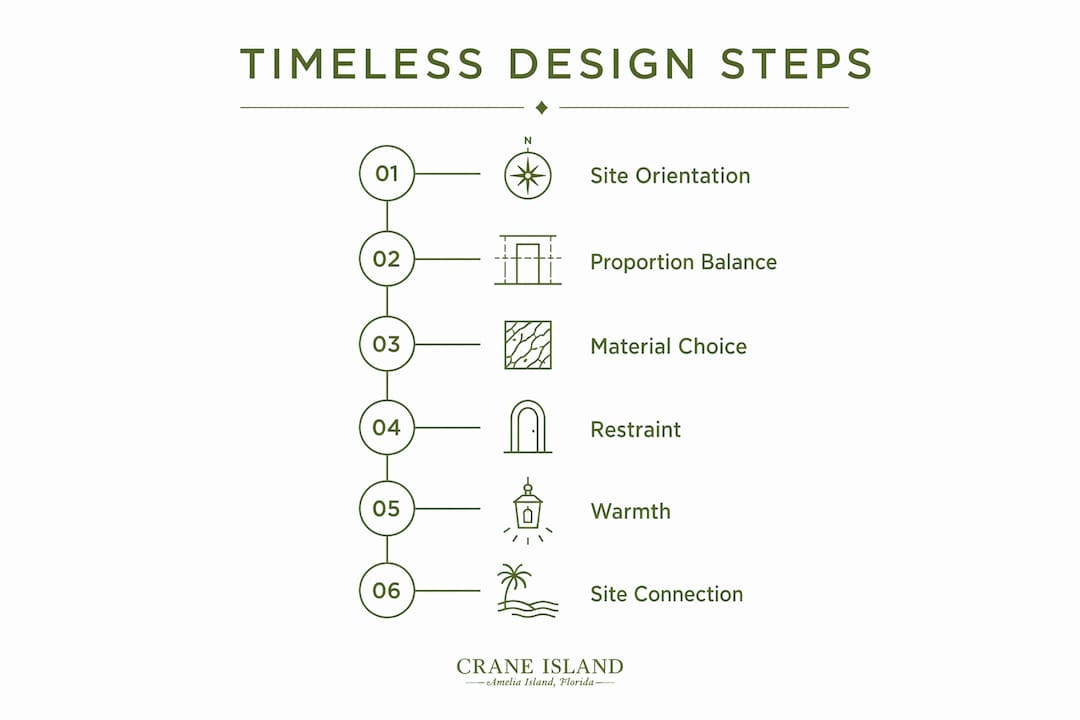
Proportion is the quietest force in a room. When ceiling heights, window sizes, and furniture scale relate to each other correctly, a space feels settled without anyone being able to say why. Designers consistently point to symmetry and proportion as the organizing principles that keep interiors relevant across decades, precisely because our brains find balance calming rather than era-specific.
Restraint follows closely. A home that tries to say everything at once dates itself to the moment it was finished. The rooms that endure tend to hold back, letting one or two well-chosen materials carry the weight.
Warmth is not optional. Classic style is a set of priorities centered on comfort and lived-in quality, not a return to ornate historical ornament. Warm neutrals, creams, ivories, and soft greiges on permanent surfaces give you a base that absorbs color updates over time without requiring a full renovation.
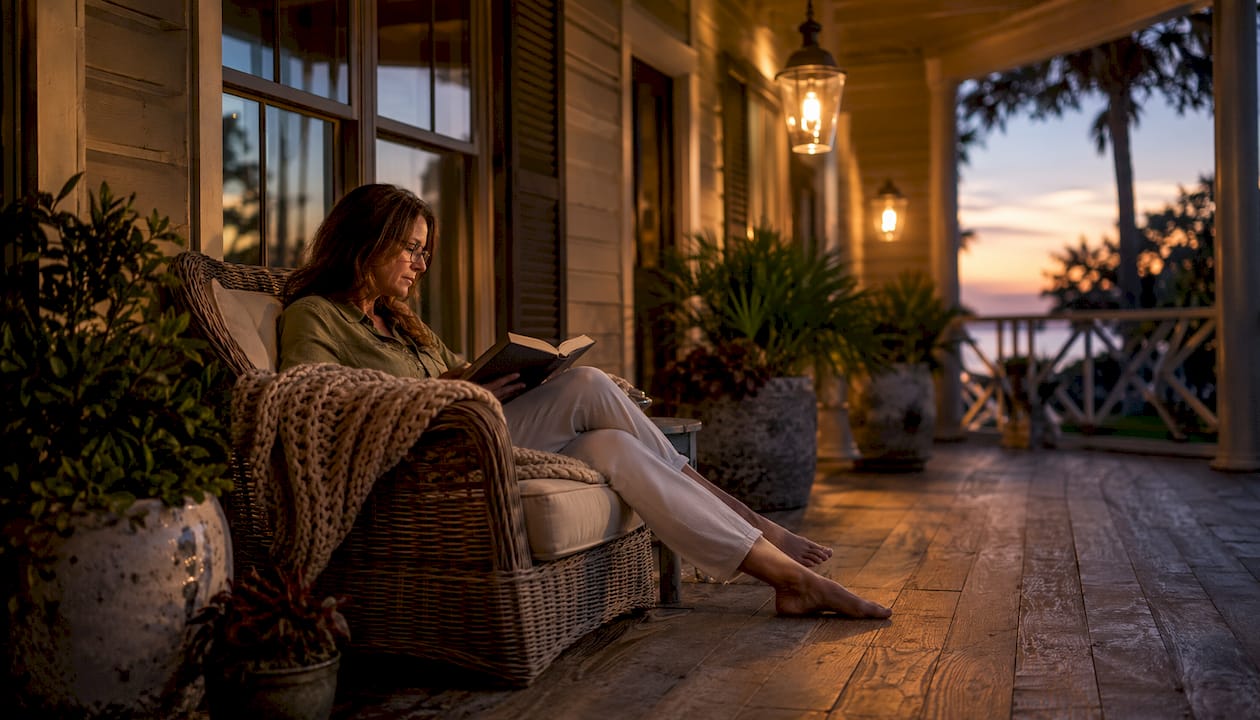
Site connection is the principle most buyers underestimate. A home designed to capture its specific views, breezes, and light carries a sense of belonging that no decorative trend can manufacture.
Pro Tip: When evaluating a floor plan, cover the finish schedule and ask whether the massing, window rhythm, and ceiling heights still feel right. If the bones hold up without the finishes, the design is genuinely timeless.
Which Lowcountry features give a coastal home its enduring character?
The Lowcountry architectural vocabulary has been refined by climate and culture over centuries, and its signature elements happen to be exactly what timeless design theory recommends.
- Deep wraparound porches. These are true living rooms that frame marsh views and capture cross-breezes. At Craneisland, porch living is a community value, not an afterthought.
- Raised foundations. Elevating the first floor above flood plain protects the structure and creates a graceful approach, a practical and aesthetic win.
- Deep eaves and generous overhangs. They shade walls from the intense coastal sun, reduce cooling loads, and slow weathering on exterior materials.
- Board-and-batten or cypress siding. Both weather to silver-gray naturally, developing a patina that reads as heritage rather than age.
- Operable shutters. Functional, not decorative, they handle storm exposure and add authentic rhythm to the facade.
Proximity to historic Fernandina Beach reinforces this sense of place. The town's Victorian streetscapes and working waterfront remind residents that architecture built with honest materials and correct proportions simply lasts. The vernacular Florida tradition that shaped this region is one of the strongest arguments for staying true to regional form.
What materials and finishes gain character instead of looking dated?
Natural materials develop patina; manufactured substitutes develop wear. That distinction drives every budget decision worth making on a luxury coastal home.
| Material | Durability / Lifespan | Maintenance effort | Visual warmth | Coastal suitability | Lifecycle value |
|---|---|---|---|---|---|
| White oak hardwood | — | Low to moderate | High | Good with proper sealing | Excellent |
| Limestone flooring | — | Low | High | Excellent | Excellent |
| Marble countertops | Decades | Moderate (sealing) | Very high | Good indoors | High |
| Unlacquered brass hardware | — | Low (patinas naturally) | High | Moderate (polish if desired) | High |
| Fiber-cement siding | — | Low | Moderate | Very good | Good |
Hardwood, marble, and limestone have been used in homes for centuries because they age beautifully and never feel trendy. The subtle etching in marble, the soft wear of limestone underfoot, the marks that form in hardwood floors: these are not flaws. They are the story the house is telling.
In a coastal Lowcountry climate, the practical guidance is straightforward. Seal natural stone annually. Use exterior-grade hardwood or cypress for any exposed porch elements. Choose unlacquered brass over polished chrome for hardware, since brass patinas gracefully while chrome pits in salt air.
Pro Tip: Spend your budget on flooring, cabinetry, and exterior cladding first. These are the fixed elements that cost the most to change later. Express any current preferences through lighting, textiles, and art, where swapping is easy and inexpensive.
Which classic architectural styles endure, and how does Transitional fit in?
Colonial, Craftsman, and Farmhouse have each demonstrated long-term market resilience because they prioritize functional beauty over ornamental novelty.
Colonial brings balanced symmetry, a centered entry, and multi-paned windows arranged in disciplined rows. Its formal clarity reads as confident rather than fussy, and it translates well to the Lowcountry when the palette shifts to warm whites and the porch is given proper depth.
Craftsman celebrates hand-crafted detail: tapered columns, exposed rafter tails, built-in millwork, and natural wood tones. On Amelia Island, these elements feel at home against a backdrop of live oaks and Spanish moss.
Farmhouse offers gabled roofs, wide porches, and an honest material vocabulary that suits the coastal South. The risk is over-commitment to the trend-driven "modern farmhouse" moment; the solution is restraint on the interior while keeping the exterior silhouette true to form.
Transitional is the most practical approach for a luxury custom build. It keeps the traditional silhouettes, rooflines, and window cadence that give a home its bones, then introduces contemporary details, cleaner millwork profiles, and a quieter palette, sparingly.
The dos and don'ts are simple: lock in the roofline, window rhythm, and massing early. Keep decorative details restrained. Never let a single trend, shiplap, barn doors, or gray-washed wood, dominate a permanent surface.
How do you brief an architect for a home that endures?
Site-first planning is the single most reliable predictor of long-term relevance. Homes designed for their specific site create a sense of belonging that no amount of decorative effort can replicate.
- Orient primary living spaces to capture prevailing breezes and the best natural views.
- Specify a raised foundation appropriate to the flood zone; on Amelia Island, this is both a code consideration and an aesthetic one.
- Size roof overhangs to shade walls during peak summer sun angles.
- Position porches on the southeast or east elevation for morning light and afternoon shade.
- Confirm the architect has experience with coastal salt-air exposures and can specify materials accordingly.
Questions worth asking on a site walk: How does this lot's topography influence the floor plan? What is your approach to cross-ventilation without mechanical cooling? Which exterior materials do you specify for this specific coastal exposure?
Coastal resilience is not a footnote. Salt air accelerates corrosion on metal fasteners, window frames, and hardware. Humidity cycles stress wood joints. Storm load demands properly engineered roof connections. These are design decisions, not contractor afterthoughts.
Where should you invest when buying move-in-ready versus building custom?
The priorities shift significantly depending on which path you take.
For a move-in-ready home:
- Evaluate the permanent surfaces first: flooring species and condition, kitchen footprint, bathroom tile.
- Upgrade fixed elements selectively before moving in; changing flooring after furniture arrives costs twice as much.
- Accept the existing floor plan if the massing and orientation are sound; cosmetic refreshes are inexpensive.
For a custom homesite at Craneisland:
- Set the floor plan, ceiling heights, and window placement correctly from the start. These decisions are nearly irreversible.
- Establish a permanent material palette, one wood tone, one stone family, one metal finish, and repeat it across rooms for cohesion.
- Reserve budget flexibility for millwork and exterior detailing, the elements that read as craftsmanship from the street and from within.
Pro Tip: Use textiles, art, and lighting as your trend layer. A new set of linen draperies or a statement pendant fixture can refresh a room completely without touching a single permanent surface.
How does sustainable design complement a timeless aesthetic?
The good news for buyers who care about both longevity and environmental responsibility: sustainable choices and timeless choices are almost always the same choices. Natural materials carry lower embodied energy than synthetic alternatives and last far longer, reducing replacement cycles. Passive design strategies, correct orientation, deep overhangs, and operable windows, reduce mechanical cooling loads without any technology that can become obsolete.
At Craneisland, the community's commitment to nature and design means preserved marshlands and forests are part of the setting, not cleared away for it. That environmental preservation is itself a timeless design decision: a home that belongs to its landscape will always feel more right than one imposed upon it.
Which lighting and hardware fixtures stand the test of time?
The rule for fixtures is the same as for materials: choose forms with historical precedent and honest materials. Unlacquered brass, aged bronze, and matte black in simple profiles have appeared across multiple design eras and will continue to. Avoid finishes tied to a single decade, brushed nickel peaked in the early 2000s and now reads as dated.
For lighting, lantern-style pendants, simple drum shades in linen, and recessed fixtures with warm color temperatures (2700–3000K) all hold up across style shifts. Swap decorative pendants and table lamps freely; treat recessed and architectural lighting as permanent decisions.
How do you blend indoor and outdoor living for lasting coastal appeal?
The Lowcountry porch is the original indoor-outdoor room, and it remains the most effective one. A porch deep enough for furniture, at least ten feet, functions as a true extension of the interior and frames the marsh or garden view the way a painting frames a wall.
Inside, use the same stone or large-format tile on covered porch floors as in adjacent interior rooms to dissolve the threshold visually. Specify doors and windows that open fully, folding or sliding systems with thermally broken frames rated for coastal exposure. Natural textures, linen, wool, weathered teak, carry the outdoor palette inward without requiring a themed approach.
The walkable community layout at Craneisland extends this logic to the neighborhood scale: parks, communal spaces, and direct Intracoastal Waterway access mean the outdoors is never more than a few steps away.
Key Takeaways
Timeless home design on the Lowcountry coast comes down to five decisions made early and made well: site orientation, honest materials, correct proportions, a neutral permanent palette, and a porch deep enough to live on.
| Point | Details |
|---|---|
| Site orientation first | Orient living spaces to capture breezes and views; overhangs and porches handle coastal sun. |
| Invest in fixed surfaces | Spend on flooring, cabinetry, and exterior cladding; use lighting and textiles for trend updates. |
| Choose patina-building materials | White oak, limestone, marble, and unlacquered brass age into character rather than wear. |
| Lock in proportions early | Roofline, window rhythm, and ceiling heights are nearly irreversible; get them right before breaking ground. |
| Craneisland as the setting | Craneisland's homesites on Amelia Island are designed for site-responsive, Lowcountry-inspired custom and move-in-ready homes with Intracoastal Waterway access. |
Why the "timeless" conversation matters more than most buyers realize
There is a version of this conversation that stays purely aesthetic, and it misses the point. The buyers we work with at Craneisland are not just choosing a look. They are making a decision about legacy value and how a place will feel to the people who live in it twenty years from now.
What I find consistently underestimated is the role of site. Buyers spend enormous energy on finish selections and almost none on orientation, foundation height, and porch placement. Those structural decisions are the ones that determine whether a home feels inevitable or accidental. A house that belongs to its land, that captures the morning light over the marsh and shelters its porch from the afternoon heat, will feel right to every generation that lives in it. No amount of beautiful marble can compensate for a floor plan that fights its site.
The Lowcountry tradition understood this intuitively. Raised foundations, deep eaves, and generous porches were not stylistic choices; they were climate responses that happened to produce beautiful architecture. That is the definition of timeless: a solution so well-fitted to its conditions that it never needs to be replaced.
Craneisland offers a rare setting for a home built to last
Craneisland's 14 exclusive homesites on Amelia Island are among the few remaining opportunities to build a custom Lowcountry home from the ground up, with site-responsive design, preserved natural surroundings, and direct access to the Intracoastal Waterway already built into the community's DNA. The design-build approach connects buyers with architects who understand coastal resilience, honest materials, and the proportions that make a home endure.
Move-in-ready options are also available for buyers who want the Craneisland lifestyle without the custom build timeline. Either way, the permanent decisions, orientation, massing, material palette have already been made with longevity in mind. With availability this limited, a site walk is the natural next step. Explore available homesites and schedule your visit today.
FAQ
What makes a home design truly timeless?
Timeless home design relies on correct proportions, honest natural materials, a warm neutral base palette, and strong site connection rather than trend-driven ornament. Homes built on these principles remain relevant across decades without requiring major renovation.
Which architectural styles have the most lasting appeal?
Colonial, Craftsman, and Farmhouse styles have demonstrated long-term market resilience because they prioritize functional beauty, balanced windows, and proportion over era-specific decoration. A Transitional approach blends their traditional silhouettes with restrained contemporary details for a result that avoids feeling dated.
What are the best materials for a timeless coastal home?
White oak hardwood, limestone, marble, and unlacquered brass are the most reliable choices because they develop patina rather than showing wear. In a coastal Lowcountry climate, seal natural stone annually and specify exterior-grade wood for any exposed porch elements.
How do I avoid locking in trends on permanent surfaces?
Keep structural and permanent surfaces, flooring, cabinetry, exterior cladding, in neutral natural tones and high-quality materials. Express current preferences through lighting, textiles, and art, where changes are easy and inexpensive.
Why is Craneisland a strong choice for a timeless Lowcountry home?
Craneisland offers multiple homesites on Amelia Island designed around site-responsive, Lowcountry-inspired architecture with access to the Intracoastal Waterway and preserved natural surroundings. Both custom and move-in-ready options are built with the proportions, materials, and orientation decisions that support long-term relevance.