
The boating lifestyle on Amelia Island is a year-round life on tidal water. You run the Amelia River along the Intracoastal Waterway, slip out to the Atlantic through the St. Marys inlet, fish the marsh creeks at dawn and tie up beside a working shrimp boat in Fernandina Beach. At Crane Island, we built a community of custom homesites and move-in ready homes around that rhythm, with deep-water Intracoastal access that is hard to find elsewhere on the island.
TL;DR
- Amelia Island sits on the Intracoastal Waterway, with ocean access through the St. Marys River inlet, so one boat can serve creek fishing, sunset cruising and offshore runs.
- The local sailing club reports more than 50 events a year and sails year-round, so the calendar stays full in every season.
- Tides and currents set the schedule here. Learn them early and the water becomes easy to read.
- Wake, clearance and preserve rules protect the marsh that makes the boating worth doing.
- Crane Island pairs deep-water Intracoastal access with preserved marsh and forest, designed for people who want to live beside the water, not just visit it.
Table of Contents
- What boating on Amelia Island feels like
- The waters you can reach from the island
- Wildlife, scenery and the long view from the water
- Reading the tides and the seasons
- Boating rules that keep the water special
- Where to keep your boat
- What the water means for a home
- Living the boating life at Crane Island
- Our perspective on boating and place
- FAQ
- Sources
What boating on Amelia Island feels like
Boating here is less an event than a habit. The Amelia Island Sailing Club sails year-round and reports 376 active members and more than 50 events each year, from races to cruises to social evenings. That tells you something about the place: people do not put their boats away for winter, and the harbor community is active enough to fill a calendar on its own.
The Amelia River itself is a mixed neighborhood. According to the island's tourism guide to the waterways, working shrimp boats, luxury yachts and sightseeing cruises share the same water. That mix gives the harbor its character. A weekend can mean a slow cruise at golden hour, a morning on the flats, or a loop past the old waterfront of Fernandina Beach, where the Isle of Eight Flags Shrimp Festival celebrates the local shrimping industry every year at the end of April.
It is also a quiet lifestyle. Once you leave the main channel, tidal creeks wind through spartina marsh, herons stand in the shallows and the only sound is water against the hull. Many owners tell the story of their boating days the same way they tell the story of their porch evenings: the view changes with the tide, and that is the point.

The waters you can reach from the island
Two features define the local map: the Intracoastal Waterway and the St. Marys River inlet.
Fernandina Beach's harbor on the Amelia River lies on the ICW. The St. Marys inlet gives boats ocean access, and a cruising guide to the island reports 45 feet through the entrance at mean low water and at least 20 feet up to Fernandina Beach. For a boater, that means a large vessel can come and go with confidence, and a smaller one can choose between sheltered inland water and open ocean on the same day.
Here is how the main options break down.
| Water | What you do there | What to plan for |
|---|---|---|
| Amelia River and the ICW | Cruising, sightseeing, harbor dining by boat | Slow speed along the waterfront to limit wake |
| Tidal creeks and marsh | Kayaking, light-tackle fishing, wildlife watching | Tide timing, oyster bars, marsh edges |
| St. Marys inlet and the Atlantic | Offshore fishing, ocean runs, day trips | Strong currents, wind against tide |
| Nassau Sound | Redfish, flounder and sea trout fishing | Currents at river mouths |
Nassau Sound deserves a note of its own. The Florida State Parks fishing guide calls it one of northeast Florida's best fishing areas, with redfish, flounder and sea trout, and anglers can also fish from the island shore or the adjacent George Crady Bridge Fishing Pier.
Wildlife, scenery and the long view from the water
The scenery is the second reason people come for the boating. The island's tourism guide lists dolphins, manatees and birdlife among the sights on tidal creeks, and wild horses on Cumberland Island, a short run across the sound. Cruising, fishing, sightseeing and kayaking all share the same marsh.

That marsh is protected for good reason. Amelia Island State Park sits next to the Nassau River-St. Johns River Marshes Aquatic Preserve, and the park protects shorebirds and sea turtles, including limits on night beach driving to reduce disturbance of turtle nesting. The boating lifestyle depends on a coastline that stays wild, and the people who live here tend to feel that responsibility personally.
Reading the tides and the seasons
The fastest way to feel at home on this water is to respect the tide. State paddling-trail guidance for this stretch of coast notes that tidal currents run hard in Northeast Florida's inlets and narrow ICW sections, and that wind against an outgoing tide can build steep waves. It recommends planning passages with NOAA tide and current predictions. The same guide flags strong currents crossing the Nassau River and entering the South Amelia River.
A few habits make it easy:
- Check the tide and current tables before you leave the dock, not after.
- Time inlet runs for slack water or a tide that runs with the wind.
- Plan creek trips for a rising tide so you are never waiting for water to return.
- Keep a margin on your return, since the same current that helped you out will test you coming home.
Because the island sails and boats through the year, seasons change the mood more than the schedule. Spring brings the shrimp festival and long evenings, summer favors early starts and sandbar afternoons, and the cooler months bring clear, quiet water and the club's racing and cruising events.
Boating rules that keep the water special
Good manners on the water are also the rules. A few worth knowing:
- Wake: Along the harbor waterfront on the Amelia River ICW corridor, boaters are expected to run slow to limit wake.
- Clearance: In Florida aquatic preserves, boaters must keep at least 1 foot of clearance between the boat bottom and submerged vegetation or other resources in mooring locations, turning basins and access channels.
- Marsh edges: Stay off oyster bars and marsh edges and keep wakes down near shorelines, as the state paddling-trail guide advises.
- Safety line: The FWC runs a 24-hour wildlife emergency and boating-under-the-influence hotline at 1-888-404-3922.
Aquatic preserves exist so their natural, biological and scientific values endure, which is exactly why a preserved shoreline adds to the lifestyle instead of limiting it.
Where to keep your boat
Owners on the island have a few kinds of places to dock. Public marinas in Fernandina Beach offer slips and fuel; for instance, Fernandina Harbor Marina at 1 S Front St. is listed by the state as a Clean Marina, and Amelia Island Marina is a full-service facility in a protected basin with 108 wet slips and 228 dry slips, a fuel dock and a ship store. Those are good places to know as a visitor or while you are deciding where to settle.
Owning waterfront changes the routine. A dock at your own home means no trailer, no queue at the ramp and no drive to the harbor: you walk down, check the tide and go. If you are weighing that choice, our guide to a deepwater dock on Amelia Island walks through what to know before you buy, and our look at Amelia Island deepwater access covers the depths we describe at 12 feet on the ICW and 46 at the inlet. For a wider picture of the daily rhythm, see what intracoastal living is really like.
Buyers who compare waterfront markets sometimes look across the Atlantic as well, browsing Mediterranean island property listings to see how other coastlines pair homes with harbors.
What the water means for a home
Access to the water shapes what a property is worth to the person who lives there. Depth decides which boats you can keep, how freely you can go out at low tide and how much of the coast opens to you. That is why we write about the Intracoastal Waterway's role in land value and why buyers who love boating often start their search with the water, then choose the house.
If you are exploring custom building here, our guide to custom Intracoastal homes in Fernandina Beach and our overview of how to build on Amelia Island cover land, approvals and design.
Living the boating life at Crane Island
Crane Island is a private, environmentally preserved community on Amelia Island, inspired by Lowcountry tradition and designed by acclaimed architects. We preserved nearly half the land as open space, and our homes are woven into marshes and forests. Residents have direct access to the Intracoastal Waterway and the culture of historic Fernandina Beach, and we offer custom homesites as well as move-in ready homes.
If you want to see what a day looks like, we offer both ways to begin: choose a homesite and build a custom home that tells your story, or explore our Portfolio Homes Program. You can also see all of our homes and homesites.
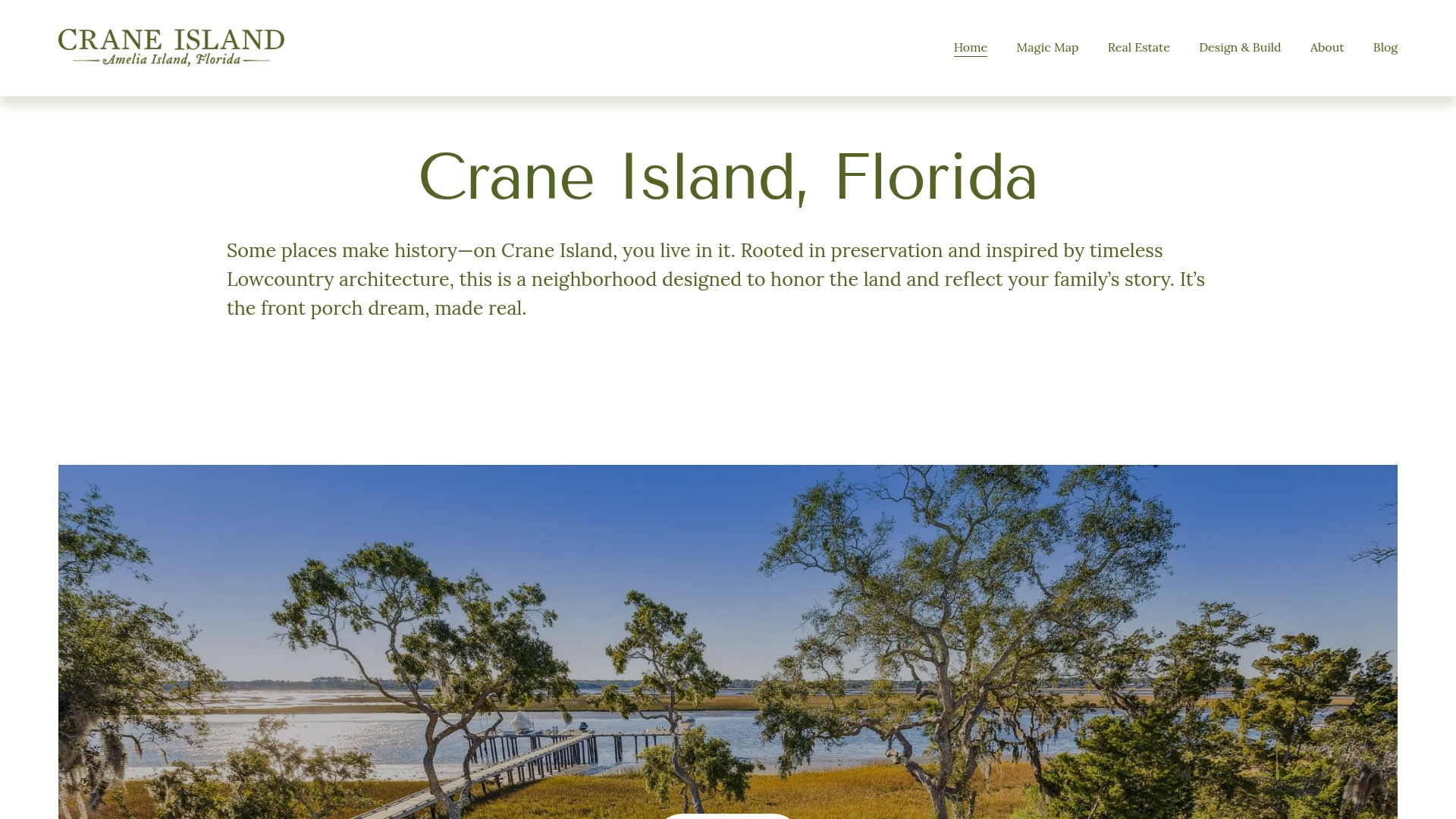
Both paths lead to the same porch: a place to watch the tide turn, with the marsh in front of you and the water a short walk away.
Our perspective on boating and place
We believe a boating community should feel as though the water and the land agreed to share the same space. When we planned Crane Island, we kept nearly half of the land as open space, because the marsh is not the backdrop to the boating, it is the boating.
Deep-water Intracoastal access is the reason many of our neighbors found us. It lets a family keep the boat they want, go out when the tide is right and come home to a porch that frames the same view they just left. We pair that access with rigorous architectural standards inspired by the Lowcountry, so the homes feel like they have always been here.
A boating life is also a neighborly one. Porch living means evenings when people gather in open spaces, trade stories about the day's water and look after the place they share. That is the legacy we want to leave: homes built with care, on land that stays wild.
John Hillman
FAQ
Is Amelia Island good for boating year-round?
Yes. The Amelia Island Sailing Club sails year-round and holds more than 50 events a year, and the Intracoastal Waterway and the St. Marys inlet keep options open in every season. Plan around tides and wind, which matter more than the calendar.
Can you reach the Atlantic from Amelia Island?
Yes. The St. Marys River inlet provides ocean access, with 45 feet through the entrance at mean low water and at least 20 feet to Fernandina Beach, according to a regional cruising guide. Inlet currents run hard, so check NOAA tide and current predictions before you go.
What can you see on the water?
Boaters and paddlers report dolphins, manatees and abundant birdlife in the tidal creeks, plus the wild horses of Cumberland Island nearby. Working shrimp boats, yachts and sightseeing cruises share the Amelia River.
What should I know about boating rules and wildlife here?
Keep your wake down near shorelines and along the harbor waterfront, stay off oyster bars and marsh edges, and keep at least 1 foot of clearance over submerged vegetation in preserve mooring areas and access channels. The FWC hotline for wildlife emergencies and boating under the influence is 1-888-404-3922.
Sources
- Amelia Island Sailing Club
- Amelia Island, Florida as a Cruising Destination
- Amelia Island Waterways: Exploring by Boat
- Florida State Parks Fishing Guide
- Amelia Island State Park and George Crady Bridge Fishing Pier management plan
- Florida Circumnavigational Saltwater Paddling Trail Segment 26 guide
- Aquatic Preserve Requirements for Single-Family Docks
- Amelia Island Marina overview
- Clean Marinas listing
- Amelia Island Marina