

The role of intracoastal waterway in land value is defined by its ability to deliver direct, protected waterfront access that commands a measurable premium over nearly every other property type in coastal markets. Buyers and investors who understand this dynamic gain a real edge. The Atlantic Intracoastal Waterway, stretching more than 3,000 miles along the East Coast, creates a corridor of high-demand real estate where dockage capacity, frontage width, and navigation access drive prices well above inland or canal-adjacent alternatives. Communities like Craneisland on Amelia Island, Florida, sit directly within this corridor, making the waterway's influence on land value both tangible and immediate.
What specific features of the Intracoastal Waterway affect land value?
Premium Intracoastal frontage and dockage capabilities increase luxury estate valuation by 15–40% compared to similar non-waterfront properties. That range is wide because the premium depends on several distinct features, not just the waterway label itself.
Dockage capacity and configuration determine how much of that premium a property captures. A homesite that accommodates a 60-foot yacht with a floating dock and direct deep-water access commands far more than one with a fixed pier over shallow water. Buyers with larger vessels pay for certainty, and dockage delivers it.
Frontage width acts as a price multiplier. Wider lots facing the waterway offer more visual exposure, more dock options, and greater privacy. Narrow lots, even on the Intracoastal, compress that premium significantly.
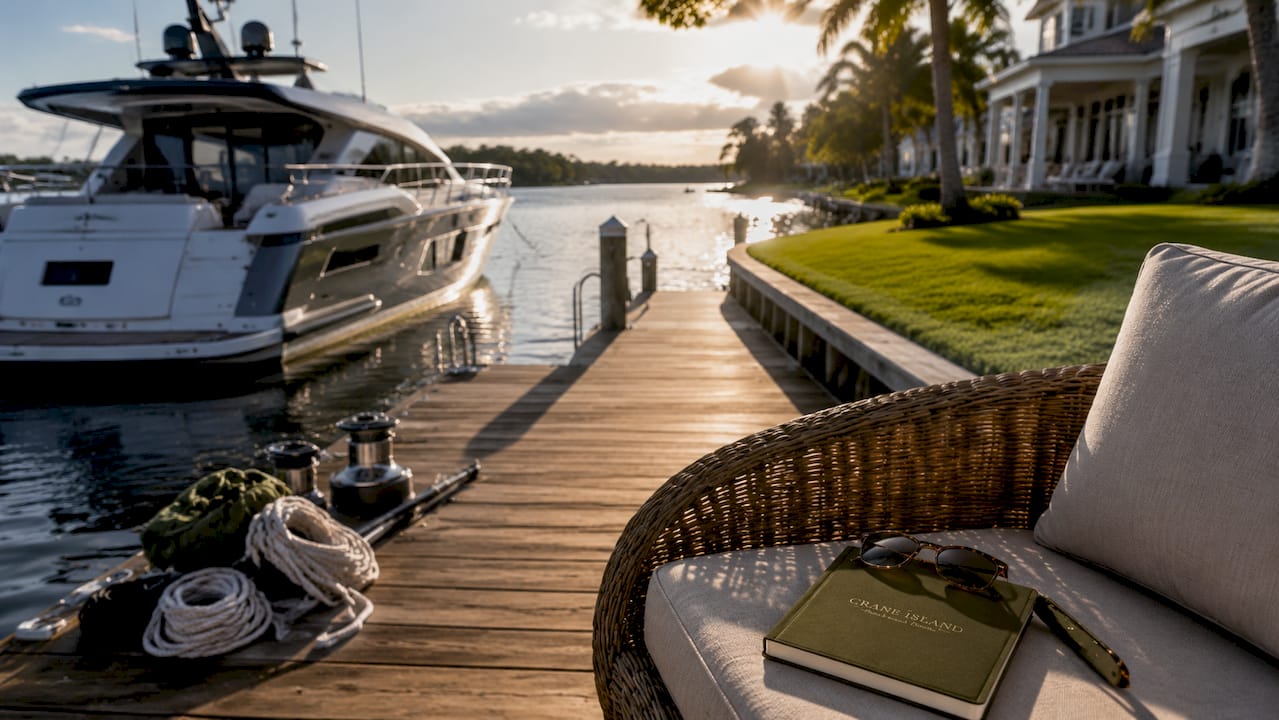
Bridge clearance restrictions segment the market in ways many buyers overlook. Properties located south of low-clearance fixed bridges face a permanent restriction: sailboats with tall masts and large yachts simply cannot pass. That restriction shrinks the buyer pool and places a ceiling on resale value, regardless of how beautiful the property is.
Riparian rights and water depth add another layer. Owners with clear riparian rights can build docks, install lifts, and modify the shoreline within regulatory limits. Water depth below four feet at low tide effectively eliminates most powerboat access, which directly reduces the property's appeal to boating buyers.
Environmental and maintenance costs are real and recurring. Seawall and bulkhead upkeep, stormwater mitigation, and flood zone compliance all affect the true cost of ownership. Urban water views increase residential property values by 10–30%, but that gain can erode quickly if maintenance costs are underestimated.
Pro Tip: Ask for a recent bulkhead inspection report and a survey of water depth at mean low water before making any offer on an Intracoastal property. These two documents reveal more about true value than the listing price alone.
How does Intracoastal land value compare to canal or non-waterfront properties?
The price gap between Intracoastal and canal properties is substantial and consistent across Florida's coastal markets. Intracoastal homes command a premium of $500,000 to over $1 million compared to canal homes of equivalent size and finish. A $2 million Intracoastal home in Martin County, Florida, compares directly to a $1.2–$1.5 million canal property with the same square footage and finishes.
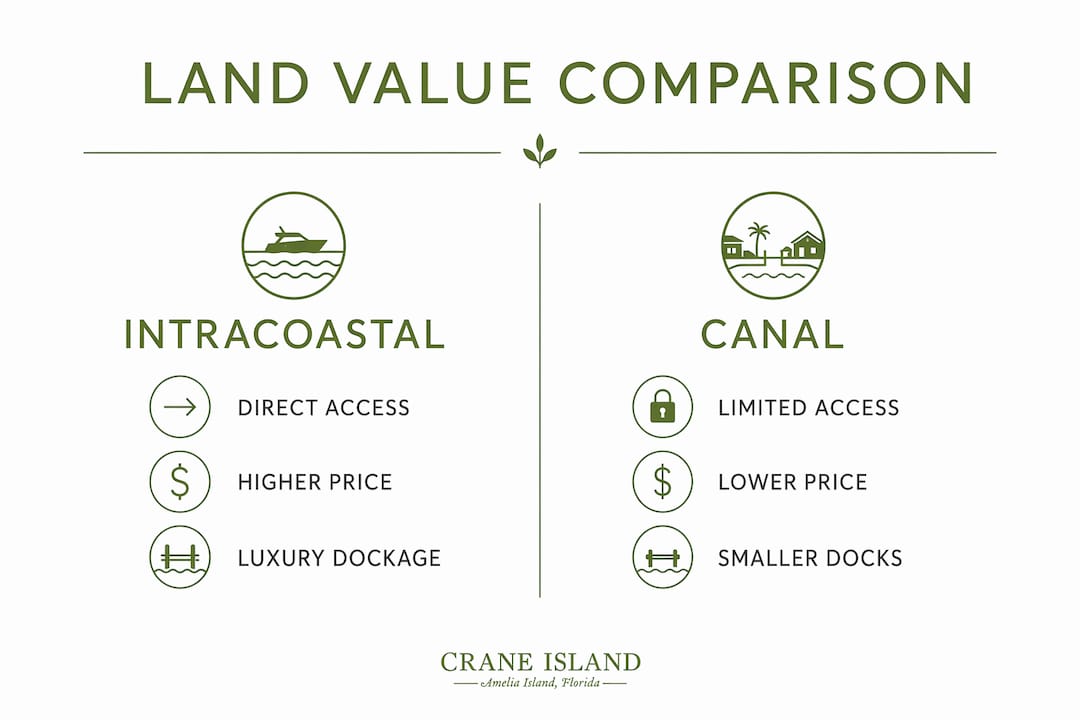
That gap reflects real differences in access, liquidity, and buyer demand. Intracoastal properties offer direct navigation to open water, ocean inlets, and coastal destinations without the dead-end limitations of most canal systems. Canal properties, by contrast, often require navigating through multiple locks or bridges before reaching open water, and some canals have depth or clearance issues that limit vessel size entirely.
| Feature | Intracoastal property | Canal property | Non-waterfront property |
|---|---|---|---|
| Typical price premium | $500K–$1M+ above canal | Moderate above non-waterfront | Baseline |
| Water access | Direct, open navigation | Limited, often restricted | None |
| Buyer pool depth | Large, includes boaters | Moderate | Broadest |
| Appreciation potential | High, driven by scarcity | Moderate | Varies by location |
| Maintenance costs | Higher (bulkhead, dock) | Moderate | Lower |
| Liquidity | Strong but slower due diligence | Moderate | Fastest |
Canal properties do offer genuine advantages. Their lower entry price makes them accessible to a wider range of buyers, and they can appreciate meaningfully in strong coastal markets. The trade-off is that their appreciation ceiling is lower, and their resale liquidity depends heavily on local canal conditions. Non-waterfront properties in the same zip codes trade faster but rarely build the same long-term equity as Intracoastal frontage. Buyers weighing the North Florida coastal market should treat these three categories as distinct investment tiers, not interchangeable alternatives.
What economic and environmental factors shape long-term waterway land value?
The Atlantic Intracoastal Waterway does not maintain itself. Federal maintenance costs approximately $53 million annually for dredging, navigation aids, and operational upkeep. That funding directly protects the navigability that makes Intracoastal properties valuable. When dredging is delayed, shoaling reduces water depth, limits vessel access, and suppresses property values in affected segments.
Several economic and environmental forces shape long-term value along the waterway:
- Federal funding continuity determines whether navigation depths are maintained. Properties in under-funded segments face real depreciation risk as shoaling accumulates over years.
- Flood zone reclassification by FEMA affects insurance premiums and financing terms. A property reclassified into a higher-risk flood zone can see its annual insurance costs rise sharply, reducing net investment returns.
- Water quality and ecosystem health correlate directly with local economic vitality. Clean, navigable water attracts recreational boating, fishing, and tourism, all of which support the commercial activity and job creation that sustain coastal property markets.
- Environmental compliance requirements for bulkhead replacement, dock permitting, and shoreline stabilization add to ownership costs and can delay improvements. Buyers who ignore these regulatory layers often face unexpected expenses after closing.
The scarcity of true Intracoastal frontage protects long-term value even as regulatory pressures increase. Regional water management policies increasingly influence market dynamics, and buyers who track these policy shifts gain a meaningful advantage in timing their purchases. Communities that prioritize environmental stewardship, like Craneisland with its preserved marshlands and natural buffers, tend to hold value better through regulatory cycles than those that have maximized lot coverage at the expense of the surrounding ecosystem.
What should buyers and investors evaluate before purchasing near the Intracoastal?
Waterfront due diligence requires more discipline than a standard residential purchase. Waterfront buyers often underestimate maintenance and environmental compliance costs, including seawall upkeep, stormwater mitigation, and bulkhead repairs. These costs affect total ownership expense in ways that a simple price-per-square-foot comparison will never reveal.
A thorough evaluation covers five areas:
- Water access features. Confirm actual water depth at mean low water, dock configuration options, and whether the property sits above or below any fixed bridge with clearance restrictions. A property that cannot accommodate your vessel is not a waterfront property for your purposes.
- Maintenance and compliance costs. Request the age and condition of the seawall or bulkhead. Replacement costs for a failing bulkhead can reach tens of thousands of dollars and are the buyer's responsibility after closing.
- Frontage length and dockage potential. Longer frontage supports larger docks, multiple vessel slips, and better resale appeal. Measure it against your actual boating needs, not just the listing description.
- Riparian buffer and view corridor. Riparian buffers with approximately 40% tree cover maximize property value by balancing natural aesthetics with open water views. Full canopy cover can actually reduce value by blocking sight lines and creating a maintenance burden.
- Market segmentation by access type. Understand whether you are buying true Intracoastal frontage, a canal lot with Intracoastal access, or a waterfront property with navigational restrictions. Waterfront properties require rigorous due diligence on bulkhead condition, riparian rights, and flood construction regulations, and they typically carry longer marketing cycles and deeper initial discounts than non-waterfront homes.
Pro Tip: Treat waterfront as a bundle of features, not a single label. Depth, access, views, dock infrastructure, and regulatory status each carry independent value. Price them separately before you price the property as a whole.
Key Takeaways
Intracoastal Waterway frontage delivers a measurable, durable price premium driven by dockage capacity, navigation access, and scarcity, but only buyers who evaluate each feature independently capture the full investment advantage.
| Point | Details |
|---|---|
| Frontage and dockage drive premiums | Intracoastal properties command 15–40% more than comparable non-waterfront homes based on access quality. |
| Intracoastal vs. canal gap is significant | Intracoastal homes typically price $500K–$1M+ above canal properties of equivalent size and finish. |
| Federal maintenance protects value | The $53M annual federal maintenance budget sustains navigation depth and protects property liquidity. |
| Due diligence must go deeper | Bulkhead condition, water depth, bridge clearance, and riparian rights all affect true value and resale. |
| Riparian buffers matter | About 40% tree cover along the shoreline maximizes value by balancing views with natural aesthetics. |
The nuances most buyers miss on the Intracoastal
I have watched buyers pay Intracoastal premiums for properties that, on closer inspection, delivered canal-level access. The listing said "Intracoastal frontage." The reality was a shallow cove south of a fixed bridge with six feet of clearance. The buyer's 45-foot sailboat could never leave the dock under sail. That is not a technicality. That is the entire investment thesis falling apart.
The conventional wisdom says "waterfront is waterfront." My experience says the opposite. The Intracoastal label covers an enormous range of actual conditions, from deep-water estate lots with unrestricted ocean access to shallow, bridge-restricted parcels that will never attract serious boating buyers. Smart investors treat those as different asset classes entirely.
What I find undervalued right now is the intersection of environmental stewardship and long-term appreciation. Properties within communities that have preserved natural buffers, limited impervious surfaces, and maintained healthy riparian corridors are holding value better through insurance cycles and flood zone reclassifications. The market has not fully priced that in yet. Places like Craneisland, where preserved marshlands and forest buffers are part of the community's identity, represent exactly this kind of resilient asset. You can read more about retiring near the Intracoastal Waterway to understand why long-term residents consistently cite environmental quality as a primary reason for their satisfaction.
The buyers who will regret their Intracoastal purchases are the ones who bought the label. The ones who will build lasting wealth bought the features.
— John Hillman
Luxury Intracoastal homesites on Amelia Island
Craneisland sits directly on the Atlantic Intracoastal Waterway on Amelia Island, Florida, offering one of the most carefully considered waterfront communities in the Southeast. With only 14 available homesites, each parcel is positioned to honor both the natural character of the land and the lifestyle that true Intracoastal access makes possible.
Residents enjoy direct waterway access, preserved marshland views, and the warmth of a close-knit Lowcountry community rooted in craftsmanship and heritage. Craneisland also offers custom design and build services for buyers who want a home woven into the land rather than placed on top of it. If you are ready to evaluate what genuine Intracoastal frontage looks like, explore available homesites and see what this place has to offer.
FAQ
How much does Intracoastal frontage increase property value?
Premium Intracoastal frontage increases luxury estate valuation by 15–40% compared to similar non-waterfront properties. The exact premium depends on dockage capacity, frontage width, and bridge clearance access.
How do Intracoastal homes compare in price to canal homes?
Intracoastal homes typically command $500,000 to over $1 million more than canal properties of equivalent size and finish in the same market. The gap reflects superior navigation access and a deeper buyer pool.
What is the biggest hidden cost of owning Intracoastal property?
Seawall and bulkhead maintenance are the most commonly underestimated costs. Waterfront buyers frequently overlook environmental compliance expenses, including stormwater mitigation and bulkhead repairs, which can run into tens of thousands of dollars.
Do bridge clearance restrictions affect Intracoastal property value?
Yes. Properties located below low-clearance fixed bridges cannot accommodate tall-mast sailboats or large yachts, which permanently reduces the buyer pool and places a ceiling on resale value.
Why does federal funding matter for Intracoastal property owners?
The Atlantic Intracoastal Waterway requires approximately $53 million annually for federal maintenance. Without consistent dredging and navigation upkeep, water depth decreases, vessel access is restricted, and adjacent property values decline.