
North Florida luxury coastal living is defined by spacious, wellness-centered homes woven into preserved natural landscapes, where Intracoastal waterways and salt marsh ecosystems frame daily life rather than serve as distant backdrops. This lifestyle prioritizes experiential space, financial prudence, and community craftsmanship over the urban intensity that characterizes South Florida's luxury market. Communities like Amelia Island, Fernandina Beach, and Northwest St. Johns County draw luxury buyers increasingly toward larger properties with smart-home systems, wellness amenities, and direct access to historic cultural districts. The result is a lifestyle that feels both timeless and deeply considered.
What defines North Florida luxury coastal living today?
Luxury coastal living in North Florida is built on a specific set of values: privacy, natural preservation, and a pace of life that honors the land as much as the home itself. This is not the high-rise, high-traffic luxury of Miami Beach or Palm Beach. It is something quieter and, for many buyers, far more lasting.
The defining characteristics of this lifestyle include large homesites that allow homes to breathe within their surroundings, Lowcountry architectural traditions that root structures in regional heritage, and a deliberate commitment to preserving the marshlands, maritime forests, and tidal ecosystems that make this coastline extraordinary. Homes here are not placed on the land. They are woven into it.
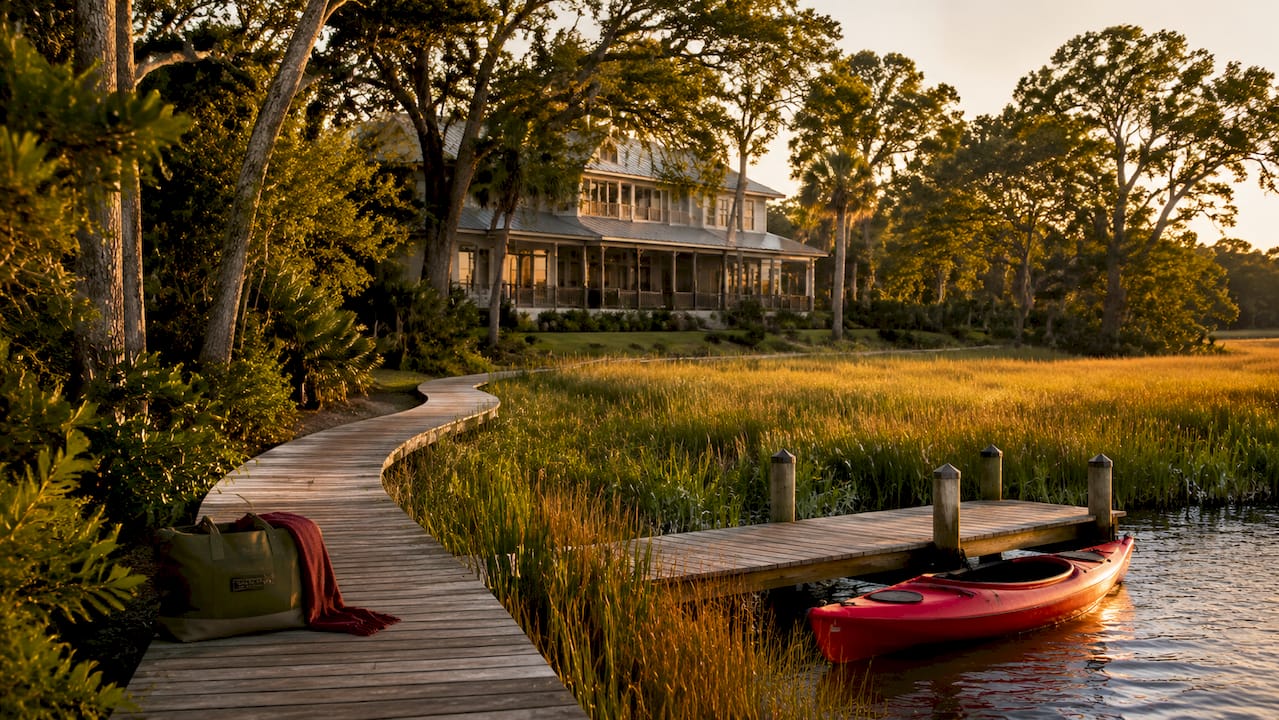
Smart-home technology and resort-style amenities are now standard expectations in coastal Northeast Florida luxury homes, including saunas, cold plunges, and open indoor-outdoor layouts. These features reflect a shift in what buyers define as luxury. The home is no longer just a status symbol. It is a sanctuary designed for daily wellbeing.
Access to the Intracoastal Waterway is another defining feature. Residents enjoy kayaking, paddleboarding, and boating from their own backyards, with the Atlantic Ocean accessible within minutes. This dual lifestyle of privacy with coastal proximity is what separates North Florida from inland luxury markets and from the congested shorelines further south.
How do community features shape the luxury coastal lifestyle?
The lifestyle quality of a luxury coastal community is measured by more than square footage and finishes. In North Florida, the most sought-after communities offer a layered experience that connects residents to both nature and culture.
Fernandina Beach stands apart as one of the few coastal towns in Florida where walkability and historic charm coexist with genuine luxury. The downtown district on Amelia Island features Victorian architecture, independent restaurants, art galleries, and a working waterfront. Residents can walk to dinner, attend a local arts festival, or spend a morning at the farmers market without touching a car. The Fernandina Beach lifestyle is particularly compelling for retirees and remote professionals who want cultural richness alongside natural beauty.
Beyond walkability, the amenities that define North Florida luxury communities in 2026 include:
- Resort-style pools with outdoor entertaining pavilions
- Private beach access or direct Intracoastal frontage
- Wellness-focused home features including air filtration systems and climate-controlled spaces
- Preserved green corridors and marshland buffers between homesites
- Golf communities with low-density membership structures
- Porch-centered design that creates natural gathering spaces between neighbors
Pro Tip: When evaluating a luxury coastal community, ask specifically about the homesite-to-preserved-land ratio. Communities that protect 50% or more of their acreage as natural preserve tend to hold value better over time and offer a measurably quieter living environment.
The balance between seclusion and accessibility is the real art of North Florida community design. Crane Island on Amelia Island exemplifies this balance. With only 14 homesites set against preserved marshlands and maritime forest, the community offers the kind of privacy that larger developments cannot replicate, while placing residents minutes from Fernandina Beach's cultural core.
Why does North Florida offer better financial sustainability than South Florida?
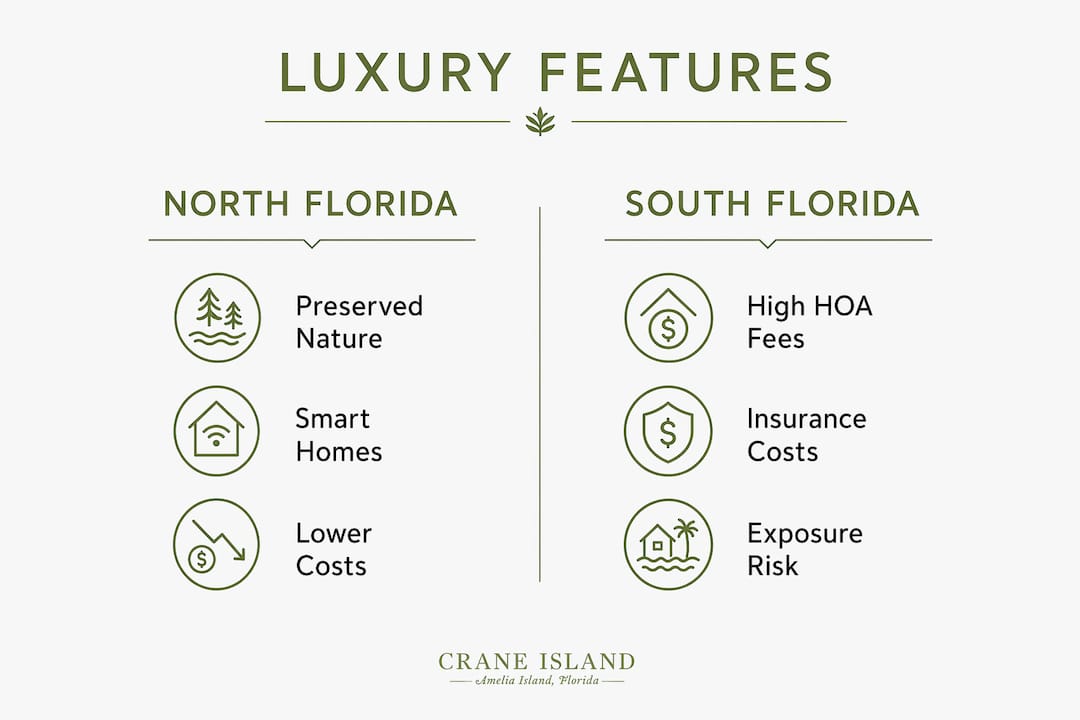
The financial case for North Florida luxury living is direct. Florida's median home price reached $436,600 in 2025, but the total cost of ownership in South Florida markets runs significantly higher once insurance premiums and HOA fees are factored in. That gap is driving migration northward.
South Florida's luxury market carries costs that compound over time. HOA fees in gated communities around Miami and Boca Raton have risen sharply, and property insurance in high-exposure coastal zones now represents a meaningful annual expense. North Florida buyers, by contrast, benefit from lower base insurance rates, more modest HOA structures, and reduced cumulative storm costs in areas like Northwest St. Johns County that sit inland from direct coastal exposure.
| Cost Factor | South Florida Luxury | North Florida Luxury |
|---|---|---|
| Property insurance | High, rising annually | Moderate, lower storm exposure |
| HOA fees | Often $1,000+ per month | Typically lower, community-dependent |
| Traffic and congestion | Significant daily friction | Minimal in most communities |
| Airport access | Congested major hubs | Uncongested regional airports |
| Long-term storm risk | Elevated, direct coastal exposure | Reduced in inland-adjacent communities |
High-net-worth buyers are prioritizing operational efficiency over brand cachet when choosing where to plant roots. That means quick access to airports, navigable waterways, and daily life without gridlock. North Florida delivers on all three.
Pro Tip: Before committing to a luxury coastal purchase anywhere in Florida, request a five-year insurance cost projection from a local independent broker. The difference between North and South Florida markets can exceed tens of thousands of dollars over a decade.
Hurricane anxiety is a decisive factor for affluent relocators, and North Florida's less-exposed coastal markets are gaining buyers as a direct result. Developers in this region have responded by building storm-resilient infrastructure into community design from the ground up.
How do top North Florida coastal communities compare?
North Florida's luxury coastal communities are not interchangeable. Each offers a distinct pace of life, level of coastal access, and community character. Understanding those differences is the foundation of a sound buying decision.
Amelia Island and Crane Island represent the gold standard for buyers who want preserved natural beauty paired with cultural access. Amelia Island sits at the northeastern tip of Florida, bordered by the Atlantic Ocean and the Intracoastal Waterway. Crane Island occupies a rare position within this landscape, offering custom homesites where Lowcountry architecture meets salt marsh and maritime forest. The Amelia Island and Crane Island experience is fundamentally different from the 30A corridor: quieter, more private, and rooted in genuine ecological stewardship.
Cape San Blas and the Outer Coastal Wilderness appeal to buyers seeking a more isolated, nature-centric lifestyle. These communities along Florida's Forgotten Coast offer undeveloped shorelines and a slower rhythm, but they trade cultural amenities and walkability for raw natural beauty. The Cape San Blas lifestyle suits buyers who prioritize solitude over community programming.
When comparing North Florida with coastal Georgia markets, the key differences come down to acreage and lifestyle tempo:
- North Florida communities like Amelia Island offer larger homesites with direct water access
- Coastal Georgia markets such as Sea Island and Cumberland Island emphasize equestrian traditions and historic plantation heritage
- North Florida's proximity to Jacksonville International Airport gives it a logistical edge for frequent travelers
- Georgia's coastal communities tend toward more established, mature market pricing with less upside potential
Mid-transition communities where the year-round resident base is growing and infrastructure is expanding offer better long-term investment potential than fully mature luxury markets. North Florida fits this profile precisely. The region's cultural institutions, retail offerings, and community services are expanding alongside a growing permanent population.
What role do technology and sustainability play in North Florida luxury homes?
The modern North Florida luxury home is designed to perform as well as it looks. Smart-home integration and sustainable construction are no longer optional upgrades. They are baseline expectations for buyers in this market.
The technology and sustainability features that define today's luxury coastal homes in Northeast Florida include:
- Whole-home automation systems controlling lighting, climate, security, and entertainment
- Advanced air filtration and humidity control systems suited to coastal environments
- Storm-resilient construction including impact-rated windows, reinforced rooflines, and elevated foundations
- Solar-ready electrical systems and energy-efficient building envelopes
- Integrated landscape design that works with native plant communities rather than against them
Sustainable building practices in North Florida serve a dual purpose. They reduce the environmental footprint of new construction, and they lower the long-term operational costs that compound over years of ownership. A home built with storm resilience and energy efficiency in mind costs less to insure, less to maintain, and less to operate.
Pro Tip: Ask builders about their use of native coastal plantings in landscape design. Native species require less irrigation, support local wildlife, and hold up far better in storm conditions than ornamental plantings imported from other climates.
Craneisland's approach to home design reflects these priorities directly. Custom homes on Crane Island are built to honor the island's natural character, with Lowcountry architectural traditions that maximize porch living, cross-ventilation, and visual connection to the surrounding marshlands. The porch is not an afterthought here. It is the true living room, framing views of tidal creeks and maritime forest in a way that no interior space can replicate.
Key Takeaways
North Florida luxury coastal living is defined by preserved natural environments, wellness-centered home design, and total ownership costs that outperform South Florida's luxury market over time.
| Point | Details |
|---|---|
| Defining lifestyle features | Large homesites, Lowcountry architecture, and Intracoastal access distinguish North Florida luxury living. |
| Financial advantage | Lower insurance, HOA fees, and storm costs make North Florida more sustainable than South Florida long-term. |
| Community comparison | Amelia Island offers cultural access and preservation; Cape San Blas suits buyers seeking greater isolation. |
| Technology and wellness | Smart-home systems, air filtration, and storm-resilient construction are standard in today's luxury builds. |
| Investment timing | Mid-transition communities in North Florida offer stronger long-term value than fully mature luxury markets. |
Why I believe North Florida is the most undervalued luxury coastal choice in America
I have watched buyers spend years chasing the South Florida dream, only to find themselves managing insurance renewals, sitting in traffic on I-95, and paying HOA fees that rival a second mortgage. The brand prestige of Miami or Naples is real. So is the friction.
What draws me to North Florida, and to communities like Crane Island specifically, is the absence of that friction. The North Florida coastal market is emerging precisely because buyers are making more considered decisions. They are asking what daily life actually feels like, not just what the address sounds like.
The psychological value of reduced hurricane anxiety is something most financial analyses undercount. Knowing your home sits in a community built for resilience, surrounded by marshland that absorbs storm surge rather than amplifying it, changes how you live in a place. You stop bracing and start belonging.
Mid-transition communities are where I would place my own investment today. The community maturity trajectory in North Florida directly correlates with rising property values as infrastructure, retail, and cultural institutions grow alongside a permanent resident base. Buying into that trajectory early is not speculation. It is pattern recognition.
Privacy and wellness are redefining what luxury means in this country. North Florida understood that before most markets did.
— John Hillman
Discover Craneisland: luxury intracoastal living on Amelia Island
Craneisland brings together everything this article describes in a single, rare offering on Amelia Island's western shore.
With only 14 custom homesites set against preserved marshlands and maritime forest, Craneisland offers the kind of privacy and natural connection that larger developments simply cannot provide. Each home is designed to honor the island's Lowcountry heritage, with porch-centered living that frames tidal creek views and draws neighbors into genuine community. Residents enjoy direct Intracoastal Waterway access and the cultural richness of historic Fernandina Beach, minutes away. If you are ready to build a home that reflects both your values and the land's beauty, explore available custom design and build options at Craneisland today.
FAQ
What makes North Florida luxury living different from South Florida?
North Florida luxury living prioritizes preserved natural landscapes, lower total ownership costs, and a quieter pace of life, while South Florida emphasizes urban intensity and brand prestige. Insurance, HOA fees, and storm exposure are all significantly lower in North Florida markets.
Which North Florida communities are best for luxury coastal living?
Amelia Island and Fernandina Beach offer the strongest combination of cultural access, natural preservation, and Intracoastal waterway connectivity for luxury buyers. Cape San Blas suits buyers who prefer more isolated, nature-centric environments.
How does North Florida compare to coastal Georgia for luxury buyers?
North Florida offers larger homesites with direct water access and stronger airport logistics, while coastal Georgia markets like Sea Island emphasize equestrian heritage and more established community pricing. North Florida's mid-transition status gives it greater long-term investment upside.
What technology features are standard in North Florida luxury homes?
Luxury coastal homes in Northeast Florida now routinely include whole-home automation, advanced air filtration, impact-rated storm construction, and solar-ready systems. These features reduce long-term operational costs while meeting buyer expectations for comfort and resilience.
Is Amelia Island a good investment for luxury homebuyers in 2026?
Amelia Island represents a mid-transition luxury market where growing year-round residency and expanding infrastructure are driving long-term property value appreciation. Buyers who enter now benefit from current pricing before the market reaches full maturity.
Recommended
- Why the North Florida Coastal Market Is Emerging
- Custom Intracoastal Homes on Amelia Island: A Guide to Gated Waterfront Living in Fernandina Beach — craneisland
- Beyond 30A: Why Amelia Island and Crane Island Offer the Coastal Life You Were Actually Looking For — craneisland
- How Fernandina Beach Compares to Other Coastal Towns