
The North Florida coastal real estate market is defined by a rare convergence of economic strength, demographic momentum, and structural supply limits that few other U.S. coastal regions can match. Understanding why the North Florida coastal market is emerging means looking past surface-level price trends and into the layered forces reshaping demand from Jacksonville to Amelia Island. Major employers like Mayo Clinic, Baptist Health, and Fidelity Investments anchor the regional economy with a stability that holds firm even when national interest rates shift. Add Florida's zero state income tax, a daily population influx, and a finite supply of buildable coastal land, and you have the conditions for a market that rewards patient, informed buyers.
Why is the north florida coastal market emerging in 2026?
The North Florida coastal real estate market is emerging because its economic foundation is genuinely diversified. Unlike markets built on a single industry, the Northeast Florida region draws from healthcare, finance, logistics, and defense. Mayo Clinic's Jacksonville campus alone employs thousands and draws medical professionals and retirees from across the country. Baptist Health and Fidelity Investments add further layers of employment stability that sustain housing demand regardless of broader economic cycles.

Local government incentives and infrastructure investment reinforce this foundation. Nassau County and Duval County have both prioritized commercial development corridors that attract businesses and, in turn, workers who need housing. This is not speculative growth. It is demand driven by payrolls.
Key economic drivers shaping the North Florida property market include:
- Diversified employer base anchored by Mayo Clinic, Baptist Health, Fidelity Investments, and a growing logistics sector near Jacksonville's port
- Business-friendly tax climate with no corporate income tax on certain business structures and low regulatory friction for development
- Infrastructure investment in road, transit, and utility corridors connecting coastal communities to metro employment centers
- Military presence at Naval Station Mayport and NAS Jacksonville, providing a steady base of housing demand that does not fluctuate with private-sector cycles
Pro Tip: When evaluating a coastal investment in North Florida, map the property's commute distance to the nearest major employer anchor. Properties within 45 minutes of Mayo Clinic or the Jacksonville urban core consistently hold value better during market corrections.
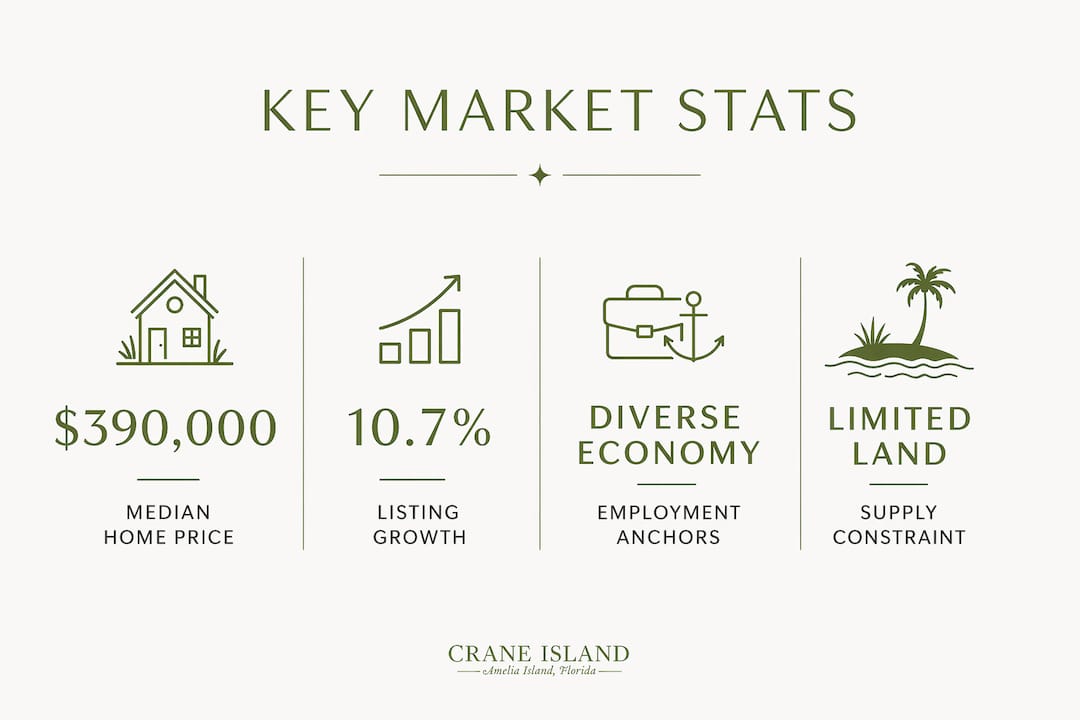
The Northeast Florida housing market recorded a median single-family home price of $390,000 as of April 2026, with a median 35 days on market. That combination signals a balanced market, not a frothy one, which is exactly the environment where long-term investors find the best entry points.
How do demographics and migration shape coastal demand?
Population growth is the engine behind rising coastal property values in North Florida. Florida adds 838 residents daily, and Northeast Florida captures a meaningful share of that inflow. The buyers arriving are not random. They follow a clear pattern shaped by origin, life stage, and financial motivation.
Here is how the migration story breaks down for the North Florida coastal market:
- High-tax state departures. The largest share of in-migrants comes from New York, New Jersey, Connecticut, and Massachusetts. These buyers are trading high property tax bills and state income taxes for Florida's financial structure.
- Remote worker relocation. Technology and finance professionals who no longer need to commute daily are choosing coastal communities over urban centers. Amelia Island and Fernandina Beach offer the quality of life that remote work makes possible.
- Retiree concentration. St. Johns County, which borders Nassau County to the south, has become one of the fastest-growing counties in the nation, driven largely by retirees seeking top-rated schools for grandchildren and access to world-class healthcare.
- Submarket variation. Not every zip code benefits equally. St. Johns County commands premium prices because of its school district rankings. Nassau County, home to Amelia Island, attracts buyers who prioritize natural beauty, privacy, and direct water access over suburban amenities.
Submarket-level data on school districts, proximity to employment anchors, and infrastructure connectivity is the single most important variable for investors trying to predict which neighborhoods appreciate fastest. Generic county-level data misses these distinctions entirely.
What tax advantages draw buyers to north florida's coast?
Florida's tax structure is a direct financial incentive, not just a lifestyle perk. The absence of state income tax and relatively lower property taxes compared to Northeastern states represent real, calculable savings for retirees and remote workers. A household earning $250,000 annually moving from New York to Florida saves tens of thousands of dollars per year in state income tax alone.
The tax advantages that shape buyer decisions in the North Florida coastal market include:
- No state income tax, which benefits retirees drawing from retirement accounts and remote workers with high W-2 incomes equally
- Homestead exemption, which reduces assessed value on a primary residence and caps annual assessment increases at 3% under Florida's Save Our Homes provision
- Lower effective property tax rates than comparable coastal markets in California, Massachusetts, or New York
- No estate tax at the state level, which matters significantly to buyers transferring generational wealth through real estate
Pro Tip: If you are relocating from a high-tax state, work with a CPA who specializes in interstate moves before closing. Establishing Florida domicile correctly from day one protects your tax savings and avoids disputes with your former state's revenue department.
These advantages compound over time. A buyer who purchases a coastal home on Amelia Island today and holds it as a primary residence benefits from both the homestead cap on assessments and the ongoing income tax savings, creating a financial return that sits alongside any appreciation in property value.
How does coastal land scarcity drive long-term value?
Buildable coastal land is finite by definition, and North Florida's regulatory environment makes it even more so. Coastal land is restricted by setback requirements, conservation designations, and wetland protections that limit where new homes can legally be built. This is not a temporary condition. It is a structural feature of the market that reinforces premium pricing over time.
The table below shows how regulated coastal land compares to unregulated inland parcels in terms of key value drivers:
| Factor | Regulated Coastal Land | Unregulated Inland Parcels |
|---|---|---|
| Supply constraint | High, fixed by law and geography | Low, expandable through development |
| Long-term value trajectory | Appreciates steadily due to scarcity | Subject to oversupply risk |
| Flood resilience | Elevated parcels command premium | Elevation less critical |
| Regulatory compliance cost | Higher upfront, protects value long-term | Lower upfront, less protection |
| Buyer demand profile | Lifestyle and legacy buyers | Broader, more price-sensitive pool |
Site elevation and flood zone compliance now govern coastal property valuation more than any aesthetic consideration. Buyers and lenders both scrutinize FEMA flood zone designations before committing. Elevated parcels that meet or exceed current FEMA standards carry a measurable price premium and face lower insurance costs, which directly affects total cost of ownership.
The Amelia Island real estate market illustrates this principle clearly. The island's combination of conservation land, marshland buffers, and coastal setback rules means new inventory is genuinely scarce. That scarcity is a feature, not a limitation, for buyers thinking in decades rather than quarters.
How are buyer preferences shifting toward year-round coastal living?
The coastal real estate market in North Florida has moved well past its seasonal vacation home identity. Coastal micro-markets are evolving from seasonal vacation zones into integrated residential ecosystems, driven by remote workers and lifestyle buyers who want full-time access to the water, the community, and the culture.
This shift has concrete implications for investment strategy:
- Year-round rental demand replaces the feast-or-famine seasonal rental cycle, producing more predictable income for investors
- Wellness and connectivity amenities including broadband infrastructure, fitness facilities, and walkable town centers have become baseline expectations, not luxury add-ons
- Community design matters more than it did a decade ago. Buyers are choosing neighborhoods with intentional gathering spaces, preserved natural surroundings, and a sense of place that a generic subdivision cannot replicate
- Luxury segment resilience holds firm even when the broader market softens. Northeast Florida's luxury market is transitioning from rapid appreciation to stable, lifestyle-driven demand, with luxury buyers less sensitive to cyclical economic pressures
The shift from seasonal to year-round residency in communities like Fernandina Beach reflects a broader cultural change. Buyers are not purchasing a vacation escape. They are choosing a permanent home that happens to sit beside the water, the marsh, and the history of one of Florida's oldest towns.
Key takeaways
The North Florida coastal market is emerging because diversified economic anchors, daily population growth, structural land scarcity, and favorable tax policy create compounding demand that outpaces available supply.
| Point | Details |
|---|---|
| Economic diversification | Employers like Mayo Clinic and Fidelity Investments sustain demand independent of interest rate cycles. |
| Daily population growth | Florida adds 838 residents daily, with Northeast Florida capturing a significant share of high-income in-migrants. |
| Tax advantage compounds | Zero state income tax combined with the homestead exemption creates measurable annual savings for buyers relocating from the Northeast. |
| Supply is structurally constrained | Setback rules, conservation zones, and finite coastal land keep inventory tight and support long-term price stability. |
| Buyer profile has shifted | Year-round lifestyle buyers and remote workers now drive demand, replacing seasonal vacation buyers and producing more stable market fundamentals. |
What i've learned watching this market evolve
I have watched investors make the same mistake repeatedly in emerging coastal markets. They focus on the headline number, the county-level median price, and miss the story happening two zip codes away. In Northeast Florida, St. Johns County and Nassau County sit side by side, but they serve different buyers entirely. St. Johns draws families chasing school district rankings. Nassau County, and Amelia Island specifically, draws buyers who want preserved land, water access, and a community that feels rooted in something older than the last development cycle.
The inventory data tells a nuanced story too. Listings rose 10.7% in April 2026, which sounds like a softening market. But months of supply sits at 3.8 months, which still favors sellers. That gap between perception and reality is where informed buyers find their advantage.
My honest advice: do not skip the elevation research. Flood zone designation affects your insurance cost, your resale pool, and your long-term value more than almost any other single variable. Buyers who prioritize elevated, conservation-adjacent parcels are not just protecting against risk. They are positioning themselves in the segment of the market that holds value when everything else normalizes.
The North Florida coastal market rewards patience and specificity. Broad bets on the region work. Precise bets on the right submarket, the right elevation, and the right community design work better.
— John Hillman
Discover coastal living at Craneisland on amelia island
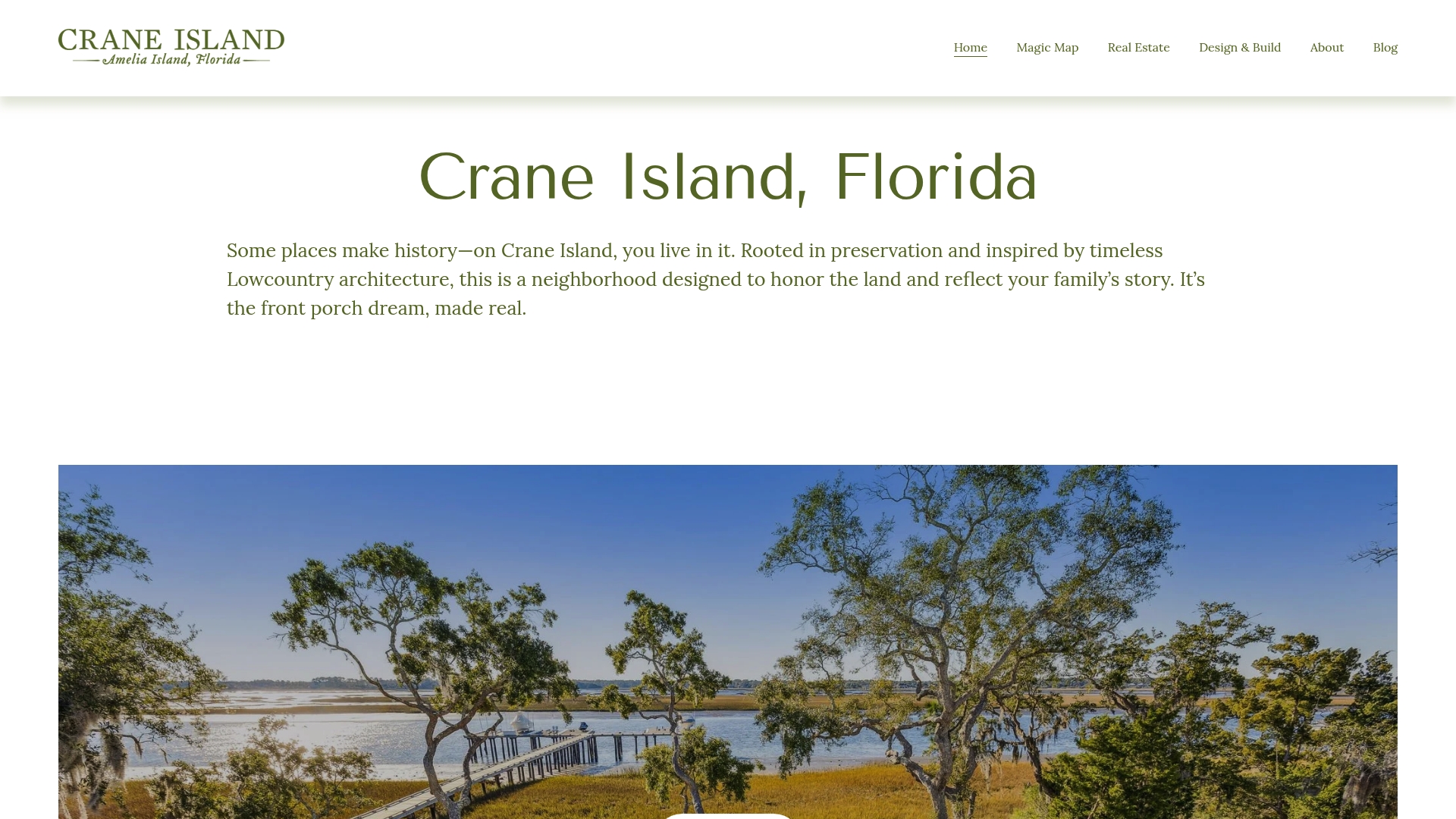
Craneisland sits at the intersection of everything that makes the North Florida coastal market worth your attention. With only 14 homesites available on Amelia Island, each woven into preserved marshlands and forest along the Intracoastal Waterway, this is the kind of place that does not come around twice. Lowcountry architecture, porch-centered community life, and direct access to historic Fernandina Beach create a living environment that honors both the land and the people who call it home.
If you are ready to explore what luxury intracoastal homes on Amelia Island look like in practice, or if you want to talk through the custom design and build process for your own homesite, Craneisland's team is here to walk you through every detail. This is not a transaction. It is a legacy decision, and we take that seriously.
FAQ
What defines the north florida coastal real estate market?
The North Florida coastal market covers communities along the Atlantic coast from Jacksonville north through Nassau County, including Amelia Island and Fernandina Beach. It is defined by proximity to the Intracoastal Waterway, conservation land, and major employment anchors in the Jacksonville metro area.
Why are property values rising in north florida's coastal areas?
Rising coastal property values in North Florida reflect a combination of daily population growth, limited buildable land under conservation and setback regulations, and strong employer anchors like Mayo Clinic and Baptist Health that sustain buyer demand independent of interest rate cycles.
Is north florida more affordable than other florida coastal markets?
Northeast Florida's median home price of $390,000 as of April 2026 compares favorably to South Florida coastal markets, where comparable properties often trade at significantly higher price points. The tax advantages amplify that affordability gap for buyers relocating from high-tax states.
What should investors prioritize when buying coastal property in north florida?
Investors should prioritize site elevation, FEMA flood zone designation, and proximity to employment anchors. Submarket specifics like school district quality and infrastructure connectivity determine which neighborhoods appreciate fastest and hold value longest.
How does fernandina beach compare to other north florida coastal towns?
Fernandina Beach offers a combination of historic character, direct water access, and proximity to Jacksonville that most North Florida coastal towns cannot match. You can read a detailed comparison of Fernandina Beach to other coastal communities to understand what sets it apart for both lifestyle buyers and long-term investors.