
Conservation communities in Florida are planned residential areas that prioritize environmental preservation, sustainable design, and resilience against climate impacts. The industry term for these places is "conservation-oriented development," though eco-conscious families searching for a better way to live in Florida know them simply as places where nature and neighborhood coexist. From Babcock Ranch's 150-megawatt solar infrastructure to coastal enclaves woven into preserved marshlands, Florida offers a rare range of sustainable communities that protect the land while building genuine community. This guide explains what makes these places work, where to find them, and how to choose one that fits your values.
What defines conservation communities in Florida?
Conservation communities in Florida integrate ecological preservation directly into their master plans. They are not simply developments with a few trees left standing. They are designed from the ground up so that natural systems, including wetlands, forests, and wildlife corridors, remain functional parts of the community's infrastructure.
The industry term "conservation-oriented development" captures this distinction well. Standard residential developments treat nature as an amenity. Conservation-oriented developments treat nature as a partner. The difference shows up in stormwater management, energy systems, building codes, and the way streets and homes relate to the land around them.
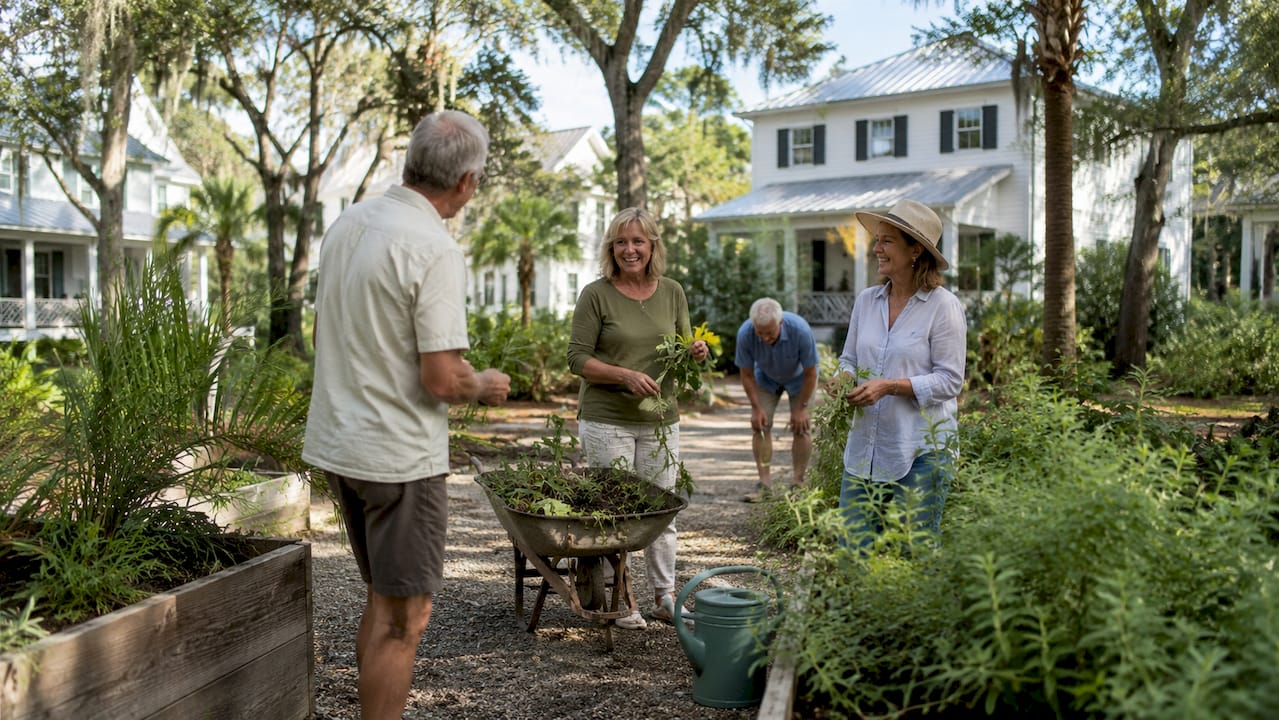
Florida is uniquely suited to this model. The state holds one of the most biodiverse ecosystems in North America, and its vulnerability to hurricanes, flooding, and sea-level rise makes resilient design not just an ethical choice but a practical one. Families relocating here find that the best sustainable communities offer both a lighter ecological footprint and a stronger, safer place to call home.
What are the key design and infrastructure features of these communities?
The physical design of Florida's conservation communities sets them apart from conventional neighborhoods. Several features appear consistently across the best examples.
- Solar energy infrastructure: Babcock Ranch operates on a utility-scale solar farm capable of powering the entire community, with capacity planned for 60,000 residents across 17,000 acres. That scale of renewable energy integration is rare in American residential development.
- Flood and stormwater management: Babcock Ranch's stormwater system connects ponds with real-time sensors, gauges, and pumps, while preserved wetlands act as natural overflow filters. This system works with the land rather than against it.
- Wind-resistant construction: Homes at Babcock Ranch are designed for 160 mph winds, exceeding Florida's standard building codes. Homes also sit elevated 18 inches above road level, reducing flood exposure significantly.
- Community resilience shelters: A 40,000-square-foot hurricane shelter built to ICC 500 standards and rated for winds up to 180 mph gives residents a safe refuge during extreme weather.
- Underground utilities: Burying power and utility lines removes one of the most common causes of storm-related outages, keeping the community functional when surrounding areas lose power.
- Walkable street networks: New Urbanism principles call for daily amenities within a 5–10 minute walk, reducing car dependency and strengthening the social fabric of the neighborhood.
Pro Tip: When evaluating a community, look past the solar panels. The passive infrastructure, including elevated building pads, underground utilities, and sensor-based stormwater networks, determines how well a community performs during a real storm.
How do these communities support Florida's broader conservation goals?
Florida's conservation communities do not exist in isolation. They connect to a statewide network of land protection efforts that give individual neighborhoods a much larger ecological purpose.
The Florida Wildlife Corridor protects 18 million acres of habitat, and Corridor Compatible design guidelines help residential developments align with those statewide goals. When a community follows these guidelines, its preserved open spaces become functional extensions of the broader corridor rather than decorative buffers.
The economic case for this approach is compelling. More than half of Florida's waterways flow through the Wildlife Corridor, which generates $30 billion annually through jobs, clean water, and tourism. Protecting that corridor protects Florida's economy as much as its ecology.
Funding for conservation has grown substantially. Public investment, nonprofits, and private developers have channeled over $2 billion since 2021 into conservation lands through the Florida Wildlife Corridor Act. That bipartisan commitment signals long-term stability for communities built around land preservation.
Local governments reinforce this work through voter-approved programs. As of mid-2026, 25 Florida counties have active land conservation programs that direct local funds into protecting natural and agricultural lands. That means the community you choose may sit within a county actively investing in the land around it.
| Conservation layer | What it protects | How it benefits residents |
|---|---|---|
| Florida Wildlife Corridor | 18 million acres of connected habitat | Preserved views, wildlife access, water quality |
| County conservation programs | Local natural and agricultural lands | Stable open space, reduced development pressure |
| Florida Wildlife Corridor Act funding | Critical conservation parcels statewide | Long-term ecological integrity near communities |
| Wetland preservation within communities | Stormwater filtration, flood buffering | Lower flood risk, cleaner local waterways |
Where are Florida's most notable conservation communities?
Florida's best conservation-oriented communities each take a distinct approach to sustainable living. Understanding their differences helps you find the right fit.
Babcock Ranch stands as the most documented example. It is America's first solar-powered town, planned for 60,000 residents on 17,000 acres in Charlotte County. Its resilience infrastructure kept the lights on during Hurricane Ian while surrounding communities lost power for weeks. The adjacent Babcock Ranch Preserve, sold to the state in 2006, protects over 73,000 acres as a publicly managed nature reserve. That land deal remains one of the largest preservation transactions in Florida history.
Alys Beach takes a different path. This New Urbanist coastal community on the Florida Panhandle emphasizes walkability, architectural coherence, and Florida Green Building Coalition (FGBC) certification standards. Residents park their cars on arrival and walk to most daily needs. Architects specializing in New Urbanism note that walkability is the most overlooked feature in sustainable community design, yet it shapes daily life more than almost any other factor.
Craneisland on Amelia Island represents a third model: intimate, ecologically sensitive, and deeply rooted in Lowcountry heritage. With only 14 homesites, the community preserves surrounding marshlands and forests as living neighbors rather than managed amenities. Homes are woven into the land, and the porch becomes a true living room framing views of tidal creeks and ancient oaks. Residents have direct access to the Intracoastal Waterway and the historic culture of Fernandina Beach. You can explore the New Urbanism principles that inform this kind of community design in more depth.
What should you look for when choosing a Florida conservation community?
Choosing the right conservation community requires looking beyond marketing language. The following criteria give you a concrete framework.
- Walkability and local amenities: Confirm that groceries, parks, and daily services sit within a 5–10 minute walk. This single feature reduces car dependency and shapes how much you actually engage with your neighbors and the land.
- Corridor Compatible design compliance: Ask whether the community follows Florida Wildlife Corridor design guidelines. Compliance means preserved open spaces connect to the broader habitat network rather than functioning as isolated green patches.
- Resilience infrastructure: Look for elevated building pads, underground utilities, and stormwater sensor networks. These passive systems protect your home and your investment when storms arrive.
- County conservation program status: Check whether the county has a voter-approved land conservation program. Counties with active programs actively protect the land surrounding your community from future development.
- Community scale and cohesion: Smaller communities often deliver stronger social bonds and more careful stewardship of shared natural spaces. A community of 14 homesites operates very differently from one planned for 60,000 residents. Both models have merit, but your lifestyle priorities should guide the choice.
Pro Tip: Request the community's stormwater management plan before you buy. A well-designed system will reference real-time monitoring, wetland integration, and specific elevation data. Vague answers about "green spaces" are a warning sign.
For a broader view of how Florida communities rank on resilience and lifestyle factors, the 2026 community lifestyle guide from Craneisland offers useful context.
Key Takeaways
Florida's conservation communities deliver lasting value by integrating passive resilience infrastructure, land preservation partnerships, and walkable design into a single coherent living environment.
| Point | Details |
|---|---|
| Passive design matters most | Elevated homes, underground utilities, and stormwater sensors protect residents more than visible green features alone. |
| Corridor compatibility adds value | Communities aligned with Florida Wildlife Corridor guidelines preserve ecological function and long-term open space. |
| County programs protect your surroundings | Living in one of 25 counties with active conservation programs means the land around you has legal protection. |
| Walkability defines daily life | Amenities within a 5–10 minute walk reduce car use and build the social connections that make a community feel like home. |
| Scale shapes the experience | Intimate communities like Craneisland and large-scale towns like Babcock Ranch both work, but they offer very different ways of living close to nature. |
Why I believe Florida's conservation communities are just getting started
I have spent years watching Florida's real estate market respond to climate pressure, and the pattern is clear. Communities that invested in ecological integrity before it was fashionable are now the ones with the strongest demand and the most stable values.
What surprises most people is how much of that resilience is invisible. The homes at Babcock Ranch that stayed lit during Hurricane Ian did not survive because of solar panels on the roof. They survived because of elevated pads, buried power lines, and a stormwater system that had been quietly doing its job for years. The visible sustainability features attract buyers. The passive infrastructure keeps them safe.
I also think the scale conversation is underrated. Families often assume bigger means better when it comes to conservation communities. A 60,000-resident solar town is impressive. But a 14-homesite community on a tidal island, where every resident knows the marsh by name and the porch is the center of social life, offers something that no master-planned megadevelopment can replicate. Both are legitimate expressions of conservation-oriented living. The question is which one fits the life you actually want to build.
The Florida Wildlife Corridor Act and the growth of county conservation programs tell me that the legal and financial infrastructure for this kind of development is only getting stronger. Families who relocate to these communities now are not just buying a home. They are buying into a model of living that Florida is actively choosing to protect.
— John Hillman
Craneisland and the art of conservation living on Amelia Island
Craneisland sits at the intersection of everything this article has described: preserved natural land, thoughtful architecture, and a community small enough to feel like family.
The community's 14 homesites on Amelia Island give residents direct access to the Intracoastal Waterway, surrounding marshlands, and the living culture of historic Fernandina Beach. Every home is designed to honor the land it stands on, with Lowcountry architecture that frames the natural world rather than blocking it out. If you are ready to see what conservation-oriented coastal living looks like in practice, 101 Broadbent Way in Fernandina Beach is a compelling place to start. You can also learn more about Florida's boating communities and the lifestyle that comes with waterfront living on the island.
FAQ
What are conservation communities in Florida?
Conservation communities in Florida are residential developments designed to integrate environmental preservation, resilient infrastructure, and sustainable living into a single master plan. They differ from standard neighborhoods by treating natural systems like wetlands and wildlife corridors as functional parts of the community rather than decorative features.
How does Babcock Ranch compare to other Florida conservation communities?
Babcock Ranch is America's first solar-powered town, planned for 60,000 residents with a 150-megawatt solar farm, wind-resistant construction rated for 160 mph, and a sensor-based stormwater system. Smaller communities like Craneisland on Amelia Island offer a more intimate model, with preserved marshlands and only 14 homesites woven into a Lowcountry coastal setting.
How do I join a conservation community in Florida?
Research communities that follow Florida Wildlife Corridor design guidelines, verify county-level land conservation program status, and evaluate passive resilience features like elevated building pads and underground utilities. Contacting the community directly or working with a real estate professional familiar with conservation-oriented developments is the most direct path.
What role do Florida counties play in land conservation?
As of mid-2026, 25 Florida counties have voter-approved land conservation programs that direct local funding into protecting natural and agricultural lands. Living within one of these counties means the open space surrounding your community has active legal and financial protection against future development.
Is Florida green living more expensive than conventional housing?
Conservation-oriented communities often carry a premium on the purchase price, but the long-term costs can be lower. Resilient infrastructure reduces storm repair expenses, solar energy lowers utility bills, and preserved land values tend to hold more stable over time than conventional suburban developments.