
New Urbanism is defined as an urban design movement that builds walkable, mixed-use neighborhoods where daily life unfolds on foot rather than behind a steering wheel. Florida is not just a follower of this movement. It is the birthplace. Seaside, built in the Florida Panhandle in the 1980s, gave the Congress for the New Urbanism (CNU) its most cited real-world proof of concept. Today, communities from Amelia Park to Babcock Ranch show that new urbanist communities in Florida deliver measurable gains in health, social connection, and long-term property value. For families and individuals weighing where to put down roots, understanding these principles is the clearest path to choosing a place that will serve them well for decades.
What are the key design principles of New Urbanism in Florida?
New Urbanism rests on a set of design rules that work together as a system, not a checklist. Remove one element and the others lose their power.
The core principles include:
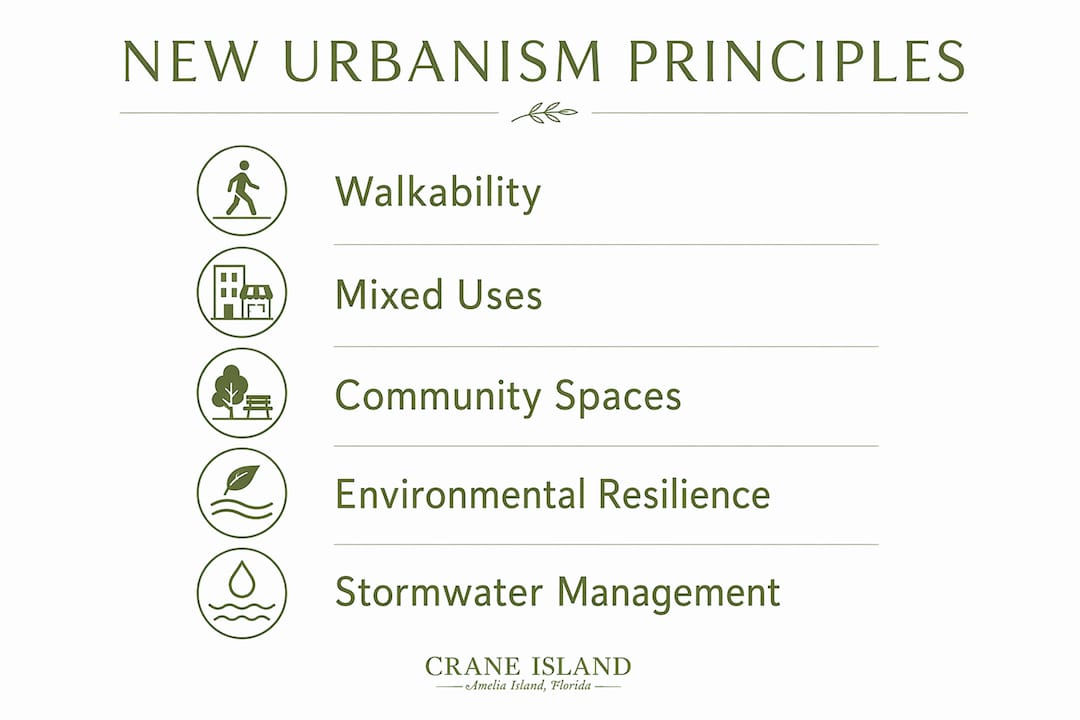
- Human-scale street grids. Streets are narrow enough to slow traffic and wide enough for comfortable sidewalks. Intersections are frequent, giving pedestrians multiple routes.
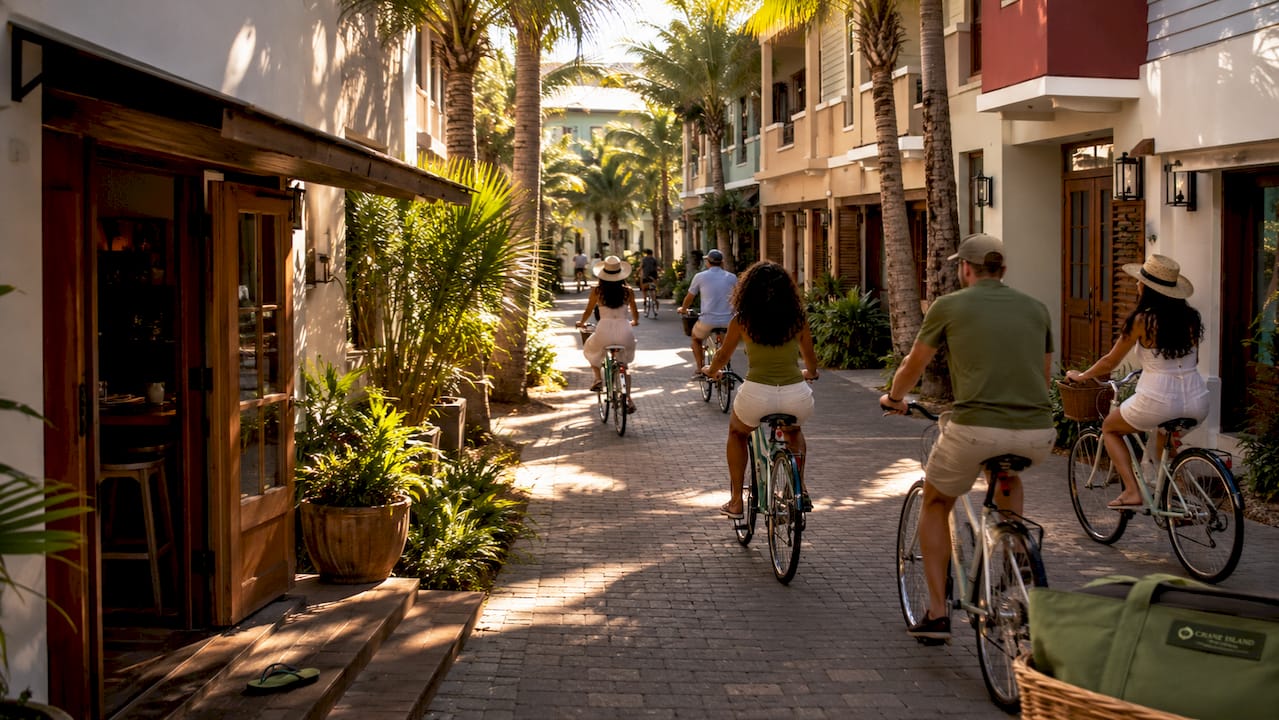
- Mixed-use zoning. Homes, shops, workplaces, and parks share the same blocks. You can walk to a coffee shop, a doctor's office, and a playground without getting in a car.
- "Missing middle" housing. Duplexes, triplexes, and courtyard apartments sit alongside single-family homes. This variety keeps neighborhoods economically diverse and avoids the monotony of pure suburban tracts.
- Environmental integration. Green spaces, stormwater management systems, and conservation land are woven into the neighborhood plan from the start, not added as an afterthought.
- Alley-loaded garages. Functional pedestrian streets depend on keeping garage doors off the main facade. Alleys push cars to the back, leaving front porches and landscaping to define the streetscape.
Pro Tip: When touring any community marketed as "New Urbanist," walk the alleys. If garages face the main street, the pedestrian experience breaks down regardless of how charming the architecture looks.
Florida's climate adds a layer of complexity. Stormwater management is not optional here. Effective New Urbanist neighborhoods in Florida incorporate biological swales, rain gardens, and interconnected water features that handle heavy rainfall while supporting native ecosystems.
Which Florida communities exemplify New Urbanist principles?
Three communities stand out as the clearest examples of what this design philosophy produces at scale.
Seaside is where the modern New Urbanism movement began. Developed in the Florida Panhandle starting in the 1980s, Seaside proved that a town built around walking, front porches, and mixed uses could attract sustained demand. Its street grid, pastel cottages, and central market square became the template that the CNU codified into formal principles.
Babcock Ranch, near Fort Myers, takes the model further by layering environmental resilience on top of walkability. The community runs on a 150-megawatt solar facility and builds homes elevated to withstand winds of 160–180 mph. Its stormwater system uses biological swales and rain gardens to manage flooding while enriching native plant communities. Sustainability and resilience have moved from luxury to essential in Florida, and Babcock Ranch reflects that shift in every infrastructure decision.
Amelia Park, in Fernandina Beach, offers a smaller-scale example with documented social outcomes. Residents report higher life satisfaction and better health compared to people living in conventional suburban neighborhoods nearby. The community's walkable layout and shared green spaces create the daily encounters that build genuine neighborly bonds.
Pro Tip: Use a tool like the ARV Calculator Florida to assess the long-term value of properties in New Urbanist neighborhoods before you commit. Walkable communities tend to hold value well, but local market conditions still matter.
New Urbanist neighborhoods like Baldwin Park in Orlando retain property values better than comparable suburban developments. That pattern holds because walkability and mixed uses create genuine urban benefits that cannot be replicated by adding a sidewalk to a cul-de-sac.
How does New Urbanism in Florida affect residents' health and well-being?
The health case for walkable neighborhoods is not theoretical. Research from Amelia Park and CNU-affiliated studies shows concrete outcomes.
"New Urbanism boosts happiness through social and environmental pathways, supporting healthy daily routines compared to car-centric alternatives. Residents of well-designed New Urbanist communities report higher social engagement, better mental well-being, and reduced obesity risk due to pedestrian-friendly streets and access to green spaces." — Congress for the New Urbanism
The mechanism is straightforward. When your grocery store, park, and neighbor's porch are all within a five-minute walk, you move more without thinking about exercise. Pedestrian-friendly green environments reduce obesity risk and support better mental health outcomes compared to car-dependent layouts.
Social infrastructure matters just as much as physical activity. Parks, plazas, and libraries give residents reasons to be outside and in proximity to each other. That daily proximity builds the kind of low-stakes social connection that research consistently links to longer, happier lives. Amelia Park residents rated their memory and overall health higher than nonresidents in the same area. That gap is not accidental. It reflects what happens when design makes healthy choices the easy choices.
For families with children, the benefits compound. Kids in walkable neighborhoods walk or bike to school, play in shared green spaces, and develop independence earlier. For older adults, the same design reduces isolation, which is one of the strongest predictors of cognitive decline.
What state policies support New Urbanist development in Florida?
Florida has moved from passive acceptance of New Urbanism to active encouragement through legislation. The policy framework now gives large-scale New Urbanist projects a real competitive advantage over conventional suburban sprawl.
The key elements of Florida's current incentive structure are:
- "Blue ribbon" certification. Qualifying developments receive a streamlined 45-day review at the state level, bypassing slower local approval processes.
- Conservation land requirement. At least 60% of the project's total acreage must be dedicated to conservation and green space.
- Affordable housing requirement. At least 20% of housing units must qualify as affordable or "missing middle" housing types.
- Scale threshold. Projects must cover more than 10,000 acres to qualify for the expedited process.
- Senate Bill 354. S.B. 354 allows developers to bypass local zoning entirely for qualifying planned communities, a significant shift in Florida's regulatory approach.
This framework signals a meaningful change in how Florida views growth. The state is betting that large, conservation-focused, mixed-use communities will absorb population growth more sustainably than conventional sprawl. For families evaluating where to buy, these policies mean that the next generation of Florida's master-planned communities will be built to a higher environmental and social standard than what came before.
What should families consider before choosing a New Urbanist community in Florida?
New Urbanist living delivers real benefits, but it also comes with trade-offs that prospective residents should understand before signing a contract.
- Smaller private yards. The design prioritizes shared green space over large private lots. If a big backyard is a non-negotiable for your family, a traditional suburban neighborhood may serve you better.
- HOA design guidelines. Strict design regulations govern exterior colors, landscaping, and modifications. These rules protect the neighborhood's character, but they limit individual expression.
- Insurance complexity. Coastal Florida communities face elevated insurance costs and coverage challenges. New Urbanist neighborhoods near the water are not exempt from this reality. Research your specific community's flood zone and wind exposure before you buy.
- Garage placement. Verify that garages are alley-loaded, not front-facing. This single design detail determines whether the street actually feels walkable or just looks like it should.
- Long-term resilience. Communities built with elevated foundations, native vegetation, and integrated stormwater systems hold up better after hurricanes. Babcock Ranch's performance through recent storm seasons is the clearest proof of that principle.
Pro Tip: Ask your real estate agent for the community's HOA documents and insurance history before making an offer. Understanding both will save you from surprises after closing.
The coastal living buyer's guide for Florida covers many of these considerations in depth, particularly for families weighing the insurance and resilience factors specific to waterfront and near-water properties.
Key Takeaways
New Urbanism in Florida delivers the strongest results when walkable design, environmental integration, and supportive state policy work together in the same community.
| Point | Details |
|---|---|
| Design principles matter together | Walkability, mixed uses, and alley garages must all be present for the pedestrian experience to work. |
| Health benefits are documented | Amelia Park residents report higher life satisfaction and better health than those in conventional suburbs nearby. |
| Florida policy now accelerates growth | Senate Bill 354 and blue ribbon certification give large New Urbanist projects a 45-day state review path. |
| Resilience is a real differentiator | Babcock Ranch's solar power and stormwater systems show that sustainability protects property through Florida's storm seasons. |
| Trade-offs require honest evaluation | Smaller yards, HOA rules, and insurance complexity are real considerations that vary by community and location. |
Why Florida's New Urbanism moment is bigger than most people realize
I've watched Florida's urban planning conversation shift dramatically over the past several years, and the pace of that shift surprises even people who follow it closely. The passage of Senate Bill 354 was not a minor regulatory tweak. It was a signal that Florida's state government has decided conventional suburban sprawl is no longer the default answer to population growth.
What strikes me most is that the communities getting this right are not sacrificing livability for ideology. Babcock Ranch did not become a solar-powered, storm-resilient community because its developers were environmentalists making a statement. They built it that way because buyers wanted it and the market rewarded it. That alignment between design values and market demand is what makes Florida's New Urbanism moment durable rather than a passing trend.
The families I see drawn to these communities are not looking for a utopia. They want a neighborhood where their kids can walk to a park, where they know their neighbors by name, and where the house they buy will still be standing and worth owning after the next major hurricane. Those are practical goals, and New Urbanism is the design framework most consistently delivering on them in Florida right now.
My honest advice: do not evaluate these communities on aesthetics alone. Walk the streets at different times of day. Talk to residents. Check the HOA documents. The communities that get the functional details right, including the alley garages, the stormwater systems, and the genuine mix of uses, are the ones that will hold their value and their character for the long term.
— John Hillman
Craneisland and the spirit of community-centered coastal living
Craneisland on Amelia Island reflects the values at the heart of New Urbanism: community, environmental stewardship, and a deep respect for place. With only 14 custom homesites set among preserved marshlands and maritime forest, Craneisland offers something rare in Florida's real estate market. Every home is designed to honor the land it sits on, with Lowcountry architecture and porch-centered living that turns neighbors into a genuine community.
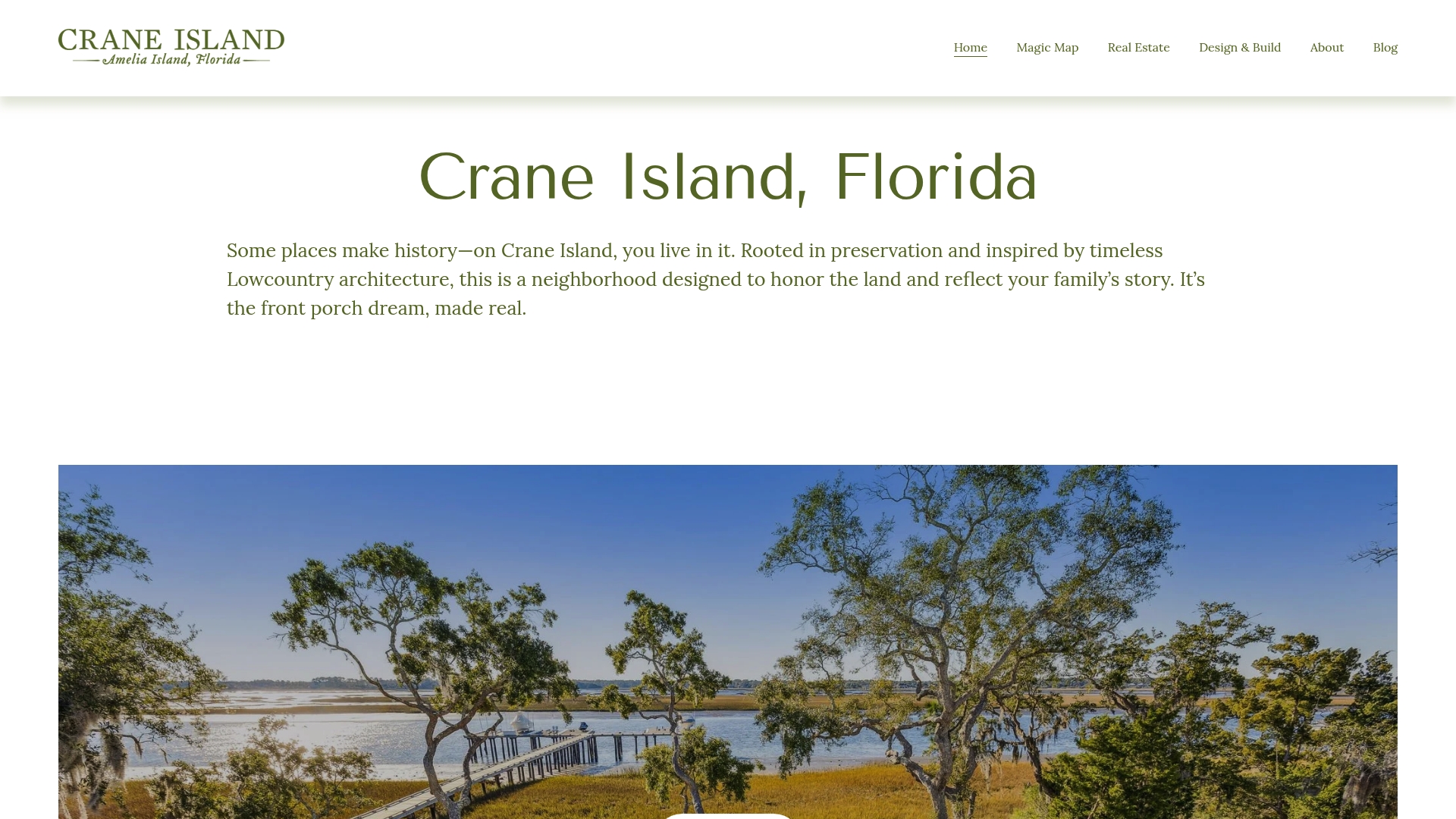
Residents enjoy direct access to the Intracoastal Waterway and the walkable culture of historic Fernandina Beach, combining natural beauty with the social richness that defines the best New Urbanist communities. If you are ready to experience what thoughtful, conservation-minded coastal living looks like in practice, explore the available Amelia Island homesites and see how Craneisland brings these principles to life.
FAQ
What is New Urbanism in Florida?
New Urbanism is an urban design movement that builds walkable, mixed-use neighborhoods with strong community connections and environmental integration. Florida is the movement's birthplace, home to Seaside, the community that first demonstrated these principles at scale.
Which Florida communities are the best examples of New Urbanism?
Seaside, Babcock Ranch, and Amelia Park are the most cited examples. Each demonstrates different aspects of the model, from Seaside's walkable street grid to Babcock Ranch's solar power and hurricane resilience.
Does living in a New Urbanist community improve health?
Research from Amelia Park shows that residents report higher life satisfaction, better health, and stronger social engagement than people living in conventional suburban neighborhoods nearby.
What does Florida's Senate Bill 354 do for New Urbanist development?
Senate Bill 354 allows large planned communities over 10,000 acres to bypass local zoning if they dedicate 60% of land to conservation and include 20% affordable or missing middle housing, with a streamlined 45-day state review.
Are there trade-offs to living in a New Urbanist neighborhood in Florida?
Yes. Smaller private yards, strict HOA design guidelines, and coastal insurance complexity are common trade-offs. Verifying garage placement and flood zone status before buying protects you from the most common surprises.