
Master-planned coastal luxury communities are defined as large-scale developments that integrate residential, commercial, and recreational infrastructure into a single, governed lifestyle ecosystem along a coastline. The industry term for this category is "master-planned community," or MPC, though the coastal luxury tier carries its own distinct character. Understanding the types of master-planned coastal luxury communities helps you match your lifestyle goals and investment priorities to the right property before you commit. The four primary residential tiers are beachfront estates, marina-adjacent residences, resort-club integrated villas, and custom-build lots. Each tier offers a different relationship with the water, a different ownership experience, and a different long-term value profile.
1. What are the types of master-planned coastal luxury communities?
Master-planned communities range from 1,000 to 30,000-plus acres and deliver integrated retail, schools, and amenities from day one. That scale separates them from standard subdivisions, which focus almost entirely on housing. Coastal luxury MPCs layer that infrastructure with waterfront access, environmental preservation, and hospitality-grade services. The result is a self-contained world where residents rarely need to leave for daily needs or leisure.
The four tiers within these communities each attract a distinct buyer profile. Beachfront estates draw buyers who prioritize direct ocean access and maximum privacy. Marina-adjacent residences appeal to boating enthusiasts who want dock access woven into daily life. Resort-club integrated villas suit frequent travelers who want professional management and club amenities on demand. Custom-build lots attract legacy buyers who want architectural control within a governed, high-quality setting. Knowing which tier fits your life is the first step toward a sound decision.

2. Beachfront and waterfront estates: the scarcity tier
Beachfront estates occupy the top of the pricing hierarchy in any coastal luxury development. True oceanfront or direct waterfront frontage is finite, and that scarcity drives both exclusivity and long-term value. Properties in this tier typically start above $2.5 million, with examples like Ocean Pines homes listed from $2.8 million. The combination of unobstructed water views, private beach access, and generous lot sizes makes these the most coveted addresses in any planned coastal neighborhood.
Buyers in this tier should evaluate more than the view. Environmental buffers like dunes and mangroves act as natural insurance against erosion and regulatory risk, stabilizing long-term property value. A beachfront home without adequate natural buffering carries measurable exposure to both physical and financial loss over time.
Key features common to beachfront estates include:
- Direct beach or water access with private pathways
- Elevated or setback construction for storm resilience
- Expansive outdoor living areas oriented toward the water
- Larger lot sizes with natural vegetation buffers
- Premium pricing reflecting scarcity and irreplaceable position
Pro Tip: Before purchasing a beachfront estate, verify the community's environmental preservation plan. Communities that dedicate significant land to open space, as Beachwood Coastal Estates does with over half its land preserved, offer stronger long-term protection against erosion and regulatory changes.
3. How do marina-adjacent and harbor-view residences differ?
Marina-adjacent residences place the boating lifestyle at the center of daily living. These homes sit within walking distance of a working marina, giving residents direct dock access, proximity to marine services, and a social hub built around the water. Communities like Costa Palmas in Los Cabos and Saltleaf on Estero Bay in Southwest Florida have built entire marina villages with waterfront dining, boutique retail, and social venues woven into the fabric of the neighborhood.
Harbor-view residences occupy a distinct sub-tier. These homes overlook the marina or harbor but do not include private dock access. The trade-off is a lower entry price with many of the same visual and social benefits. Residents still enjoy the energy of the marina village and the aesthetic of boats on the water, without the maintenance and cost of a private slip.
The lifestyle differences between these two sub-tiers are meaningful:
- Marina-adjacent: Private or assigned dock slips, direct water launch, boating as a daily activity
- Harbor-view: Panoramic marina vistas, walkable access to marina amenities, lower price point
- Both tiers: Access to waterfront dining, social programming, and community events centered on the water
- Community integration: Lifestyle ecosystems that combine marinas, walking trails, and waterfront dining reduce dependence on outside amenities
Marina-adjacent properties command a pricing premium over harbor-view homes, but that gap narrows when a community's marina village is particularly active and well-programmed. The social value of a thriving marina village often rivals the practical value of a private slip.
4. What defines resort-club integrated villas and condos?
Resort-club integrated villas and condominiums represent the hospitality-managed tier of coastal luxury living. These properties are typically associated with a branded hospitality group, such as Four Seasons or Marriott, which provides concierge services, housekeeping, security, and wellness amenities as part of ownership. The Watermark in the Cayman Islands exemplifies this model, establishing a benchmark for ultra-prime residential hospitality in the Caribbean.
Branded residences command price premiums and maintain strong asset liquidity because they offer institutional-grade property management and global marketing platforms. Four Seasons and Marriott properties, for example, leverage worldwide hospitality infrastructure to support long-term owner benefits. That management quality translates directly into resale value and rental income potential.
"Hospitality-managed residences transform ownership into a service experience, meeting affluent buyers' desire for convenience and high-quality management." — The Watermark, Cayman Islands
Common features of this tier include:
- 24-hour concierge and butler services
- Access to private beach, golf, and yacht clubs
- Professionally managed rental programs for lock-and-leave owners
- Wellness centers, spas, and curated social programming
- Architectural consistency enforced by the brand's design standards
Pro Tip: If you travel frequently and want your property generating income while you are away, resort-club integrated villas with a professional rental program offer the most hands-off ownership experience in the coastal luxury tier.
5. What opportunities exist for custom-build lots in these communities?
Custom-build lots give buyers the greatest degree of architectural control within a master-planned setting. You select your homesite, work with your own architect and builder, and design a home that reflects your personal vision. The community's design codes govern materials, massing, and landscaping to maintain the neighborhood's character, but within those parameters, the creative range is wide. This tier attracts legacy buyers who want a home that tells their own story while honoring the land it sits on.
The trade-off is time and complexity. Custom homes require navigating design review processes, approval timelines, and construction management. Buyers should verify that community infrastructure, including roads, utilities, and shared amenities, is complete or well underway before purchasing a custom lot. Buying into an early phase with unfinished infrastructure carries both opportunity and risk.
Key considerations for custom-build lot buyers:
- Review the community's design code thoroughly before committing
- Confirm infrastructure completion timelines with the developer
- Evaluate the developer's track record on prior phased releases
- Understand the approval process and typical timeline for design review
- Assess lot orientation for views, privacy, and natural light
Unified architectural codes enforced over decades are the mechanism that protects property values and community standards in master-planned developments. That discipline is what separates a custom-build lot in an MPC from building on a raw parcel with no governance.
Pro Tip: Verify that the community's core amenities, such as the marina, club facilities, and main roads, are operational before you break ground. Phased communities where early buyers gain equity as amenities complete are attractive, but only if the developer has a proven delivery record.
6. How do these types compare on pricing, amenities, and lifestyle?
Each residential tier serves a different buyer, and the differences show up clearly across four dimensions: pricing, amenities, lifestyle fit, and investment profile.
| Type | Typical Pricing | Core Amenities | Best Fit | Investment Profile |
|---|---|---|---|---|
| Beachfront estates | $2.5M and above | Private beach access, ocean views, natural buffers | Privacy-focused buyers, legacy owners | High scarcity value, strong long-term appreciation |
| Marina-adjacent residences | $1M to $4M+ | Dock access, marina village, waterfront dining | Boating enthusiasts, social buyers | Steady demand, lifestyle-driven value |
| Resort-club integrated villas | $1M to $5M+ | Concierge, club memberships, rental management | Frequent travelers, lock-and-leave owners | Brand premium, rental income potential |
| Custom-build lots | Varies widely | Community amenities, design freedom, governance | Legacy buyers, design-driven owners | Equity upside in early phases, higher execution risk |
Across all four tiers, the defining advantage of a master-planned community is long-term governance. Unified architectural and landscape codes protect the neighborhood's character and value over decades. That discipline is what differentiates MPCs from high-end subdivisions that lack consistent oversight. Buyers who understand this distinction make better long-term decisions.
The North Florida coastal market, including communities on and near Amelia Island, reflects these dynamics clearly. Buyers exploring luxury coastal living in this region will find that governance quality and environmental preservation are the two factors most consistently tied to sustained property values.
Key takeaways
The most effective way to choose among the types of master-planned coastal luxury communities is to match your ownership goals, lifestyle priorities, and investment timeline to the specific tier that delivers on all three.
| Point | Details |
|---|---|
| Four distinct residential tiers | Beachfront estates, marina-adjacent homes, resort villas, and custom lots each serve different buyer profiles. |
| Governance protects value | Unified architectural codes enforced over decades separate MPCs from standard subdivisions. |
| Environmental buffers matter | Natural dunes and mangroves reduce erosion risk and stabilize long-term property values. |
| Branded residences command premiums | Hospitality-managed properties offer liquidity, rental income, and institutional-grade management. |
| Phase timing affects returns | Early-phase buyers often gain equity as amenities complete; later buyers pay for finished infrastructure. |
What I have learned from watching buyers choose the wrong tier
The most common mistake I see among buyers entering the coastal luxury MPC market is choosing a tier based on aesthetics rather than lifestyle alignment. A buyer who loves the look of a beachfront estate but travels eleven months a year will find the maintenance burden and vacancy costs erode the joy of ownership quickly. A resort-club villa with professional management would serve that buyer far better.
Governance quality is the factor most buyers underweight. The architectural review process feels like friction during the purchase phase, but it is the very mechanism that keeps your neighbor from making decisions that hurt your property value. I have watched communities without strong codes drift in quality within a single decade. The ones with disciplined oversight hold their character and their prices.
Environmental preservation is the sleeper issue of the 2026 coastal market. Communities that have dedicated significant land to natural buffers are not just making an aesthetic choice. They are building in protection against the regulatory and physical risks that are reshaping coastal real estate valuations right now. When you are evaluating a community, ask specifically what percentage of land is preserved and what legal instruments protect that preservation permanently.
The North Florida coastal market is drawing serious attention from buyers who want the combination of natural beauty, governance quality, and relative value that is harder to find in more saturated coastal markets. That combination is worth paying attention to.
— John Hillman
Craneisland: where Lowcountry heritage meets coastal luxury living
Craneisland on Amelia Island is a rare example of a master-planned coastal community that holds all four values in balance: architectural integrity, environmental preservation, waterfront access, and genuine community character.
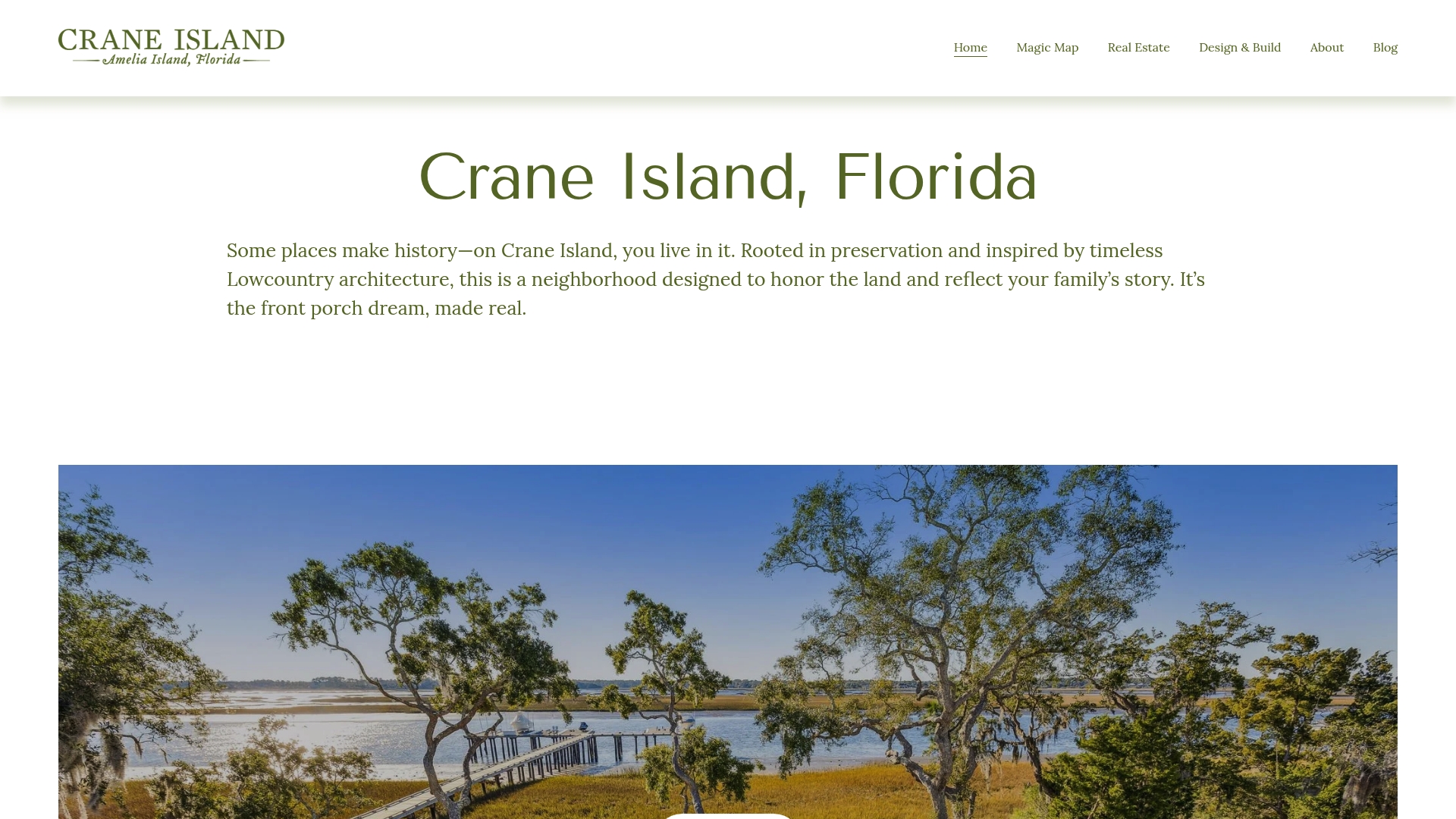
With only 14 custom homesites available, Craneisland offers buyers the opportunity to build a home woven into preserved marshlands and maritime forest, with direct access to the Intracoastal Waterway and the culture of historic Fernandina Beach. The community's Lowcountry design ethos and commitment to porch living create the kind of neighborhood warmth that larger resort developments rarely achieve. If you are ready to see what luxury intracoastal living looks like at this scale, the Craneisland real estate listings are the right place to start. For buyers who want full architectural control, the custom design and build program walks you through every step.
FAQ
What is a master-planned luxury community?
A master-planned luxury community is a large-scale development that integrates residential, commercial, and recreational infrastructure under unified governance, typically ranging from 1,000 to 30,000-plus acres. The coastal luxury tier adds waterfront access, environmental preservation, and hospitality-grade services to that foundation.
How do beachfront estates differ from marina-adjacent homes?
Beachfront estates offer direct ocean or waterfront frontage and typically start above $2.5 million, while marina-adjacent homes center on dock access and boating lifestyle at a wider range of price points. The key difference is the type of water relationship each property delivers.
Are resort-club integrated villas a good investment?
Resort-club integrated villas command price premiums and maintain strong asset liquidity because branded hospitality groups like Four Seasons and Marriott provide professional management and global marketing. They are particularly strong investments for buyers who want rental income during periods of absence.
What should I verify before buying a custom-build lot in a coastal MPC?
Verify that core community infrastructure is complete or on a confirmed delivery schedule, review the design code in full, and assess the developer's track record on prior phased releases. Early-phase buyers often gain equity as amenities complete, but only when the developer has a proven history of delivery.
Why does environmental preservation matter in coastal luxury communities?
Natural buffers like dunes and mangroves protect against coastal erosion and reduce exposure to regulatory changes that can affect property values. Communities that permanently preserve significant land provide buyers with a measurable layer of long-term financial protection.