
Fernandina Beach's arts scene centers on downtown cooperative galleries, a monthly Artwalk, regular open-air arts markets, and signature annual festivals that let visitors meet artists and hear live music. Visitors return for the direct access it offers: original work bought straight from the maker; receptions where you talk shop with the person who painted the canvas; and a festival calendar that turns whole weekends into open studios.
TL;DR:
- The Fernandina Beach arts scene is anchored by cooperative galleries like Island Art Association, Blue Door Artists, and Plantation Artists' Guild, which promote direct artist engagement and diverse styles.
- Major festivals, including the Shrimp Festival, Jazz Festival, and Amelia Island Dance Festival, draw large crowds and significantly increase gallery foot traffic during their peak weekends.
- Buying original art is easiest through the local arts market or directly from gallery members, with inquiries about limited editions, commissions, and community support being recommended.
- The active arts community is a key reason people settle in Nassau County, with most events and galleries being walkable and accessible for residents.
- The scene's growth has been gradual, rooted in historic storefront reuse and community projects, supported now by formalized arts funding and local government backing.
Table of Contents
- Must-Visit Galleries and Artist Spaces in Fernandina Beach
- Recurring Arts Events and Major Festivals to Plan Around
- Where to Buy Directly From Local Artists and Makers
- Classes, Workshops, and Ways to Get Involved
- Planning a Gallery Crawl or Festival Day Downtown
- How the Arts Scene Shapes Life on Amelia Island
- How the Fernandina Beach Arts Scene Took Shape
- Local Artists Worth Knowing in Fernandina Beach
- Public Art and Murals Around Downtown
- Who Supports the Local Arts Community
- Official Pages Worth Bookmarking
- What Actually Makes This Arts Scene Worth Planning Around
- Sources
- FAQ
Must-Visit Galleries and Artist Spaces in Fernandina Beach
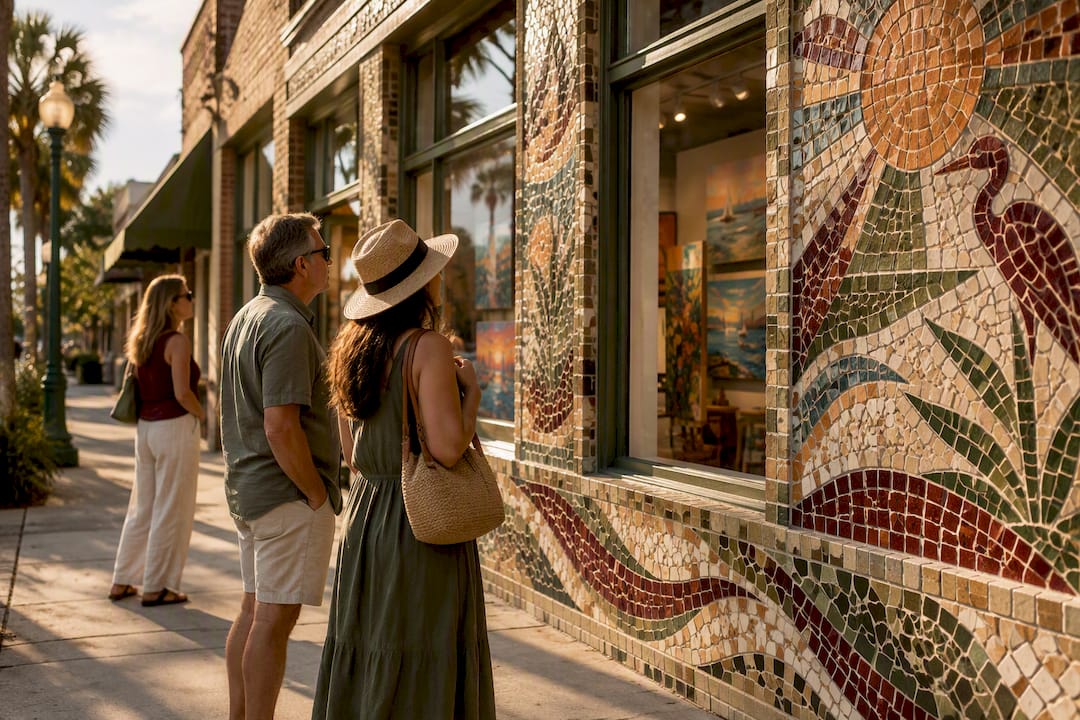
Start any gallery walk at the Island Art Association, which has anchored the local arts scene since 1975. Its co-op gallery, converted from an old diner and wrapped in a mosaic facade finished in 2012, now gives exhibition space to 48 local artists working in every medium from watercolor to sculpture. The co-op model means members staff the gallery themselves, so visitors often chat directly with the person who made the piece on the wall rather than a hired clerk.
Blue Door Artists occupies a historic downtown storefront and leans contemporary. Expect mixed media, photography, and experimental work that stands apart from the more traditional coastal landscapes found elsewhere on Centre Street. It's a good stop for readers who want to see where the Fernandina Beach arts scene is pushing past its Lowcountry watercolor reputation.
Plantation Artists' Guild & Gallery runs on a similar cooperative structure, with member artists rotating gallery duty and curating themed shows throughout the year. Between these three anchors, downtown covers a wide range of price points and styles without requiring a car.
A few notes on timing and etiquette for gallery visits:
- Most downtown galleries keep standard afternoon hours Tuesday through Saturday, with extended evening hours on Second Saturdays.
- Featured-artist receptions typically run early evening, often 5 to 8 p.m., with wine, light snacks, and the artist present to talk about the work.
- Weekday mornings are quietest if you want one-on-one time with gallery staff or members.
- Ask any co-op gallery which member is showing that week. Artists rotate, and the mix changes month to month.
Recurring Arts Events and Major Festivals to Plan Around
The Fernandina Beach arts scene runs on a fairly predictable rhythm, and knowing the calendar changes how you plan a trip. Here's the sequence that shapes most of the year:
- Second Saturday Artrageous Artwalk turns downtown into a self-guided gallery crawl every month, with galleries staying open late, artists on hand, and often live music spilling onto the sidewalk.
- Fernandina Beach Songwriters Festival lands in April, pairing original music with the town's broader creative identity.
- Isle of Eight Flags Shrimp Festival arrives in May with a juried arts and crafts show that draws makers from well beyond Nassau County, alongside the festival's namesake shrimp boat parade.
- Amelia Island Dance Festival takes over September with performances and workshops spanning styles from ballet to contemporary.
- Amelia Island Jazz Festival closes out the arts calendar in October. The 2026 edition runs October 4 through 11 as an established annual festival, with a community kickoff concert and shows spread across multiple downtown venues.
Running alongside all of this, Sounds on Centre offers free monthly concerts from April through October, giving visitors a low-commitment way to sample the town's creative energy between the bigger festivals. Festival weekends tend to swell gallery foot traffic considerably, since juried craft booths and out-of-town visitors funnel straight into the same few downtown blocks where the galleries sit.
Where to Buy Directly From Local Artists and Makers
The Fernandina Beach Arts Market gives visitors the most direct route to original, affordable work. It's a recurring open-air market where local artists and craftspeople sell handmade pieces in person, and the mix runs from jewelry and pottery to paintings and woodwork.
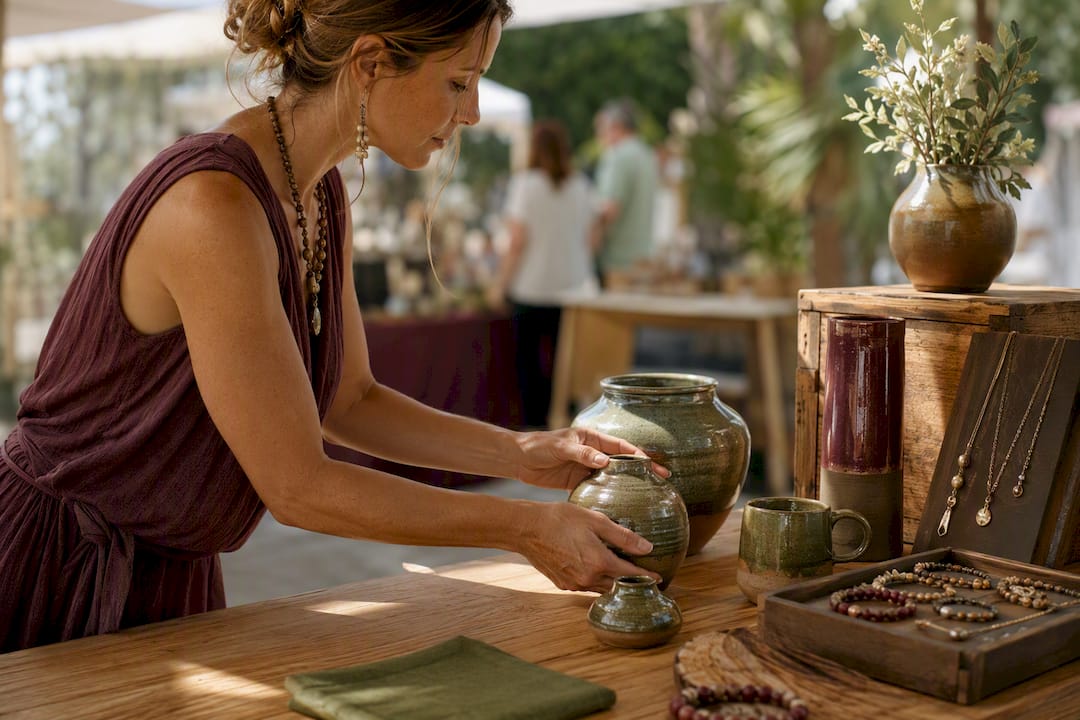
Cooperative galleries offer a second, quieter path to buying direct. Both the Island Art Association and Plantation Artists' Guild rotate member work through juried shows, and staff on duty during your visit are frequently the artists themselves, ready to discuss a commission or custom piece.
A few things worth asking before you buy:
- Whether the piece is a one-off or part of a limited series, since that affects both price and resale value.
- Whether the gallery takes a commission that supports scholarships or community art programs, which many co-ops do.
- Whether the artist accepts custom commissions if you want something sized for a specific wall.
Pro Tip: Buy the piece you keep circling back to at the market, not the one that seems like the "safe" choice. Local makers remember returning buyers, and a direct relationship with an artist often leads to first pick on future work.
Classes, Workshops, and Ways to Get Involved
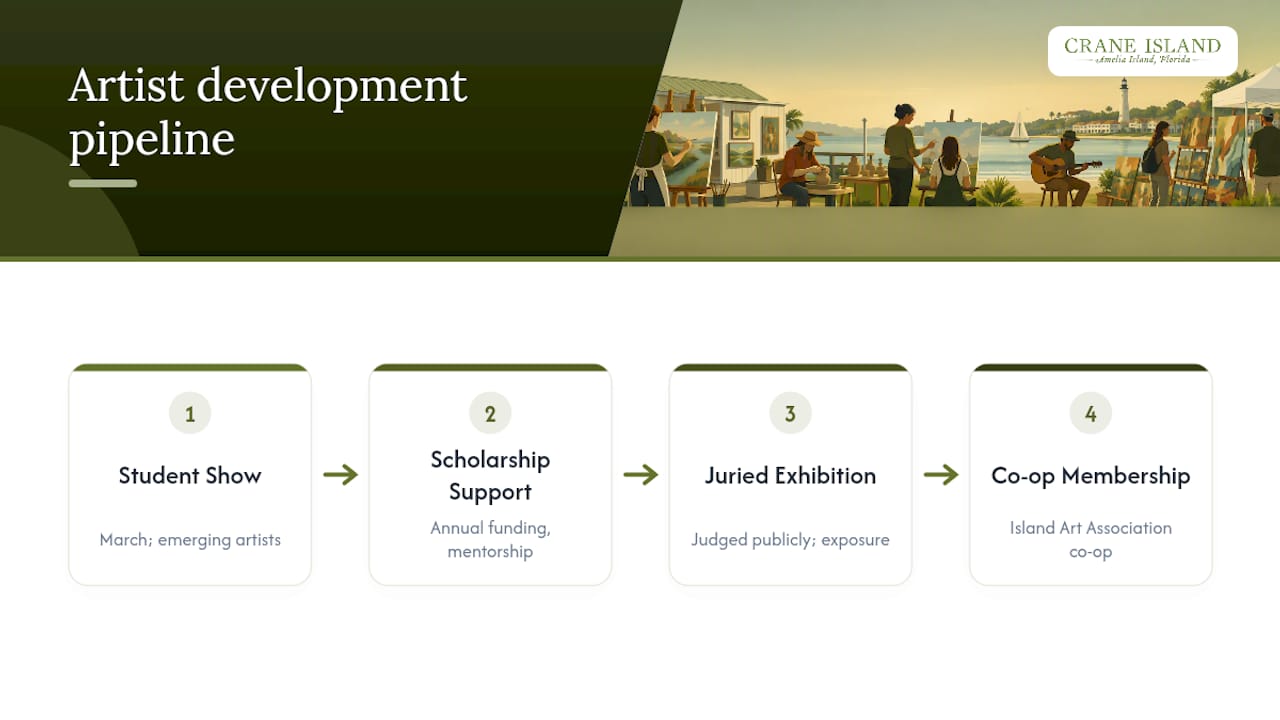
The Island Art Association runs an active education program that goes well beyond exhibition space. Open studio sessions happen twice weekly, giving working artists a place to paint alongside peers, and a student show each March highlights younger talent alongside the annual scholarship awards the organization funds.
If you want more structured practice, visiting-artist workshops and summer camps rotate through the season and typically fill fast. A few ways to plug in beyond taking a class:
- Volunteer at festival arts booths during the Shrimp Festival or Jazz Festival, where extra hands help artists manage juried displays.
- Ask galleries about docent or front-desk shifts, a common entry point into the co-op model.
- Donate to scholarship funds that keep art lessons accessible to local students.
Planning a Gallery Crawl or Festival Day Downtown
Second Saturdays are the easiest single day to build a trip around, since the Artwalk keeps galleries open late and artists on-site for conversation. Festival weekends multiply that energy but also the crowds, so arrive early if you want quiet time with a specific artist's booth.
A realistic day combines a morning at the Fernandina Beach Arts Market, an afternoon working through two or three downtown galleries, and an evening anchored by a Sounds on Centre concert between April and October. Most downtown is walkable once you park, and side streets near Centre Street tend to have more availability than the main strip during festival weekends.
Families should expect a relaxed pace. Outdoor concerts and the arts market welcome children, though gallery interiors are better suited to older kids who can handle a slower browse. Most events are free or low-cost, with ticketed items limited mainly to festival concerts and workshops.
How the Arts Scene Shapes Life on Amelia Island
Local writers and arts leaders often describe the creative community as a defining reason people choose to settle in Nassau County, not just a pleasant weekend diversion. That distinction matters for anyone weighing a longer stay versus a permanent move. A downtown you can walk to for a Second Saturday reception, a market morning, or a jazz set in October adds a texture to daily life that's hard to replicate in a place without that kind of density.
Homesites in the area sit a short drive from the historic district's galleries and festival calendar, so residents can treat the Fernandina Beach arts scene as an extension of their own neighborhood rather than a special occasion. If you're weighing what daily life looks like here, our Amelia Island lifestyle guide is a natural next stop, alongside attending a Second Saturday Artwalk yourself to get a feel for the community firsthand.
How the Fernandina Beach Arts Scene Took Shape
The creative identity of Fernandina Beach didn't emerge overnight. It grew out of a working shrimping and railroad town whose brick storefronts and Victorian houses gave later generations of artists an unusually intact backdrop to build around. The Island Art Association's founding in 1975 marked the first formal step toward organizing that talent into something visitors could actually find and support.
The organization's own building tells part of that story. What started as an old diner was converted into gallery space in 2001, and a community mosaic project completed in 2012 gave the exterior its now-distinctive facade, itself a piece of public art built by local hands. That willingness to repurpose existing architecture rather than build new set a template other downtown galleries followed, favoring historic storefronts over purpose-built exhibition halls.
Momentum built steadily rather than in a single burst. Cooperative galleries like Plantation Artists' Guild and Blue Door Artists followed the co-op model the Island Art Association had proven out, and festivals that started as single-day community gatherings, like the Shrimp Festival, grew juried arts components over the decades. Fifty years on, the scene now supports a full annual calendar rather than a handful of scattered events, and the Local Arts Agency designation in 2024 gave that growth formal institutional backing for the first time.
Local Artists Worth Knowing in Fernandina Beach
Because the town's galleries run on a cooperative model, the artists you meet are rarely anonymous names on a wall label. Island Art Association members staff their own gallery, meaning the person who greets you at the front desk on a Tuesday afternoon is frequently the same person whose landscape painting hangs three feet away. That structure rewards visitors who ask questions rather than browse silently.
Featured-artist rotations mean a different member takes the spotlight each month, often timed to Second Saturday receptions where the artist discusses technique and inspiration directly with attendees. Juried shows, including the bi-monthly exhibitions the Island Art Association runs, put new work in front of judges and the public simultaneously, which is how emerging local talent gets discovered without waiting years for gallery representation elsewhere.
The student show each March deserves particular attention from anyone tracking where the scene is headed. It showcases younger artists training under association mentors, several of whom go on to receive the scholarship funding the organization awards annually. Watching that pipeline, from student show to juried exhibition to eventual co-op membership, gives a clearer picture of the local creative community than any single artist profile could offer on its own. The through line across decades is continuity: today's featured artist was often yesterday's scholarship recipient.
Public Art and Murals Around Downtown
Public art in Fernandina Beach tends to double as civic memory. The Island Art Association's mosaic facade, completed through a 2012 community project, is the most visible example: a building that was once a working diner now wears an artwork that visitors photograph as often as they photograph the historic storefronts nearby. It's a useful reminder that the town's public art rarely stands alone. It usually connects back to a gallery, a festival, or a community group that made it happen.
Murals and installations around the historic district shift over time as community projects come and go, so the specific pieces you'll encounter on a given visit depend on what's current when you arrive. That's part of the appeal for repeat visitors: a walk through downtown a year later rarely looks identical. Checking current gallery pages or the Local Arts Agency's calendar before a trip is the most reliable way to know what's on view, since public art here tends to be tied to specific community initiatives rather than a single permanent collection.
Who Supports the Local Arts Community
The Nassau Council of Arts and Culture's designation as the county's Local Arts Agency in October 2024 gave the region's creative organizations a centralized advocate for the first time. That kind of designation typically stabilizes funding and coordinates promotion across galleries, festivals, and individual artists who previously worked largely on their own.
Cooperative galleries handle a good share of the grassroots support themselves. The Island Art Association funds scholarships and community art lessons directly through gallery sales and membership dues, which means buying a piece from a co-op artist often indirectly supports the next generation of student painters coming through the March show.
Festivals add another layer of institutional backing. Events like the Shrimp Festival and Jazz Festival build educational outreach into their programming, from school partnerships to scholarship funding, turning what looks like a weekend of entertainment into an ongoing investment in local arts education. Local government support has followed a similar pattern of formalizing what community groups had already been doing informally for years, rather than starting arts funding from scratch.
Official Pages Worth Bookmarking
- Amelia Island Festivals & Events: full calendar with dates for major festivals.
- Nassau Council of Arts and Culture: countywide arts programming and updates.
- Fernandina Beach Arts Market: market schedule and vendor announcements.
What Actually Makes This Arts Scene Worth Planning Around
Most visitor guides treat Fernandina Beach's arts scene as a checklist: see the galleries, catch an Artwalk, buy something at the market. That undersells what's actually happening here. The cooperative structure behind the Island Art Association and Plantation Artists' Guild means the person selling you a painting is usually its maker, and that direct relationship is rarer than most coastal towns of this size manage to sustain.
Where conventional advice falls short is treating festivals as separate from the gallery scene rather than as its busiest, most concentrated expression. The Shrimp Festival's juried craft booths and the Jazz Festival's week of programming aren't distractions from the "real" art scene. They're where it's most visible.
If you're prioritizing one thing, make it a Second Saturday Artwalk over a single festival day. It costs nothing, puts you face to face with working artists on a normal month, and gives a far more honest read on the community than any single event weekend can.
— John Hillman
Sources
- Discovering the Heartbeat of Fernandina Beach Through Art and Culture - Nassau Council of Arts and Culture
- Festivals & Events - Amelia Island
- Les DeMerle Amelia Island Jazz Festival
- Fernandina Beach Arts Market
FAQ
What Is the Artsy Area in Florida Near Fernandina Beach?
Downtown Fernandina Beach, centered along Centre Street and the surrounding historic district, functions as the artsy core of Nassau County. It concentrates cooperative galleries like the Island Art Association and Blue Door Artists within walking distance of the monthly Artwalk and the open-air arts market.
Which Movies Were Filmed in Fernandina Beach?
Fernandina Beach's historic waterfront and Victorian architecture have made it a location scouts favor for film and television productions over the years, largely because the downtown retains its original brick storefronts and period buildings. Specific production credits vary by year and aren't tracked centrally, so checking current local film office announcements is the most reliable way to confirm recent shoots.
What Celebrities Live on Amelia Island?
Amelia Island has a reputation as a private, low-key retreat, and residents there generally value that privacy over publicity. No verified, current list of celebrity residents is publicly maintained, so treat specific names circulating online with caution.
What Is Fernandina Beach Famous For?
Fernandina Beach is best known for its intact Victorian historic district, its shrimping heritage celebrated each May at the Isle of Eight Flags Shrimp Festival, and a downtown arts scene built around cooperative galleries and a recurring festival calendar. The Amelia Island Jazz Festival each October and the monthly Artwalk are two of the clearest expressions of that identity.