
Clearing a lot in Florida commonly requires at least one permit, and the trigger is usually one of three things: wetland or surface-water impact, disturbance of an acre or more, or the presence of protected species like the gopher tortoise. The agencies most likely to get involved are the Florida Department of Environmental Protection for wetlands, the NPDES Construction Generic Permit program for stormwater, and the Florida Fish and Wildlife Conservation Commission for tortoise burrows. Before any equipment moves, check DEP's MapDirect wetland layers, and call your county's Development Services office.
TL;DR:
- NPDES coverage starts at one disturbed acre, including phased common plans; submit and post the Notice of Intent at least two days before soil disturbance.
- DEP's MapDirect layers only flag possible wetlands; a qualified consultant must delineate legal boundaries in the field, then DEP can verify them before design.
- FWC requires a radius of 25 feet around potentially occupied gopher tortoise burrows; an Authorized Gopher Tortoise Agent handles relocation, and permit type depends on burrow count.
- County rules can require separate land disturbance permits, tree approvals, and drainage reviews; requirements vary, so contact Development Services before buying or clearing.
Table of Contents
- When state environmental resource permits (ERP) apply and what they regulate
- NPDES construction permit thresholds, SWPPP, and NOI timing
- Local land-disturbance permits: what counties typically review
- Wetlands: map screening versus a field delineation
- Gopher tortoise rules: the 25-foot buffer and permit types
- Erosion control, grading, and stormwater expectations during clearing
- Debris disposal and burning: Florida Forest Service rules
- Pre-clearing checklist: the order that avoids permit traps
- Typical costs and timelines for permits and clearing
- Penalties for unpermitted clearing and how to recover
- Our perspective on clearing responsibly from the start
- A different kind of homesite for buyers who'd rather plan ahead
- FAQ
- Sources
When state environmental resource permits (ERP) apply and what they regulate
Florida's Environmental Resource Permit program covers work in, on, or over wetlands and other surface waters, along with any activity that changes how surface water flows across a site. Many property owners assume ERP only matters when a wetland is obvious, but upland clearing that alters drainage patterns or increases impervious runoff can trigger review even on dry-looking parcels. DEP's stated approach favors avoidance and minimization before anything else: shift the building pad, trim the cleared footprint, preserve natural swales. Only impacts that truly can't be avoided call for mitigation.
For anyone unsure where their lot stands, a DEP pre-application meeting or a formal wetland verification is worth the time before a contractor is hired.
- Dredge and fill activities in wetlands or surface waters need ERP coverage.
- Stormwater management systems and new impervious surfaces often fall under ERP review.
- Avoidance and minimization come before any discussion of mitigation.
NPDES construction permit thresholds, SWPPP, and NOI timing
The NPDES Construction Generic Permit applies once a project disturbs one acre or more, or less than an acre if it's part of a larger common plan of development. Coverage requires a Notice of Intent and a Stormwater Pollution Prevention Plan, known as a SWPPP, that spells out erosion and sediment controls before soil moves.
At least 2 days before clearing or soil disturbance begins, the responsible authority must submit the NOI, and that notice has to be posted at the job site for public reference.
- The one-acre threshold applies individually or across a common plan, even when phased.
- The SWPPP names the operator responsible for implementing and maintaining controls.
- NPDES coverage never replaces ERP or county-level land-disturbance permits; all three can apply at once.
Local land-disturbance permits: what counties typically review
State permits don't erase local requirements. Most Florida counties layer their own land-disturbance or clearing permits on top of ERP and NPDES, often triggered by acreage thresholds, protected tree ordinances, or grading and drainage review that has nothing to do with wetlands.
- Many counties require a land-disturbance permit even for relatively small parcels.
- Protected or "grand" tree ordinances can restrict removal regardless of wetland status.
- Grading and drainage plans are frequently reviewed separately from stormwater permits.
As an illustrative pattern, some counties apply lighter review for small residential lots and significantly more scrutiny once clearing exceeds roughly three acres, though the exact figure varies by jurisdiction. Calling county Development Services before closing on a lot, not after, saves weeks of rework.
Wetlands: map screening versus a field delineation
DEP's online wetland layers, available through MapDirect, are useful for a first look, but the agency is explicit that these are screening tools only. Legal wetland boundaries come from a field delineation performed under Chapter 62-340, F.A.C., not from a satellite overlay.
- Start with MapDirect to screen for wetland indicators near your parcel.
- Hire a qualified environmental consultant for a field delineation if screening suggests any wetland presence.
- Request an informal DEP verification to validate or refine the delineation before finalizing site design.
Shifting the building pad or trimming the cleared footprint to avoid a delineated wetland almost always costs less than pursuing mitigation after the fact.
Gopher tortoise rules: the 25-foot buffer and permit types
FWC requires a 25-foot avoidance radius around any potentially occupied gopher tortoise burrow. Disturbing ground within that radius generally requires a relocation permit, and the right permit type depends on how many burrows are involved.
- Sites with 10 or fewer burrows typically use on-site or off-site relocation permits.
- Larger populations may call for conservation permits or disturbed-site permits, depending on circumstances.
- An Authorized Gopher Tortoise Agent must handle the actual relocation work in most cases.
Pro Tip: Survey for burrows before finalizing your site plan, not after clearing starts, since a burrow discovered mid-project can halt work entirely.
Erosion control, grading, and stormwater expectations during clearing
Agencies reviewing a cleared site look for sediment and erosion controls that stay in place until vegetation or other stabilization measures are established, preventing silt and runoff from reaching neighboring properties or waterways. Preserving the lot's natural drainage pattern, rather than regrading it flat, is often the simplest way to avoid tripping an ERP or local enforcement review in the first place.
- Silt fences and inlet protection are standard around the perimeter and any drainage structures.
- Stabilized construction entrances reduce mud tracked onto public roads.
- Temporary seeding or mulching stabilizes bare soil until permanent landscaping takes hold.
Debris disposal and burning: Florida Forest Service rules
Burning cleared vegetation on-site is not a free pass. Every land-clearing pile burn requires authorization from the Florida Forest Service, and setbacks differ by use. Residential piles need 300 feet from occupied buildings other than the landowner's own, 100 feet from paved roads, and 50 feet from wildlands, with someone attending the fire at all times. Nonresidential burns face stricter setbacks and Air Curtain Incinerator rules in some cases. Hauling debris to a licensed disposal facility often proves simpler than managing an authorized burn.
- Authorization must be obtained before any pile is lit, not after.
- Residential setbacks differ meaningfully from nonresidential ones.
- Chipping or hauling debris avoids the authorization and attendance requirements altogether.
Pre-clearing checklist: the order that avoids permit traps
- Screen the parcel on DEP's MapDirect for wetland indicators.
- Hire a wetland delineator and, if tortoise sign is present, a qualified survey.
- Request pre-application meetings or verification from DEP, FWC, or your county as needed.
- File the NOI and SWPPP if the project meets NPDES thresholds.
- Secure Florida Forest Service burn authorization if burning debris on-site.
- Post the NOI at the site and install BMPs before mobilizing equipment.
Pro Tip: Line up your delineator, stormwater engineer, and Authorized Gopher Tortoise Agent in the same intake call, since their findings often change each other's scope.
The NOI must go in at least two days before soil disturbance, but ERP review and some county permits can take weeks to months, so sequence accordingly.

Typical costs and timelines for permits and clearing
Budgets swing widely based on what the lot turns up; for high-net-worth buyers, understanding purchase structures is crucial—see why foreign buyers should never use an LLC to buy U.S. real estate to avoid costly pitfalls. Wetland delineation and gopher tortoise surveys carry their own consultant fees, and if burrows are found, relocation or recipient-site fees can add meaningfully to the total. ERP and NPDES application fees, contractor clearing and haul-off, stump removal, and BMP materials round out the rest.
- Delineations and wildlife surveys typically take days to a few weeks to complete.
- ERP review often runs weeks to months depending on project complexity.
- Actual clearing work after approvals usually takes days to a couple of weeks.
Building in contingency for mitigation or recipient-site fees protects a budget if a survey turns up protected resources partway through planning.
Penalties for unpermitted clearing and how to recover
Unauthorized wetland impacts can bring DEP-ordered restoration and fines, and FWC separately enforces against unpermitted take of gopher tortoises. Work can be stopped mid-project, and a disturbed-site permit or remediation plan may be required before clearing resumes.
- Stop all activity immediately if a violation is suspected.
- Document the site and timeline before agencies arrive.
- Bring in legal counsel or an environmental consultant to manage the agency response.
Our perspective on clearing responsibly from the start
We've watched enough Florida lots get cleared first and permitted second to know the order matters. Preserving native drainage and habitat up front tends to cost far less than mitigating for it later.
— John Hillman
A different kind of homesite for buyers who'd rather plan ahead
For buyers weighing all of this against the appeal of simply starting somewhere already thoughtfully planned, Crane Island offers just 14 homesites along Amelia Island's Intracoastal Waterway, with nearly half the land preserved as marsh and forest from the outset.
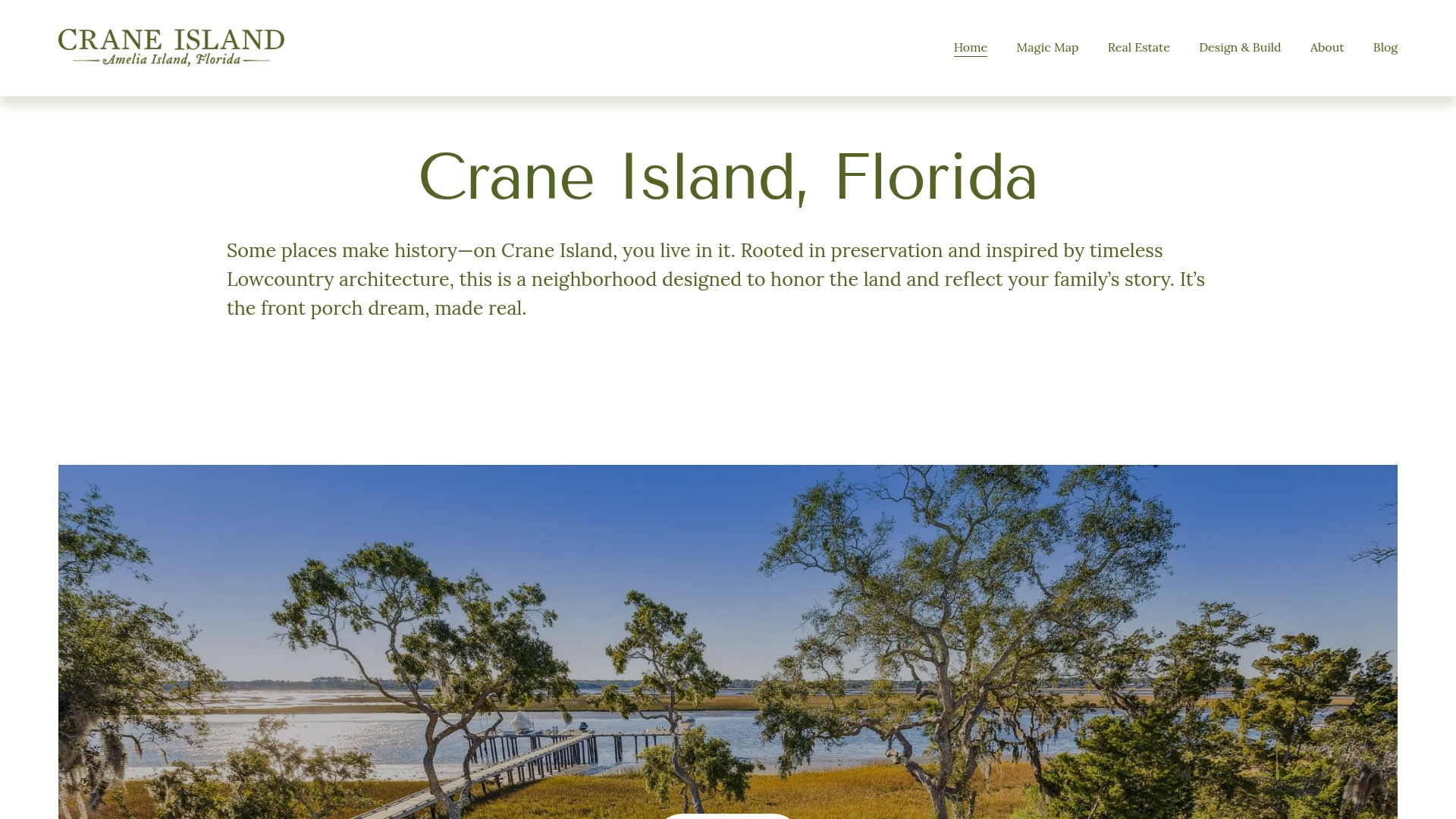
We've already walked the permitting path so our homeowners can focus on designing a Lowcountry-inspired home instead. Explore available homesites and homes, or reach out through The Crane Island Portfolio Homes Program for guidance on site planning before you buy.
FAQ
What are the laws regarding trees in Florida?
Tree protection in Florida is mostly a local matter: many counties and cities maintain protected or "grand" tree ordinances that restrict removal regardless of wetland or state permit status. State-level rules focus more on wetlands, surface waters, and protected species, so checking your specific county code is the most reliable step.
How much does it cost to clear a 10,000 sq ft lot?
Clearing costs depend heavily on vegetation density, drainage needs, and whether wetlands or gopher tortoise burrows are present, so there's no fixed figure. Budgeting should account for delineation and survey fees, contractor clearing and haul-off, BMP materials, and any mitigation or relocation costs if protected resources turn up.
Do I need a permit to cut down a tree in Hillsborough County?
Tree removal permit requirements vary by county, and local tree protection ordinances often apply independently of state wetland or species rules. Contacting Hillsborough County's Development Services office directly is the most reliable way to confirm current requirements for a specific lot.
Do you need a license to clear land in Florida?
Clearing itself doesn't require a personal "license," but the permits tied to the work, such as ERP coverage, NPDES construction permits, or gopher tortoise relocation permits, often require licensed or authorized professionals to prepare applications or perform the work. A wetland delineator, a stormwater engineer, and an Authorized Gopher Tortoise Agent each handle a different piece of that puzzle.
Sources
- FDEP: Wetland evaluation and ERP guidance
- FWC: Gopher tortoise permits and guidance
- Florida Forest Service: Land clearing debris burns guidance