
Keep your homeowners and wind coverage active, confirm your hurricane deductible, and add flood insurance through the NFIP or a qualified private carrier if you don't already carry it. Then schedule a wind mitigation inspection and gather your elevation certificate, permits, and upgrade photos. These three moves determine whether you're properly covered this hurricane season and whether your premium reflects the home you actually built.
TL;DR:
- Flood and wind coverage are separate policies, with flood insurance available through FEMA’s NFIP or private insurers, and premiums affected by elevation and mitigation efforts.
- The hurricane deductible activates when a Florida hurricane warning is issued and remains in effect until 72 hours after the warning ends, with standard options including 2%, 5%, or 10% of dwelling coverage.
- Upgrading impact-resistant windows, roof-to-wall connections, and garage doors can significantly lower wind mitigation discounts, especially in homes built to modern Florida standards.
- Citizens Property Insurance is phasing in mandatory flood coverage based on home value, with thresholds reaching $400,000 by 2026 and full requirement by 2027.
- Proper documentation of mitigation upgrades, permits, and elevation certificates speeds up discounts and enhances insurability, particularly for homes in high-risk coastal areas.
Table of Contents
- Property Insurance Coastal Florida Homeowners Actually Need
- Flood Insurance Options for Coastal Florida Properties
- Wind Mitigation Upgrades That Lower Your Premium
- Citizens, Eligibility Rules, and What's Changing in 2026
- When to Buy Flood Insurance and What to Ask Your Agent
- Your Next Steps for Coastal Insurability
- Why Documentation Is an Asset Strategy, Not Just Paperwork
- Building on Amelia Island With Mitigation Already Built In
- Where to Verify Coverage Details and Forms
- Sources
- FAQ
Property Insurance Coastal Florida Homeowners Actually Need
Coastal Florida homeowners rarely carry one policy. They carry a stack, and each layer covers something the others don't. A standard homeowners policy handles wind, hail, fire, liability, and loss of use if a covered event forces you out of the house. It will not pay a dime for rising water, no matter how directly that water arrives because of the same storm that ripped your shingles off.
That gap is why wind and flood insurance in Florida function as two separate products, sold and rated differently, even when the same hurricane causes both kinds of damage. Your homeowners policy also carries a distinct hurricane deductible, separate from your standard deductible, and Florida law is specific about when it applies.
- Homeowners/wind policies cover wind, hail, fire, and liability, but exclude flood.
- The hurricane deductible activates when the National Hurricane Center issues a hurricane warning for any part of Florida and stays in effect until 72 hours after the last watch or warning expires.
- Insurers must offer standard deductible options, typically $500 or a percentage such as 2%, 5%, or 10% of dwelling coverage.
- Lenders on coastal or flood-zone properties, and Citizens Property Insurance Corporation under certain conditions, can require a separate flood policy as a condition of coverage.
Understanding this split matters before you shop, because an agent quoting only wind coverage isn't giving you the full picture of what a storm could cost you out of pocket.
Flood Insurance Options for Coastal Florida Properties
Flood coverage comes from two places: the National Flood Insurance Program (NFIP) or a private flood insurer. The NFIP, backed by FEMA, is available in more than 22,600 participating communities and covers both the building structure and its contents as separate line items. You can get quotes through an agent or FloodSmart.gov, and nationally the program carries roughly $1.3 trillion in coverage across about 4.7 million policyholders.
Since 2021, the NFIP has priced flood risk under Risk Rating 2.0, a system that looks at your specific structure rather than just the flood zone on a map. Elevation, foundation type, replacement cost, and distance from the nearest flood source all factor into your premium, which means two neighboring homes can carry very different rates.
- Elevating utilities, adding flood vents, or raising the lowest floor can lower your rated risk.
- An elevation certificate is a key document for obtaining an accurate flood insurance quote.
- Private flood insurance can offer higher coverage limits than the NFIP's caps and sometimes faster underwriting, but availability and terms vary by carrier and by property.
If your home's NFIP quote seems high, a private policy is worth comparing, particularly for higher-value coastal homes.
Wind Mitigation Upgrades That Lower Your Premium
Wind mitigation is where coastal homeowners have the most direct control over their premium. Insurers offer documented discounts for features that reduce hurricane damage, and the credits can be substantial on a home built to modern Florida Building Code standards.
The inspection process itself changed for 2026. Any wind mitigation inspection dated April 1, 2026 or later must use the updated Uniform Mitigation Verification Inspection Form, OIR-B1-1802 (Rev. 04/26). Older inspections completed within the prior five years generally remain valid, but anything scheduled now should use the current form.
Five upgrades carry the most underwriting weight:
- Impact-resistant windows and doors, which reduce breach risk during wind-borne debris events.
- Reinforced roof-to-wall connections, verified through attic access during inspection.
- Hip roof geometry, which performs better aerodynamically than gable roofs in high wind.
- Secondary water resistance, such as a sealed roof deck, which limits leaks after shingle loss.
- Reinforced or braced garage doors, since garage door failure is a common cause of catastrophic wind damage.
Inspectors must be properly licensed, and they need actual attic access to verify roof-to-wall connections. Skipping that step can mean losing mitigation credits you'd otherwise qualify for.
Pro Tip: Keep a folder, physical or digital, with your permits, dated photos of each upgrade, and the completed OIR-B1-1802 form. Submitting a complete package to your carrier speeds up discount approval and gives you a ready answer if an underwriter ever questions your coverage.
Citizens, Eligibility Rules, and What's Changing in 2026

Citizens Property Insurance Corporation serves as Florida's insurer of last resort for homeowners unable to secure insurance in the private market. It isn't a bargain option. It's a backstop, and the state has been tightening the rules around it.
One of the biggest shifts is the phased-in flood insurance requirement for Citizens policyholders. Flood coverage becomes mandatory based on dwelling value and year: homes valued at $600,000 or more needed it by January 1, 2024, $500,000 by 2025, $400,000 by 2026, and every personal residential Citizens policy will require it by January 1, 2027.
- Homeowners nearing these thresholds should confirm their dwelling value and check their renewal date now.
- Documentation standards for both flood and wind mitigation have tightened, so incomplete paperwork is more likely to delay or reduce a discount than it was a few years ago.
- Some coastal zip codes are seeing non-renewals as carriers reassess risk, which makes proactive mitigation documentation more valuable, not less.
If you're already with Citizens, treat the 2027 deadline as a certainty rather than a distant possibility.
When to Buy Flood Insurance and What to Ask Your Agent
Timing catches people off guard more than almost anything else in this process. NFIP policies carry a 30-day waiting period before coverage takes effect, with exceptions typically made at the time of a home purchase or a mortgage refinance. You also cannot buy new wind or flood coverage once an active storm watch or warning is in effect for your area. Insurers simply won't bind new policies during that window.
Before you call an agent, gather these documents:
- Your elevation certificate, if your property has one on file.
- Building permits for any structural or mitigation upgrades.
- Dated photos of impact windows, roof connections, and garage door bracing.
- Any prior wind mitigation inspection form.
- Your current policy declarations page.
Then ask direct questions: which hurricane deductible options are available, whether the policy pays actual cash value or full replacement cost, whether your home is Citizens-eligible, and how a private flood quote compares to an NFIP quote for the same coverage limits.
Your Next Steps for Coastal Insurability
Start with a short checklist rather than trying to solve everything at once.
- Confirm your current homeowners and flood coverages are both active and adequate for rebuild cost.
- Obtain an elevation certificate if your property doesn't already have one on file, since it directly affects flood pricing.
- Schedule an OIR-B1-1802 wind mitigation inspection and request attic access explicitly.
- Collect permits and photos for every mitigation upgrade you've made.
Crane Island's own resources walk through several of these steps in more depth, including a breakdown of wind mitigation upgrades and their premium impact, a guide to when private flood insurance makes more sense than the NFIP, and a plain-language explanation of elevation certificates for Florida properties. Documented mitigation doesn't just lower your premium. It also shows up favorably when you eventually sell, since buyers and their insurers both want to see the paper trail.
Why Documentation Is an Asset Strategy, Not Just Paperwork
Insurance readiness and home value aren't separate conversations on the coast. A house with a complete mitigation file, elevation certificate, permits, and photos in hand, is a house that insures more easily and sells with fewer questions. We think about mitigation the same way we think about craftsmanship: it's not decoration, it's the structure holding everything else up. Homes built to coastal standards from the start carry that advantage into every renewal.
— John Hillman
Building on Amelia Island With Mitigation Already Built In
A community where homes are designed from the outset with coastal codes and preserved open space in mind, rather than retrofitted for mitigation credits later. Much of the land stays undeveloped, and homesites sit along waterways with construction standards that make wind mitigation documentation straightforward from day one.
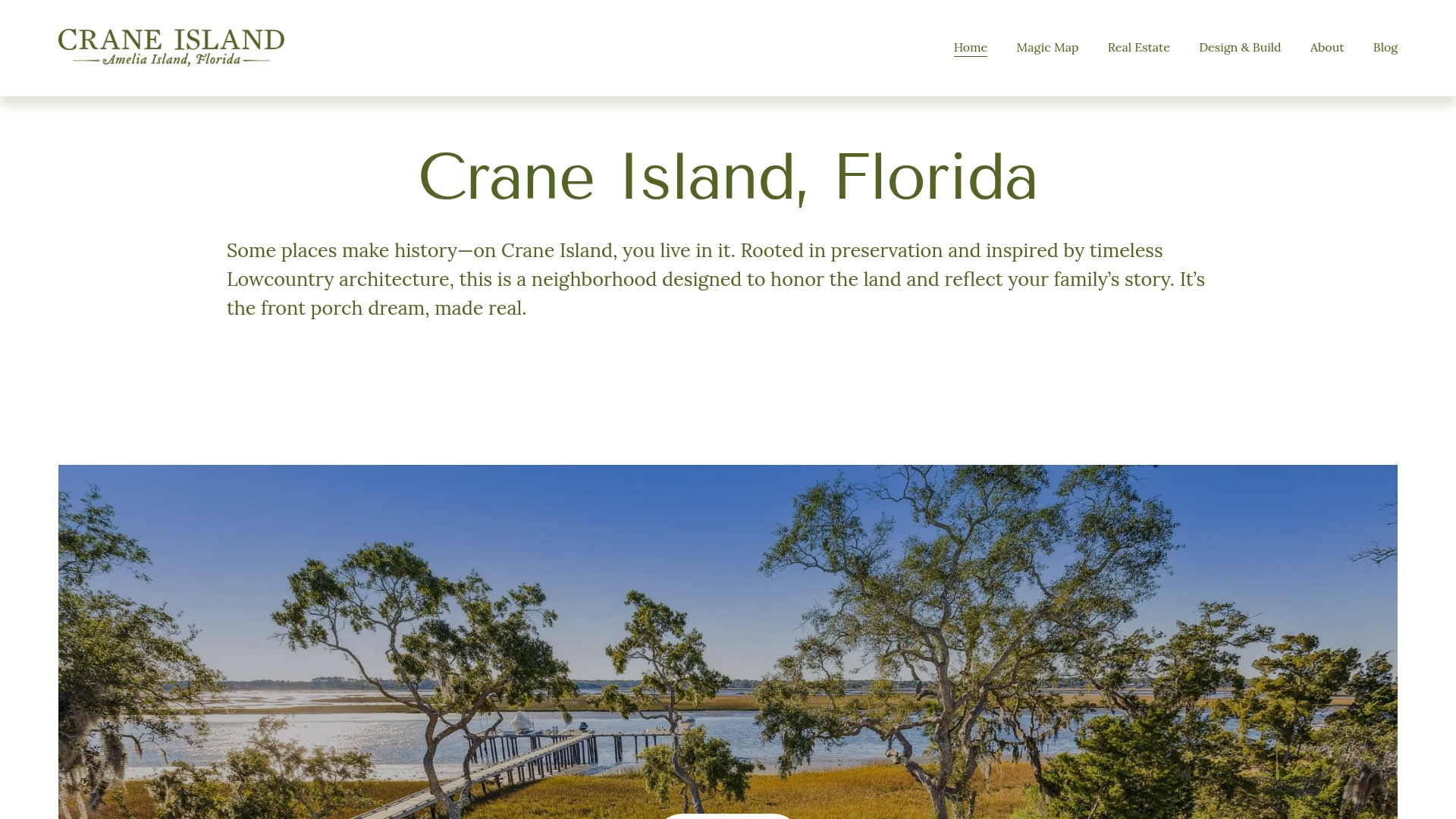
With only 14 homesites available, buyers work directly with Crane Island to design a custom home or explore move-in ready options through the Portfolio Homes Program. If you're weighing the cost of retrofitting an older coastal property against building somewhere designed for these standards from the start, visit Craneisland to see current homes and homesites and start that conversation.
Where to Verify Coverage Details and Forms
For flood quotes and program details, visit FEMA's NFIP overview or FloodSmart.gov. For wind mitigation forms and Citizens policy rules, check the Florida Office of Insurance Regulation and Citizens Property Insurance Corporation. Homeowners pursuing grants for mitigation upgrades should also look into the My Safe Florida Home program.
This article is general information, not a substitute for advice from a qualified financial advisor. Consult a qualified financial professional about your own circumstances before acting on anything here.
Sources
- FEMA — National Flood Insurance Program overview
- Florida Division of Consumer Services — Florida's hurricane deductible
FAQ
Does homeowners insurance cover flood damage in Florida?
No. Standard homeowners policies cover wind, fire, and liability but exclude flood damage from rising water, which is why a separate flood policy through the NFIP or a private insurer is necessary.
How does Risk Rating 2.0 affect my flood insurance premium?
Risk Rating 2.0 prices your policy based on your home's elevation, foundation, replacement cost, and distance from flood sources, rather than zone alone, so mitigation steps like elevating utilities can lower your rate.
When does the Florida hurricane deductible apply?
It activates once the National Hurricane Center issues a hurricane warning covering any part of Florida and remains active until 72 hours after the last related watch or warning ends.
Do I have to buy flood insurance if I'm with Citizens?
Increasingly, yes. Citizens is phasing in mandatory flood coverage based on dwelling value, reaching $400,000 by 2026 and covering every personal residential policy by January 1, 2027.
How long is the NFIP waiting period before coverage starts?
Most NFIP policies carry a 30-day waiting period, though that period is typically waived when flood insurance is purchased in connection with a home purchase or mortgage refinance.
Can Crane Island help with insurance-related mitigation documentation?
Crane Island homes are designed around coastal construction standards from the start, and the Portfolio Homes Program gives buyers a documented, code-compliant foundation for insurability rather than a retrofit process.