

Pocket parks produce measurable gains in health, social connection, and local environmental quality, and under the right conditions they can help catalyze economic change in a neighborhood. Those benefits are not automatic: they depend on thoughtful design, consistent maintenance, and a site chosen for genuine community need. A pocket park built well and cared for well behaves differently than one left to languish.
TL;DR:
- Properly designed and maintained pocket parks can enhance mental health, physical activity, neighborhood cohesion, and environmental quality, but only if they are thoughtfully sited and cared for.
- Design features such as plant diversity, natural aesthetics, appropriate canopy placement, and sightline-oriented seating are crucial to maximizing restorative and safety benefits.
- The physical activity benefits of pocket parks are comparable to larger recreational spaces and can be cost-effective at around $0.73 per MET-hour gained.
- Site placement, early activation, deliberate maintenance planning, and simple metrics tracking are key steps to ensure long-term success and community impact.
Table of Contents
- What are the proven health, social, environmental, and economic benefits?
- What the best studies actually found and their limits
- Which design choices deliver which benefits
- Realistic cost ranges and what cost-effectiveness studies report
- How to site, activate, fund, and monitor a pocket park
- What the research means for how we build neighborhoods
- How Crane Island approaches open space and placemaking
- Sources
- FAQ
What are the proven health, social, environmental, and economic benefits?
A pocket park is typically a small, urban green space, often much less than an acre, tucked into a vacant lot, a leftover parcel, or a gap between buildings, built to serve a walkable radius rather than an entire city. Research groups these benefits into four categories, and each one carries its own evidence and its own conditions.
On the health side, time spent in these small green spaces supports mental restoration, the kind of recovery from mental fatigue that researchers have documented in restorative effects linked to pocket park features. That same research found that more frequent visits deepen the restorative effect, which suggests these spaces work best as part of a daily routine rather than an occasional destination. Pocket parks also contribute to physical activity in ways that rival larger facilities, a point explored further below.
Socially, a well-placed pocket park becomes a gathering point that builds what planners call social capital: the informal trust and familiarity that forms when neighbors share a bench, a dog run, or a shaded table. Perceived safety rises when sightlines are open and the space feels cared for, and that sense of safety often determines whether a park gets used at all.

Environmentally, pocket parks can measurably ease local heat and manage stormwater when vegetation and drainage are sized correctly for the site, a relationship we return to in the design section. Even a modest planting bed can support pollinators and small-scale biodiversity that a paved lot never could.
The benefits of small parks include:
- Restorative mental health effects that increase with more frequent, regular visits.
- Opportunities for moderate-to-vigorous physical activity comparable to larger recreational facilities.
- Stronger neighborhood cohesion through shared, walkable gathering spaces.
- Localized cooling and stormwater relief when plantings and drainage are properly sized.
One study found pocket parks rival nearby playgrounds in promoting moderate-to-vigorous physical activity, with cost-effectiveness estimated at about $0.73 per MET-hour gained, though the figure varied by site. Economic effects are the least certain of the four: property values near well-designed green space sometimes rise faster than the surrounding area, but those gains tend to ride alongside broader investment and ongoing upkeep rather than the park alone.
What the best studies actually found and their limits
The strongest evidence on pocket parks comes from a handful of focused studies, each answering a different question. A 2023 review in the International Journal of Environmental Research and Public Health examined which design features support psychological restoration and found that plant diversity, natural aesthetics, and a mix of open and enclosed areas consistently improved outcomes, while also noting that the field still lacks long-term, multi-city data.

A separate study of three Los Angeles pocket parks, published in PMC, measured actual use and activity levels and found that these small spaces rivaled nearby playgrounds in encouraging exercise, at a cost of roughly $0.73 per MET-hour gained, a measure of physical activity benefit relative to dollars spent.
Two caveats matter here. Much of this research is cross-sectional, meaning it captures a single point in time rather than tracking a park over years, and much of it is site-specific, built around a handful of parks in one city. That combination means the findings describe what is plausible and often observed, not a universal guarantee for every lot.
Prioritize monitored pilot projects with clear, pre-defined metrics before scaling a design citywide.
That approach, borrowed from practitioner toolkits rather than any single study, turns an uncertain investment into a testable one.
Which design choices deliver which benefits
Design determines whether a pocket park's benefits show up at all. The concept of prospect-refuge, drawn from restorative-environment theory, explains part of why: people feel most at ease in spaces that offer both an open view and a sheltered, enclosed niche to retreat into, a balance that research on restorative pocket park features ties directly to feelings of safety and recovery.
- Plant diversity and natural aesthetics improve restorative value more than manicured, uniform landscaping.
- Canopy placement over seating areas extends usable hours during warm months and supports the cooling effects described in heat-island research.
- Seating arranged for sightlines, rather than hidden corners, raises perceived safety and everyday use.
- Bioswales and planted drainage, sized to the site's actual rainfall and runoff, deliver stormwater and microclimate benefits; undersized or ornamental-only installations do not.
- Restraint on active-use infrastructure matters as much as what gets added: cramming a full court or large playground into a small lot can increase intense activity while undermining the quiet, restorative use that drew neighbors there in the first place.
A site meant for passive use, reading, resting, quiet conversation, should lean toward dense plantings, varied seating, and partial enclosure. A site meant for active use can carry more open lawn and equipment, but it will trade away some of the restorative benefit in the process.
Pro Tip: Decide whether a site's primary job is restoration or recreation before drawing the plan; trying to do both well on a quarter acre usually means doing neither well.
Realistic cost ranges and what cost-effectiveness studies report
Pocket parks are inexpensive relative to large parks, but they are not automatically cheap. A revised municipal estimate from the City of Austin put the cost of developing a pocket park with a full suite of amenities at approximately $982,800, a figure driven largely by civil work, utilities, and built structures rather than the plants themselves.
Cost-effectiveness looks different when measured in health terms. The Los Angeles pocket park study calculated roughly $0.73 per MET-hour gained, a way of pricing physical activity benefit against construction and operating cost, and that figure varied meaningfully from park to park depending on design and use levels.
Main cost drivers to budget for:
- Utility connections and site grading, often the largest line items on a small lot.
- Hardscape and any built structures, from shade pavilions to restrooms.
- Planting and irrigation, which scale with plant diversity rather than acreage.
- Ongoing maintenance, a recurring operating cost distinct from one-time construction.
Construction is a single expense; maintenance is a permanent one, and funding plans that ignore the second are the most common reason a promising pocket park fades.
How to site, activate, fund, and monitor a pocket park
Benefits persist only when a park is placed, used, and cared for with intention.
- Site for walkability first, prioritizing gaps in service radius and locations prone to heat or flooding, where ecological benefits compound.
- Activate early with low-cost programming, such as partnerships with local groups or schools, rather than waiting for a grand opening.
- Choose a maintenance model deliberately, whether that is a city parks contract, a conservancy, volunteer stewardship, or a dedicated line item in a developer's budget; the Trust for Public Land's Pocket Park Toolkit treats this step as inseparable from design.
- Track simple metrics over time: visitor counts, shade coverage, and even basic temperature logging tell you quickly whether the space is delivering.
A landscaping partner experienced in ongoing commercial upkeep, such as Atlanta Landscape Co., can help translate a maintenance plan into a realistic budget before the first plant goes in the ground.
What the research means for how we build neighborhoods
The research keeps circling back to one point: a pocket park is only as good as the attention paid to it after the ribbon is cut. We have spent years thinking about how shared outdoor spaces shape a community's daily rhythm, from a porch that catches the evening light to a quiet clearing under live oaks. The same principles that make a neighborhood park worth visiting, shade, a place to sit, a reason to return, apply at any scale.
— John Hillman
How Crane Island approaches open space and placemaking
The community’s approach is built around a simple belief: a home is only as good as the land around it. A significant portion of the land is preserved as open space, with marshlands and maritime forest left intact rather than cleared for density, creating a network of communal green areas where neighbors gather informally, often, and on foot.
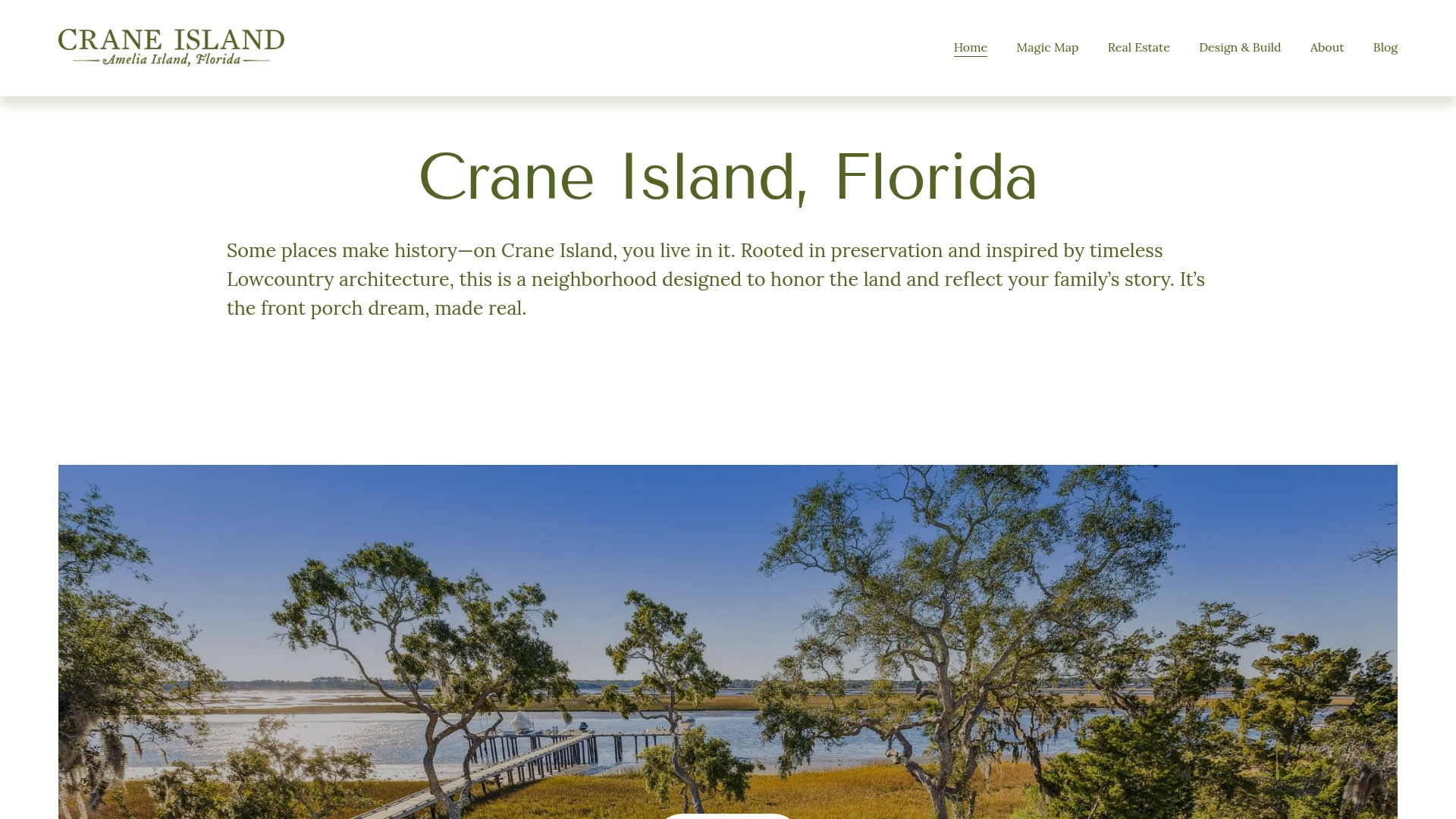
The Lowcountry-inspired architecture and deep-water Intracoastal access set the community apart from other coastal developments, but it is the porches, the preserved canopy, and the shared gathering spaces that turn a collection of homesites into a neighborhood. If you are exploring what it looks like when preserved land and thoughtful design work together:
- Browse available homesites and move-in ready homes on Crane Island.
- Learn how our Portfolio Homes Program integrates preserved open space into custom design.
- See current listings through our Amelia Island property search.
Visit Craneisland to see how a community built around conservation, not just construction, takes shape.
Sources
- International Journal of Environmental Research and Public Health (2023) — restorative effects linked to pocket park features
- PMC article on pocket parks and physical activity (Cohen et al.)
- Trust for Public Land — Pocket Park Toolkit (2020)
- NRPA — Creating mini-parks for increased physical activity (PDF)
FAQ
How much do pocket parks cost?
Costs vary widely by site, but a municipal estimate from Austin put a fully amenitized pocket park at approximately $982,800. Utilities, civil work, and built structures typically drive the budget more than plantings or seating.
What are the benefits of going to the park?
Regular visits to a park, including a small pocket park, support mental restoration and stress recovery, with more frequent visits linked to stronger restorative effects. Parks also offer a low-barrier way to build physical activity into a daily routine.
What are the benefits of parks?
Parks of any size can improve mental health, encourage physical activity, strengthen neighborhood social ties, and support local environmental quality through shade and stormwater management. The scale and consistency of these benefits depend heavily on design and upkeep rather than size alone.
What is a pocket park in a neighborhood?
A pocket park is a small urban green space, often under half an acre, built on a vacant lot or leftover parcel to serve the people within easy walking distance. The NRPA's guidance on mini-parks emphasizes that despite their size, these spaces need dedicated management to stay safe and useful.