
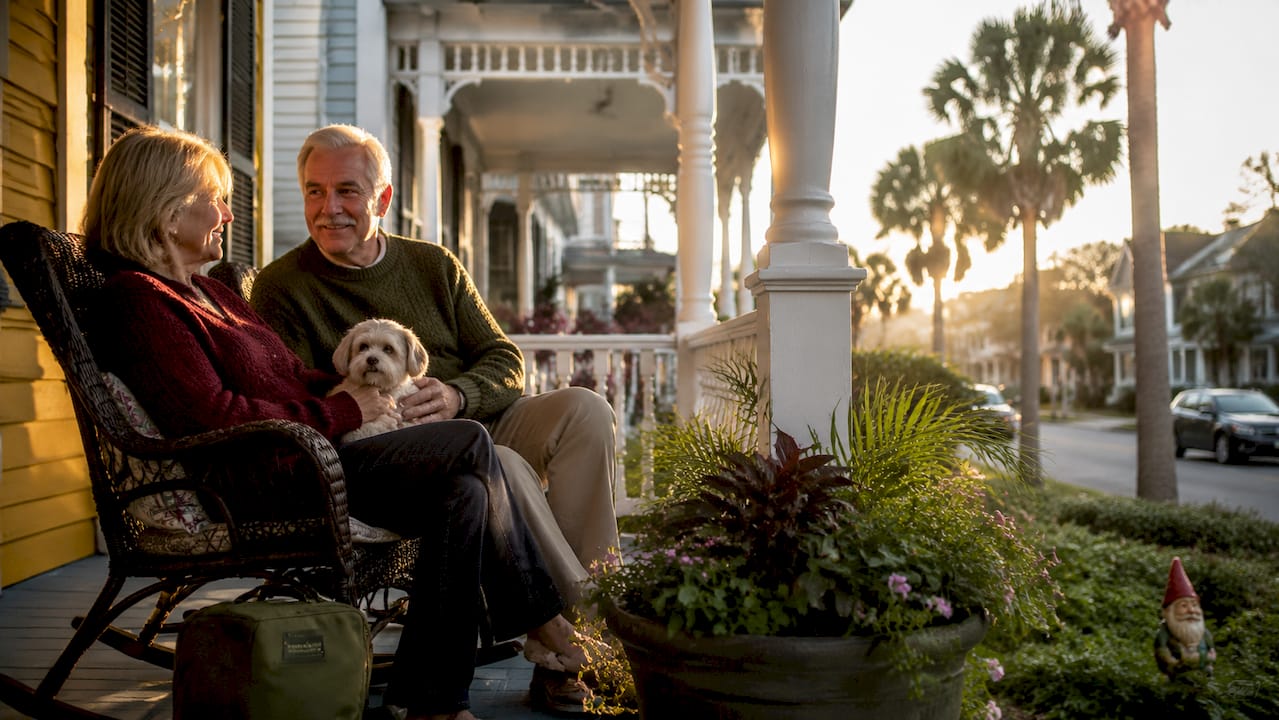
Fernandina Beach is defined as one of Florida's most compelling retirement destinations because it delivers a rare combination: no state income tax, a walkable historic downtown, year-round community life, and direct access to Atlantic beaches and the Intracoastal Waterway. Retirees who relocate here are not simply choosing a warm climate. They are choosing a place with genuine character, where Victorian architecture lines brick streets and neighbors gather on porches overlooking preserved marshlands. The Fernandina Beach lifestyle rewards those who value continuity, craftsmanship, and a slower, more deliberate pace of living.
Why Fernandina Beach attracts retirees: the financial case
Florida's tax structure is the first reason retirees look seriously at Fernandina Beach. The state levies no income tax and no tax on retirement income, which means Social Security, pension distributions, and IRA withdrawals are all sheltered from state taxation. For a household drawing $80,000 annually in retirement income, that distinction alone can preserve thousands of dollars each year compared to states like Georgia or North Carolina.
The cost of living in Fernandina Beach runs about 15% above the U.S. average, driven primarily by housing costs. That premium reflects the desirability of the location rather than inefficiency. The median home price in ZIP code 32034 sits near $600,000 in 2026, while Nassau County's broader median is approximately $490,000. Retirees with equity from a prior home sale often find these figures manageable, particularly when the tax savings offset carrying costs.
Property taxes and sales taxes in Nassau County remain moderate by Florida standards, adding to the financial appeal. However, barrier island ownership introduces one cost that surprises many buyers: property insurance. Flood and windstorm coverage on Amelia Island can be volatile and costly, and the annual premium can rival or exceed a monthly mortgage payment on some properties. Requesting insurance quotes before making an offer is not optional here. It is the most important financial step in the process.
Pro Tip: Request flood zone determination and windstorm insurance quotes from at least three carriers before submitting any offer on a Fernandina Beach property. The variance between carriers can be significant, and it directly affects your true monthly cost of ownership.
| Cost factor | What retirees should know |
|---|---|
| State income tax | Florida charges none, protecting all retirement income streams. |
| Median home price | Around $600,000 in ZIP 32034; Nassau County median near $490,000 in 2026. |
| Cost of living index | Approximately 15% above the U.S. average, driven by housing. |
| Property insurance | Flood and windstorm premiums are high on barrier islands; get quotes early. |
| Sales and property tax | Moderate by Florida standards, partially offsetting housing cost premium. |
How does Fernandina Beach's lifestyle benefit retirees?
The benefits of retiring in Fernandina go well beyond tax savings. The historic downtown functions as a true neighborhood rather than a tourist corridor. Shops, restaurants, a working marina, and a farmers market are all within walking distance of residential streets, which means daily life here does not require a car for every errand. That walkability is rare on Florida's coast and is one of the most consistently cited reasons retirees choose this town over alternatives.
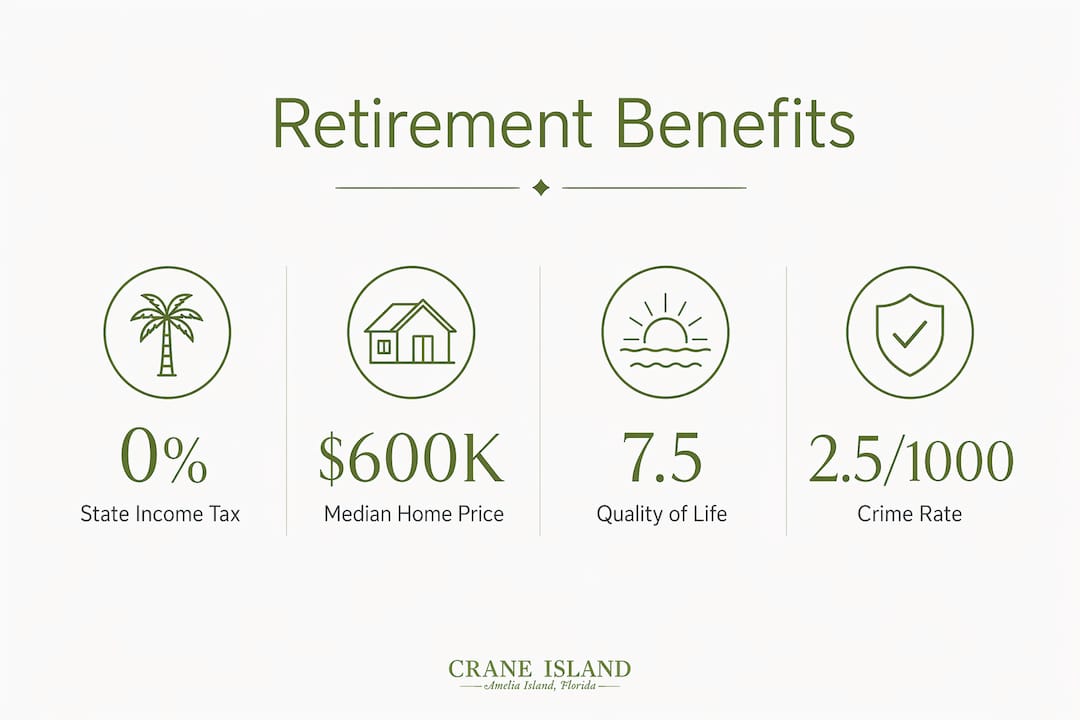
Fernandina Beach scores 7.5 out of 10 for quality of life, with a crime rate of approximately 2.5 per 1,000 residents and an average annual temperature of 74°F. That combination of safety and climate supports the kind of outdoor, socially active retirement that most people envision but rarely find. Fort Clinch State Park, accessible by bicycle from the historic district, offers hiking, fishing, and living history programs that give retirees meaningful ways to spend their days.
The town's resistance to rapid change is not a limitation. It is a feature. Victorian homes, brick streets, and a preserved waterfront give Fernandina Beach a layered sense of history that newer resort communities simply cannot replicate. Retirees who have lived in places that reinvented themselves every decade often describe Fernandina Beach as the first place they have lived that feels genuinely settled.
Here are four lifestyle qualities that distinguish the Fernandina Beach senior community from comparable coastal towns:
- Walkable historic core. The Centre Street corridor and surrounding blocks offer daily errands, dining, and cultural events on foot, without the congestion of larger resort towns.
- Year-round community. Unlike seasonal resort areas, Fernandina Beach remains vibrant year-round, with local events, civic organizations, and neighborhood life that continue well past tourist season.
- Natural access. Fort Clinch State Park, Atlantic beaches, and the Intracoastal Waterway provide outdoor recreation within minutes of any address in town.
- Cultural continuity. The town's architectural heritage and community identity give retirees a sense of belonging that takes years to build elsewhere but feels immediate here.
"The town's architecture and community preserve a layered history and resist rapid reinvention, which appeals to retirees valuing continuity and authenticity." — Historic Port Town on Amelia Island
What housing and neighborhood options should retirees consider?
The Fernandina Beach real estate market divides into two distinct lifestyle segments, and choosing between them is the most consequential decision a retiring buyer will make. Understanding Amelia Island real estate means recognizing that these two segments serve genuinely different visions of retirement.
The historic downtown district offers Victorian cottages, restored brick storefronts converted to residences, and character-rich homes woven into a walkable neighborhood fabric. Median prices here run near $600,000, and ownership comes with renovation guidelines enforced by the local historic preservation board. Those guidelines protect the neighborhood's integrity, but they require buyers to work with contractors and agents who understand the approval process. Navigating historic district regulations without experienced local guidance is the most common mistake retirees make in this market.
The south end of Amelia Island offers a different experience entirely. Resort-style gated communities provide amenities like golf, tennis, spa facilities, and private beach access within a managed environment. These properties attract retirees who want resort amenities on demand and prefer the predictability of a homeowners association over the creative latitude of the historic district.
| Feature | Historic downtown | Resort-style south end |
|---|---|---|
| Walkability | High, daily errands on foot | Low to moderate, car dependent |
| Architectural character | Victorian, brick, coastal cottage | Contemporary resort and golf community |
| Renovation flexibility | Restricted by historic guidelines | Governed by HOA standards |
| Amenities | Restaurants, marina, festivals | Golf, tennis, spa, private beach |
| Price range | Near $600,000 median | Varies widely by community |
A third option has emerged for retirees who want neither the renovation complexity of the historic district nor the density of a large resort community. Smaller, conservation-focused communities like Crane Island offer custom-built homes on the Intracoastal Waterway within a preserved natural setting. With only 14 homesites, the scale is intimate, and the gated waterfront living combines privacy with direct access to Fernandina Beach's cultural life.
Pro Tip: Visit each neighborhood type on a weekday morning, not a weekend during festival season. The day-to-day rhythm of a neighborhood tells you far more than its peak-season energy.
How do healthcare, transportation, and services support retirees?
Practical infrastructure matters as much as lifestyle when you are choosing a permanent home. Fernandina Beach performs well on the metrics retirees prioritize most.
- Airport access. Jacksonville International Airport sits about 30 minutes away, making it straightforward to visit family, travel seasonally, or return from medical appointments in larger cities without the exhaustion of a long drive.
- Healthcare proximity. Jacksonville's major hospital systems, including UF Health Jacksonville and Baptist Health, are within 35 to 50 minutes. Local urgent care and primary care options in Nassau County handle routine needs without requiring the commute.
- School quality. Nassau County Schools hold an all-A rating for 2024 to 2025. For retirees with grandchildren who visit frequently or who may eventually relocate nearby, that rating matters more than many buyers initially expect.
- Daily amenities. Grocery stores, pharmacies, fitness centers, and specialty retailers are accessible within Fernandina Beach and the surrounding Nassau County area, reducing dependence on Jacksonville for everyday needs.
- Commute flexibility. The 35 to 50 minute drive to Jacksonville job centers makes Fernandina Beach viable for retirees who consult part-time, maintain professional licenses, or simply want proximity to a major metro without living in one.
The Amelia Island relocation guide for 2026 confirms that this combination of local amenities and metro proximity is one of the town's most underappreciated advantages. Retirees who have lived in truly remote coastal communities often cite the lack of nearby services as their primary regret. Fernandina Beach avoids that trade-off.
What seasonal and cultural nuances should retirees understand?
Fernandina Beach has a cultural calendar that enriches daily life but also introduces rhythms that retirees should understand before committing to a purchase. The Isle of Eight Flags Shrimp Festival, held each May, draws tens of thousands of visitors to the historic downtown and transforms the neighborhood for a weekend. Seasonal congestion during major festivals affects parking, noise levels, and the general pace of the town in ways that are genuinely enjoyable for some residents and genuinely disruptive for others.
A few things worth knowing before you move:
- Spring and early summer bring the highest tourist volume. Parking near the historic district becomes competitive on weekends from March through July.
- The Isle of Eight Flags Shrimp Festival is the town's signature event and a genuine community celebration, but it occupies the entire downtown for several days.
- Fall and winter offer the quietest, most authentic version of Fernandina Beach life. Visiting in November or January gives you an honest picture of what year-round living actually feels like.
- The town's year-round vibrancy distinguishes it from purely seasonal resort towns, where off-season can feel empty and services contract significantly.
The slower rhythm that defines Fernandina Beach outside of peak season is precisely what draws retirees who have spent decades in faster-moving environments. The town does not perform for visitors. It simply continues being itself.
Key takeaways
Fernandina Beach attracts retirees because it combines Florida's tax advantages, a walkable historic community, year-round social life, and coastal access in a town that has deliberately preserved its character rather than traded it for growth.
| Point | Details |
|---|---|
| Tax environment | No state income tax and no retirement income tax make Florida financially compelling for retirees. |
| Cost of living | Housing runs about 15% above the U.S. average, but tax savings and lifestyle quality offset the premium. |
| Community and lifestyle | A 7.5/10 quality of life score, low crime, and year-round neighborhood activity support active retirement. |
| Housing options | Historic district, resort communities, and conservation enclaves each serve different retirement visions. |
| Practical infrastructure | Jacksonville International Airport and top-rated Nassau County Schools are within 30 to 50 minutes. |
What I have learned from watching retirees choose Fernandina Beach
I have followed this market long enough to notice a pattern. The retirees who thrive in Fernandina Beach are not the ones who arrived chasing a postcard. They are the ones who visited in February, walked the downtown on a Tuesday morning, ate lunch at a local restaurant without a wait, and thought: this is what I actually want.
The financial case is real. Florida's tax structure is a genuine advantage, and the numbers in Nassau County are defensible for buyers with equity from a prior home sale. But the tax savings are not why people stay. They stay because the town has a soul that newer communities spend millions trying to manufacture and never quite achieve.
The challenges are real too. Property insurance on a barrier island is not a minor line item. Historic district ownership requires patience and the right local partners. And if you are someone who needs the energy of a large city within walking distance, Fernandina Beach will feel quiet in ways that take adjustment. The commute to Jacksonville is manageable, not negligible.
My honest recommendation: explore the Amelia Island lifestyle across multiple neighborhood types before deciding. The historic district, the resort communities, and the conservation-focused enclaves like Crane Island each attract a different kind of retiree. None of them is wrong. But only one of them will feel like yours.
— John Hillman
Discover your place on Amelia Island with Craneisland
If what you have read resonates, Craneisland offers something rare on Amelia Island: a collection of just 14 custom homesites on the Intracoastal Waterway, where Lowcountry architecture meets preserved marshland and genuine porch-living culture. Every home here is built to honor both the land and the story of the family that chooses it.
Craneisland's team brings deep knowledge of the local market, the natural environment, and the architectural traditions that make this place worth protecting. Whether you are ready to explore available properties or want to understand what a custom design-build process looks like on Amelia Island, we are here to walk you through every step with the care this decision deserves.
FAQ
Why do retirees choose Fernandina Beach over other Florida towns?
Fernandina Beach offers a combination of no state income tax, a walkable historic downtown, low crime, and year-round community life that most Florida coastal towns do not provide together. The town's preserved Victorian character and direct beach access make it particularly appealing to retirees who value authenticity over resort-style development.
What is the cost of living in Fernandina Beach for retirees?
The cost of living runs about 15% above the U.S. average, driven by housing costs, with a median home price near $600,000 in ZIP 32034. Florida's no-income-tax environment partially offsets this premium for retirees drawing from pensions, IRAs, or Social Security.
Is Fernandina Beach safe for retirees?
Fernandina Beach has a crime rate of approximately 2.5 per 1,000 residents and scores 7.5 out of 10 for overall quality of life, making it one of the safer small coastal communities in Florida.
What are the best neighborhoods for retirement in Fernandina Beach?
The historic downtown suits retirees who want walkability and cultural character, while resort communities on the south end of Amelia Island offer golf and managed amenities. Conservation-focused communities like Crane Island serve retirees seeking privacy, natural beauty, and custom-built homes on the Intracoastal Waterway.
How far is Fernandina Beach from major healthcare facilities?
Jacksonville International Airport and major hospital systems including UF Health Jacksonville are approximately 30 to 50 minutes from Fernandina Beach, giving retirees reliable access to specialized medical care without living in a large metro area.