
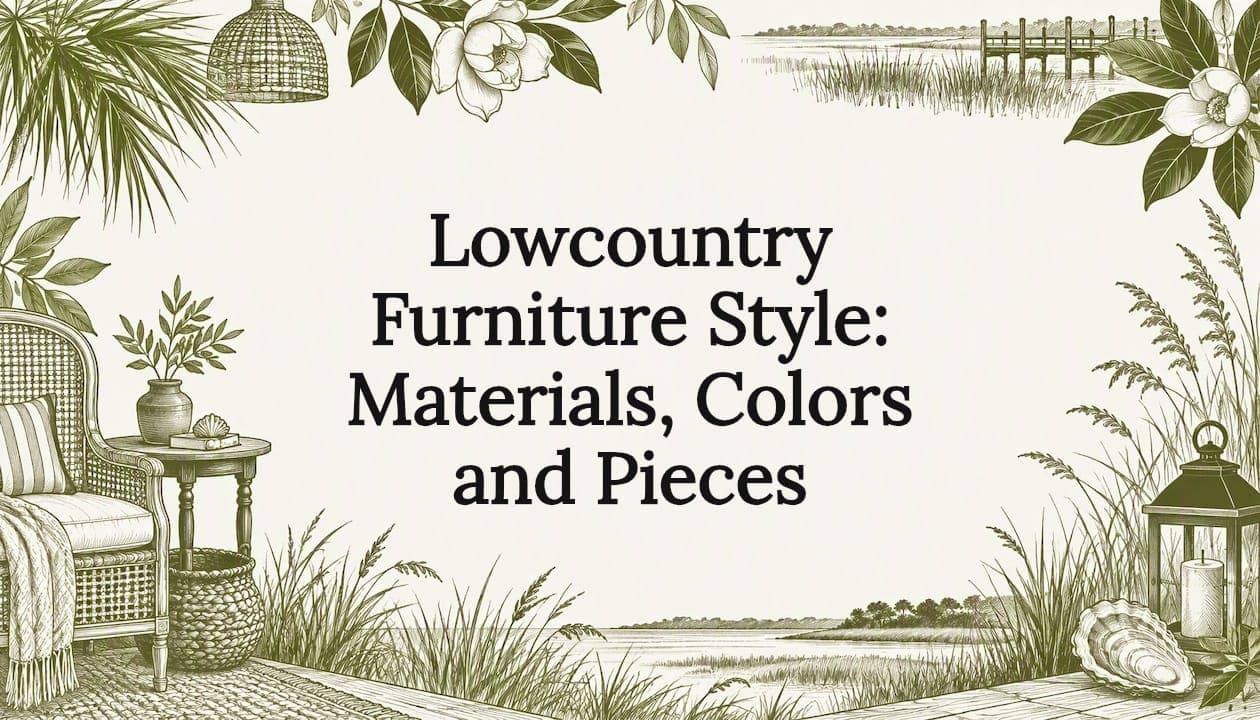
Lowcountry furniture style is a relaxed, well-mannered blend of Southern tradition and coastal ease. It favors natural woods, woven rattan and seagrass, linen upholstery and a palette borrowed from marsh, tide and oyster shell. Pieces are meant to be lived in, to move easily between the living room and the porch, and to look as though they have been there for generations. Below we walk through what defines the look, which materials last in salt air and humidity, how to furnish each room, and how a garden house or other outbuilding should echo the main house.
TL;DR
- Lowcountry furniture rests on natural materials: wood, rattan, seagrass and linen, in mellow neutral tones.
- The palette comes from the landscape: oyster white, marsh green, tidal blue and warm sandstone, with black used sparingly.
- Furnish with the outdoors in mind: porches work as true living rooms, so choose pieces that move between inside and out and survive humidity.
- Choose durable outdoor materials, such as marine-grade aluminum and HDPE, and keep teak for pieces you are willing to maintain.
- Any outbuilding should stay smaller than the house and echo its form, materials and details.
Table of Contents
- Where the style comes from
- The materials that define the look
- A palette drawn from the landscape
- Furnishing room by room
- Flooring that supports the furniture
- Porch and outdoor furniture that lasts
- Outbuildings: furnishing and designing the garden house
- Our perspective: furniture follows the place
- Bringing the look together: a short checklist
- Build a home made for this furniture
- FAQ
- Sources
Where the style comes from
Lowcountry furniture did not appear fully formed. Historic furniture making in the region, particularly in Charleston, drew together British, German, French Huguenot and other European influences. The result ran from refined urban cabinetwork to plain, useful vernacular pieces made for everyday life.
That double heritage still shapes the look today. A Lowcountry room can hold a formal mahogany sideboard and a worn pine bench without either feeling out of place, because both were made to be used. The best rooms have what designers call a sense of having evolved: nothing matched in a single afternoon, everything chosen for how it ages.
The houses shaped the furniture as well. Traditional Low Country homes feature large raised verandas, tall double-hung windows and broad, shady porches. Those porches and tall windows explain why the furniture feels airy, breathable and oriented toward the view. If you want to see how the architecture and the interiors speak to each other, our guide to Lowcountry architecture with a Fernandina twist is a good companion.

The materials that define the look
The core of the style is a short list of natural materials. Coastal South Carolina and Georgia homes are furnished with the outdoors in mind, and interiors lean on wood, rattan and seagrass to tie rooms to the surrounding landscape. Designers also reach for woven grasses, feathers, linens and natural woods such as cypress or heart pine.
Wood
Cypress and heart pine are the regional signatures. Both carry a warm, slightly irregular grain, and both suit the pieces that anchor a room: farm tables, benches, open shelving, consoles. Local material palettes in the area also include tabby, Savannah gray brick, heart pine, cypress and metal roofing, which is a useful reminder that the furniture should feel related to what the house itself is made of.
A few guidelines for wood pieces:
- Favor honest finishes: oiled, waxed, limewashed or softly painted rather than high-gloss lacquer.
- Let wear show. A dining table that picks up a few marks is part of the story.
- Mix one or two darker antique pieces with lighter, weathered woods so the room reads as collected.
Rattan, cane and seagrass
Woven furniture is the quickest way to add lightness. Rattan and woven pieces introduce a lightness and materiality that upholstery alone cannot provide. Think cane-backed dining chairs, a rattan armchair beside a window, a seagrass pouf or a woven bench at the foot of a bed. Weave also lets air and light move through a room, which matters in a humid climate.

Linen and natural textiles
Linen in natural, undyed tones is the default upholstery. It breathes, softens with washing and reads as relaxed rather than precious. Slipcovered sofas and armchairs are a classic choice because they can be laundered, a practical gift in a house where sandy feet and salt air are part of life. Layer in cotton throws, jute or sisal rugs and a few woven baskets, and keep patterns quiet: stripes, ticking and small botanical prints.
A palette drawn from the landscape
Lowcountry color is not decoration for its own sake. It is borrowed from the place. One regional design guide describes the palette as oyster white and warm cream, marsh green and sage, deep tidal blue and navy, and warm sandstone and taupe, with black used sparingly to give graphic definition.
That last point is worth taking seriously. A black cane chair back, an iron lantern or a slim black window frame gives a soft room its outline. Too much, and the room loses its ease.
A local designer, Cheryl Wilson of Plantation Interiors, advises soft, nature-derived tones such as mossy grays and sky blues to promote tranquility. In practice, that means:
- Start with a quiet base on walls and large upholstery: cream, oyster or pale gray.
- Add one landscape color in moderation, such as sage on a cabinet or navy in a rug.
- Bring in natural wood and woven texture to warm everything up.
- Finish with a small amount of black in lighting, hardware or a picture frame.
Furnishing room by room
Living room
Build around a deep, slipcovered sofa in natural linen, then add a pair of rattan or cane-backed chairs facing it. A reclaimed wood coffee table, a woven basket for throws and a single piece with age, perhaps an antique chest, keep the room from feeling like a showroom. Place seating to face the windows or an open door, because in this style the view is part of the furniture.
Dining room
A long wood table, a bench on one side and cane-backed chairs on the other make an easy, social arrangement. Keep the finish natural. A simple pendant in iron, rope or woven material carries the coastal note without theme-park touches.
Bedroom
Think of a bedroom as a quiet retreat: a wood or woven headboard, linen bedding in white or sand, a bench at the foot and a bedside table with a little patina. A single sea-grass rug or a flat-weave runner in a soft tone is enough underfoot.
Entry and hall
The entry is where Lowcountry hospitality starts. A narrow console, a bench for removing shoes and a basket for umbrellas and beach bags speak to how people actually live near the water.
Flooring that supports the furniture
Furniture sits on floors, and in a humid region the floor matters. Flooring in Lowcountry homes should prioritize humidity resistance, and wide-plank white oak in a natural or wire-brushed finish is considered a standard contemporary choice for its stability and organic warmth. Pair it with natural-fiber rugs and the furniture above and the room almost arranges itself.
Humidity is also a design question for the house as a whole. Our piece on climate ready Lowcountry architecture features for heat and flooding explains how the building itself shapes what will thrive inside.
Porch and outdoor furniture that lasts
The porch is the heart of Lowcountry living. We think of it as a true living room, with the marsh, the live oaks or the water as the view. If that idea appeals, our front porch living guide goes deeper into how to design and furnish one.
Salt, sun and humidity are hard on outdoor pieces, so material choice matters more here than anywhere else in the house. Durable outdoor furniture materials include HDPE and marine-grade aluminum, while teak can survive outdoors but needs significant maintenance on the coast. The same source suggests a mix: low-maintenance materials such as HDPE for dining, where pieces get daily use and cleaning, and more traditional, aesthetic-focused pieces for lounge areas.
If woven looks appeal to you outdoors, it is worth exploring rattan outdoor furniture alternatives so you can compare the weave, frame and weather performance before you buy. A few practical rules for any porch:
- Choose frames that resist corrosion, such as marine-grade aluminum, even when the surface looks like wood or rattan.
- Pick cushions in solution-dyed or quick-drying fabrics and store them when storms are forecast.
- Keep the color story consistent with the interior so the porch reads as another room.
- Add a ceiling fan, a daybed or a swing, which are classic porch companions.
Outbuildings: furnishing and designing the garden house
Many readers who search for Lowcountry style are also thinking about the small buildings that surround a main house: a pool house, a guest cottage, a boat shed, a studio or a garden room. The principle is the same as for furniture: belong first, stand out second.
Guidance from one municipal design standard for outbuildings says they should be minimal in scale and subordinate to the primary structure, placed so they do not visually compete with it, and that their design should echo the house in form, scale, materials and detail. It was written for a Virginia city, not the coast, but the logic carries to a Lowcountry lot, and it is the same instinct that guides our own design standards.
In practice, we translate it this way:
- Keep it smaller than the house. The main house leads and the outbuilding supports it.
- Repeat the roofline and materials. If the house has a metal roof and cypress trim, the garden house should as well.
- Give it a porch or a deep eave. A small shaded edge turns even a utility building into a place to sit.
- Furnish it lightly. A daybed with linen cushions, a wood table and a pair of woven chairs are enough. Outbuildings often see more humidity and fluctuation than the house, so favor sturdy, washable materials.
- Respect the site. Place it where it preserves views, trees and natural drainage rather than fighting them.
The same document also advises maintaining the property's drainage and historic site features, a sound habit on any low-lying coastal lot. For a wider view of how houses and the land fit together, see our look at timeless home design for Lowcountry coastal homesites.
Our perspective: furniture follows the place
We design and steward a community where nearly half the land is kept as open space, and we have learned that interiors are best when they take their cues from what is outside the window. Lowcountry furniture is not a catalog of items. It is an attitude: use honest materials, let light and air in, and leave room for the pieces that tell a family's own story.
We believe a porch should be furnished as carefully as a dining room, because that is where neighbors gather. We also believe the best furniture is chosen slowly. A cypress table inherited from a grandparent, a cane chair found at an estate sale and a new linen sofa can share a room happily, because the house they live in was built to hold layers of memory.
The same discipline applies to everything on the property. Outbuildings, garden houses and boat sheds should look as though they grew from the same roots as the home, in proportion, in material and in detail. That consistency is what makes a neighborhood feel woven into the land rather than placed upon it.
— John Hillman
Bringing the look together: a short checklist
- Choose a quiet base color from the landscape palette and keep large surfaces calm.
- Select two or three natural materials, such as cypress, rattan and linen, and repeat them.
- Add one antique or inherited piece per room for depth.
- Select durable materials outdoors and plan for storage in storm season.
- Keep outbuildings subordinate to the house and echo its materials.
- Edit. A Lowcountry room breathes; it is never crowded.
For more on how the architecture sets the stage, our architecture and design articles and our guide to Southern Living architecture and classic styles are good next reads.
Build a home made for this furniture
Furniture looks best in a house designed for it: deep porches, tall windows, wide-plank floors and views of preserved marsh and forest. At Crane Island on Amelia Island, we offer custom homesites and move-in ready homes in a Lowcountry-inspired community with Intracoastal Waterway access, guided by rigorous architectural standards. Only 14 homesites are available. You can explore homes and homesites or learn about The Crane Island Portfolio Homes Program.
If you would like to see how the community plans for design, our house plan books are a place to begin, and our frequently asked questions answer many questions about buying here.
FAQ
What is Lowcountry furniture style?
It is a Southern coastal style built on natural materials such as wood, rattan, seagrass and linen, in soft neutral colors. Its roots lie in Charleston-area cabinetmaking, which blended European influences into both refined and utilitarian pieces. The look is relaxed, layered and made for indoor-outdoor living.
What colors work best in Lowcountry interiors?
Draw from the landscape: oyster white, marsh green or sage, tidal blue or navy, and warm sandstone. Use black sparingly for definition, in lighting, hardware or a chair back. Soft tones such as mossy gray and sky blue keep rooms calm.
Which outdoor furniture holds up on the coast?
Marine-grade aluminum and HDPE are among the most durable choices for salt and humidity. Teak can last outdoors but demands significant upkeep near the coast. Many designers pair low-maintenance dining pieces with more traditional lounge furniture.
How should an outbuilding relate to the main house?
Keep it smaller than the house and placed so it does not compete with it. Echo the house's form, scale, materials and details, such as roofing and trim. Preserve drainage and natural site features around it.
Can I use Lowcountry style in a newly built home?
Yes. The style is about materials, proportion and a connection to the outdoors rather than age. New homes with deep porches, wide-plank floors and natural finishes suit it well, and a few antiques add the sense of history.
Sources
- Cabinetmakers | South Carolina Encyclopedia
- Design In Focus: Southeast | LUXE Interiors + Design
- Keeping it Real in the Lowcountry | LOCAL Life SC
- The Lowcountry Aesthetic: A Complete Design Guide | The Charleston Design Center
- The Low Country Style | Heritage Pattern Book
- Outbuildings and Site Design | City of Petersburg
- Lowcountry Outdoor Furniture: What Materials Actually Last | Terrace + Tide