
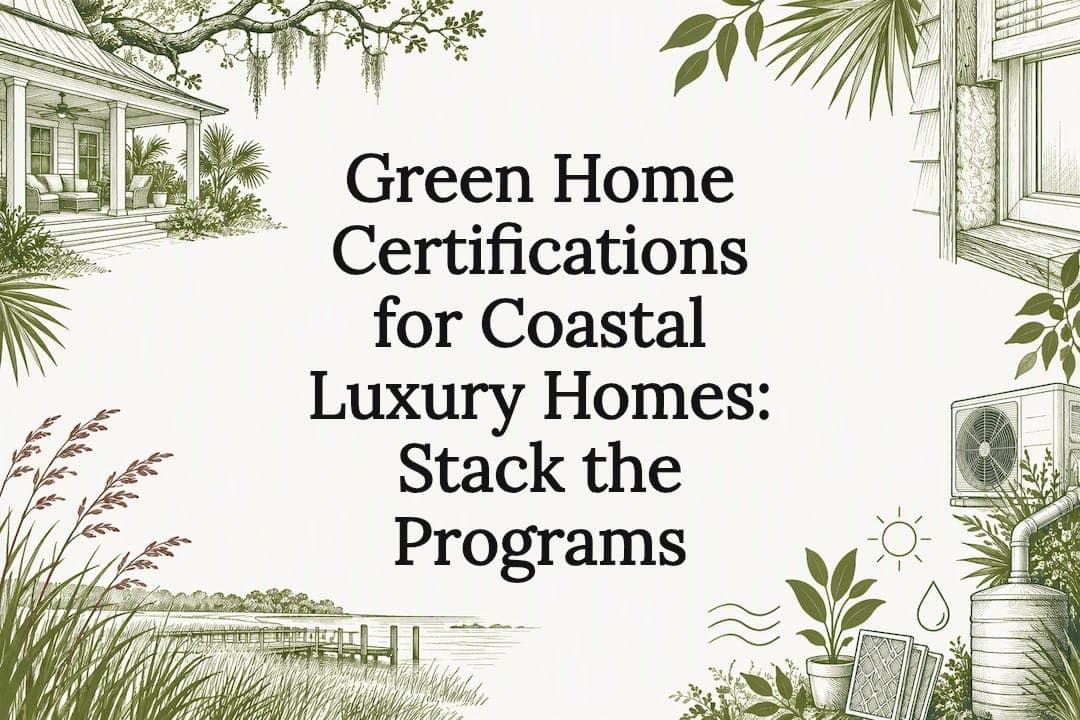
The certifications that matter most for residential projects are ENERGY STAR (including its NextGen tier), the DOE Zero Energy Ready Home, Indoor airPLUS, LEED for Homes, the National Green Building Standard, and Passive House or PHIUS+. Once you know which goal matters most to you, whether it is lower utility bills, cleaner indoor air, or verified whole-home performance, the next step is simple: reach out to a certified rater or register your project directly with the program.
TL;DR:
- Register during design before construction documents are final, and hire a qualified rater early; inspections before walls close and permit dates can change applicable requirements.
- ENERGY STAR NextGen requires homes to use at least 20% less energy than homes built to typical codes, giving cost conscious projects a measurable target.
- DOE Zero Energy Ready Home requires both ENERGY STAR and Indoor airPLUS, plus wiring prepared for solar or an equivalent renewable energy provision.
- Choose Indoor airPLUS with ENERGY STAR for air quality; it adds ventilation, moisture control, and low VOC material rules, checked during the same inspection.
- Rebates vary by state, utility, and municipality, so confirm current eligibility with your utility or state energy office before counting on savings.
Table of Contents
- Shortlist: the main green home certifications and what each is for
- How certification typically works: the practical steps, verification, timeline, and cost drivers
- Detailed per-program breakdown: requirements, what they verify, and measurable claims
- Which certification should you choose: matching goals to programs and practical advice for homeowners
- Crane Island perspective: how residential green certifications align with sustainable luxury homes
- Comparison of lifecycle environmental impact assessments addressed by each certification
- Examples of certified homes or case studies relevant to coastal luxury homes
- How green building certifications align with local or state sustainability incentives or rebates relevant to home buyers
- Common challenges or considerations when integrating green certifications with luxury coastal home design
- Differences in certification suitability based on regional climate or location-specific factors
- Benefits of green building certifications for homeowners
- Author perspective: a concise expert take on trends and the practical value of certification for homeowners
- Alternative option: Crane Island as a sustainable-luxury place to build
- FAQ
- Sources
Shortlist: the main green home certifications and what each is for
Each program answers a slightly different question, and knowing the distinction up front saves months of confusion later. We find that most homeowners narrow their choice quickly once they see what each one actually verifies.
- ENERGY STAR confirms baseline, independently verified energy efficiency; its ENERGY STAR NextGen tier highlights advanced electric technologies and requires homes to be at least 20% more energy-efficient than typical code-built construction.
- DOE Zero Energy Ready Home pushes whole-house performance further, requiring both ENERGY STAR and Indoor airPLUS as prerequisites and enforcing PV-ready wiring or an equivalent renewable-energy provision.
- Indoor airPLUS layers indoor-air-quality construction specifications onto an ENERGY STAR foundation, addressing ventilation, moisture control, and material choices.
- LEED for Homes uses a point-based system across energy, water, materials, and site factors, with certification levels running from Certified through Platinum.
- NGBS, the National Green Building Standard, is an ANSI-approved framework covering six categories: site, resource use, water, energy, indoor environmental quality, and operation and maintenance.
- Passive House or PHIUS+ sets the most demanding energy-performance bar, built around airtightness, thermal bridging control, and modeled heating and cooling loads.
If your priority is simply trimming the electric bill, ENERGY STAR is the natural starting point. If you care equally about air quality for a family member with allergies, Indoor airPLUS belongs in the conversation from day one. For buyers who want the most rigorous, physics-driven approach to comfort and energy use, Passive House sets a standard that few other programs attempt to match.
How certification typically works: the practical steps, verification, timeline, and cost drivers
Pursuing certification is less about paperwork at the end and more about decisions made early, often before a shovel touches the ground.
- Register with your chosen program during the design phase; most programs, including LEED for Homes, work best when registration happens before construction documents are finalized.
- Line up your verification team: a Home Energy Rater or Green Rater handles inspections and testing, while a Home Certification Organization (HCO) or program-recognized verifier manages documentation and submission.
- Build to the program checklist throughout construction, expecting a pre-drywall inspection to confirm insulation and air sealing, followed by diagnostic testing such as a blower door test and duct leakage test.
- Complete a final inspection once construction wraps, then submit documentation for program review and certification.
- Watch your permit date closely, since many programs tie checklist versions to the date a permit is pulled, and a few months' difference can change which requirements apply.
Cost drivers tend to cluster around rater fees, diagnostic testing, and any mechanical upgrades needed to hit program targets, such as a heat recovery ventilator or a higher-efficiency heat pump. Documentation time adds up too, particularly for point-based programs like LEED or NGBS that require more extensive record-keeping.
Pro Tip: Ask any rater or builder for a sample checklist and a realistic timeline estimate before you commit to a certification path or an upgrade package.
Detailed per-program breakdown: requirements, what they verify, and measurable claims
ENERGY STAR verification runs through independent third-party inspection and testing, overseen within a Quality Assurance Program managed by an HCO. The ENERGY STAR NextGen tier requires homes to be at least 20% more energy-efficient than typical code-built homes, a figure that reflects advances in electric heat pumps, heat pump water heaters, and tighter building envelopes.
The DOE Zero Energy Ready Home program sits a tier above that baseline. Its national rater checklist mandates ENERGY STAR and Indoor airPLUS certification as prerequisites, then layers on envelope, HVAC, and renewable-ready provisions, including PV-ready wiring so a home can add solar later without reworking the electrical system. Builders can pursue either a prescriptive path, following fixed specifications, or a performance path, using energy modeling to hit the same target through different means. Credentialed raters are required throughout, and the program's structure means much of the ENERGY STAR and Indoor airPLUS documentation carries forward rather than duplicating effort.
Indoor airPLUS requires ENERGY STAR certification as its own prerequisite, then adds construction specifications aimed squarely at what you breathe: low-VOC paints and sealants, ventilation requirements, moisture management details, and documented product choices. Verification happens alongside the ENERGY STAR inspection rather than as a separate visit, which keeps the process efficient once you commit to both programs together.
LEED for Homes follows a registration, verification, and review sequence: you register with USGBC, a LEED Green Rater and energy rater verify the home through site visits that include a pre-drywall inspection, and the U.S. Green Building Council's certification arm, GBCI, reviews the submitted documentation. Points earned across categories determine whether the home lands at Certified, Silver, Gold, or Platinum, and the Green Rater's on-site role is central to keeping that scoring honest.
NGBS takes a broader, ANSI-approved approach, scoring homes across six categories: site design, resource efficiency, water efficiency, energy efficiency, indoor environmental quality, and operation and maintenance. Multiple certification levels let a project demonstrate incremental improvement, which makes NGBS a comfortable fit for builders who want flexibility across different categories rather than a single hard threshold.
Passive House and PHIUS+ take the opposite approach: instead of scoring across many categories, they concentrate almost entirely on measured performance. Blower-door targets for airtightness, modeled heating and cooling loads, and strict thermal-bridging control define the standard, making it less a checklist and more an engineering discipline applied to the whole envelope.

Which certification should you choose: matching goals to programs and practical advice for homeowners
The right program depends on what you actually want the house to do for you.
- If your main goal is a lower utility bill, start with ENERGY STAR and consider stepping up to DOE Zero Energy Ready Home once that foundation is in place.
- If indoor air quality matters most, pair Indoor airPLUS with ENERGY STAR from the outset rather than retrofitting air-quality measures later.
- If you want the highest achievable thermal performance and are comfortable with a rigorous design process, Passive House or PHIUS+ delivers results no other residential program attempts.
- If you want a broad sustainability portfolio that documents site, water, materials, and energy together, LEED for Homes or NGBS offers that range.
Stacking makes sense when your ambitions grow in sequence: ENERGY STAR plus Indoor airPLUS naturally sets up a DOE Zero Energy Ready Home certification, since the prerequisites carry forward. A single-program focus is often enough for a straightforward new build where energy savings are the primary concern. New custom builds tend to have the most flexibility to pursue any of these programs, while a gut rehab often finds ENERGY STAR or Indoor airPLUS more practical given existing structural constraints.
Before committing, ask your builder or rater what certifications they have completed before, request a sample checklist and timeline, clarify who covers testing and documentation costs, and ask how certification might affect your home's warranty or closing timeline.
Crane Island perspective: how residential green certifications align with sustainable luxury homes
We think about energy performance, indoor air quality, and site sensitivity the same way these certification programs do, as interconnected priorities rather than separate boxes to check. Our approach to environmentally sensitive development and our architectural standards grew from the same values that drive programs like NGBS and LEED for Homes: thoughtful material choices, careful site planning, and construction quality that holds up over decades.
For a buyer building a custom home on a homesite, formal certification becomes worth pursuing when resale value, demonstrable performance, or personal peace of mind matter enough to justify the documentation. Many of our homeowners find that builder specifications and detailed manuals already capture much of what a certification would verify, as discussed in our piece on sustainable luxury home features and the role HERS scores play in that conversation.
Comparison of lifecycle environmental impact assessments addressed by each certification
Lifecycle thinking asks a different question than a single-point energy score: how much impact does a home create across its full life, from the materials harvested to build it through decades of operation and eventual renovation or demolition? The certification programs address this unevenly.
ENERGY STAR and the DOE Zero Energy Ready Home program concentrate almost entirely on operational impact, the energy consumed while you live in the home, verified through inspection and testing rather than a full lifecycle model. Indoor airPLUS stays narrowly focused on health outcomes during occupancy rather than material sourcing or end-of-life impact.
LEED for Homes and NGBS take the broadest view among these programs, awarding points for material selection, waste management during construction, and water efficiency alongside energy performance, which brings them closer to a true lifecycle perspective even without a formal life-cycle assessment calculation built into every project.

Passive House and PHIUS+ sit in between: the standard's intense focus on building envelope performance reduces operational energy dramatically over the home's lifespan, which is itself a meaningful lifecycle contribution, even though the program does not formally score material sourcing or embodied carbon the way LEED's point system can.
For homeowners weighing lifecycle impact seriously, pairing a performance-focused program like ENERGY STAR or Passive House with deliberate material choices, documented separately, often achieves more than relying on any single certification's scope to cover every angle.
Examples of certified homes or case studies relevant to coastal luxury homes
Coastal construction adds layers that inland certification examples do not always address: salt-air corrosion, elevated humidity, storm-resistant detailing, and foundation considerations tied to flood zones. Programs like DOE Zero Energy Ready Home and Indoor airPLUS both include provisions that translate directly to these conditions, since moisture management and ventilation requirements already anticipate humid climates.
Within our own community, the emphasis on preserved marshland and careful site orientation reflects the same site-sensitivity criteria that NGBS and LEED for Homes score formally. Our piece on sustainable coastal communities walks through how site preservation, material durability, and design standards work together in a coastal setting, offering a useful reference point for anyone comparing a custom coastal build against a certified example elsewhere.
Builders pursuing certification on a coastal luxury project often find that the construction specifications already required for storm resistance, impact-rated windows, elevated mechanical systems, and durable envelope materials, overlap significantly with what Indoor airPLUS and ENERGY STAR ask for anyway. That overlap can make certification feel like documentation of decisions already made rather than an entirely separate set of hurdles.
How green building certifications align with local or state sustainability incentives or rebates relevant to home buyers
Many utilities and state programs offer rebates tied directly to ENERGY STAR certification, since the program's third-party verification gives incentive administrators a reliable, independently checked standard to point to. A heat pump water heater or HVAC upgrade that meets ENERGY STAR criteria often qualifies for a rebate where an uncertified equivalent would not.
DOE Zero Energy Ready Home certification can open doors to additional incentives in some jurisdictions precisely because its prerequisites already include ENERGY STAR and Indoor airPLUS, stacking eligibility rather than requiring separate qualification paths. LEED for Homes and NGBS certifications sometimes factor into state or local green building incentive programs as well, particularly where a jurisdiction has adopted green building requirements into its own code or permitting process.
Because incentive programs vary considerably by state, utility territory, and even municipality, the most reliable step is confirming current rebate eligibility directly with your utility provider or state energy office before assuming a certification will unlock a specific incentive. A rater or program administrator experienced in your area can often point you toward incentives you would not find through a general search.
Common challenges or considerations when integrating green certifications with luxury coastal home design
High-end architectural ambitions and certification checklists do not always pull in the same direction without some negotiation. Large expanses of glass, a signature feature in many waterfront homes, can work against airtightness targets required by Passive House or against the energy modeling thresholds in ENERGY STAR NextGen, requiring higher-performance window assemblies to compensate.
Custom material choices, often central to a luxury home's character, need documentation to satisfy LEED or NGBS point categories, which can mean extra coordination between architect, builder, and rater earlier than many homeowners expect. Elevated coastal foundations and the mechanical systems that come with them add complexity to blower-door testing and duct-leakage diagnostics, since more distributed systems create more points where air can leak.
None of these challenges rule out certification on a luxury coastal project, but they do argue for bringing a rater into the design conversation early rather than treating certification as a final inspection to pass. A contractor experienced in sequencing efficiency upgrades correctly, a resource our partners at Axenia Construction address directly for remodel projects, can help homeowners avoid costly rework when certification requirements surface mid-project rather than at the start.
Differences in certification suitability based on regional climate or location-specific factors
Climate shapes which certification makes the most practical sense almost as much as personal priorities do. In hot, humid coastal regions, moisture control and ventilation take on outsized importance, which makes Indoor airPLUS's specifications around humidity and air exchange especially relevant, often more so than in drier inland climates where moisture risk is lower.
Passive House's airtightness and thermal-bridging requirements apply everywhere, but the cooling-load modeling that matters most in warm coastal climates differs substantially from the heating-load focus that dominates Passive House projects in colder regions. A rater experienced in your specific climate zone will weight these differently when advising on mechanical systems.
DOE Zero Energy Ready Home's PV-ready provisions make particular sense in sunny coastal markets where solar adoption is already common, while the same provision carries less immediate payoff in regions with limited solar access. NGBS and LEED for Homes, by scoring across multiple categories rather than one dominant metric, tend to flex more naturally across climate zones, since a project can earn points in water efficiency or site design even where energy-focused measures face regional constraints.
Benefits of green building certifications for homeowners
The practical case for certification rests on a few concrete outcomes rather than abstract virtue. Verified energy efficiency translates directly into lower utility bills, and a program like ENERGY STAR NextGen's requirement that certified homes use at least 20% less energy than typical code-built construction gives homeowners a number they can actually expect to see reflected on a monthly bill.
Health benefits follow closely behind, particularly for households that prioritize Indoor airPLUS: better ventilation, lower-VOC materials, and moisture control contribute to indoor air that simply feels different to live in, especially for family members with respiratory sensitivities. Certification also provides a form of documented proof that matters at resale, since an independently verified HERS score or LEED plaque gives a prospective buyer confidence that marketing language alone cannot.
Beyond the individual home, certified construction tends to hold up better over time, since the inspections and diagnostic testing required along the way catch problems, poor insulation installation, duct leaks, moisture intrusion, before they become expensive to fix after the walls are closed.
Author perspective: a concise expert take on trends and the practical value of certification for homeowners
Certification earns its cost when you need proof, not just intention, behind energy savings, air quality, or marketability claims. The right program depends entirely on your goals and budget, but the verification and documentation behind any of these certifications outlast the trend cycle around sustainability itself.
— John Hillman
Alternative option: Crane Island as a sustainable-luxury place to build
For readers who would rather build within a community already organized around these values than certify an existing house from scratch, our offerings on Amelia Island may be worth a look.
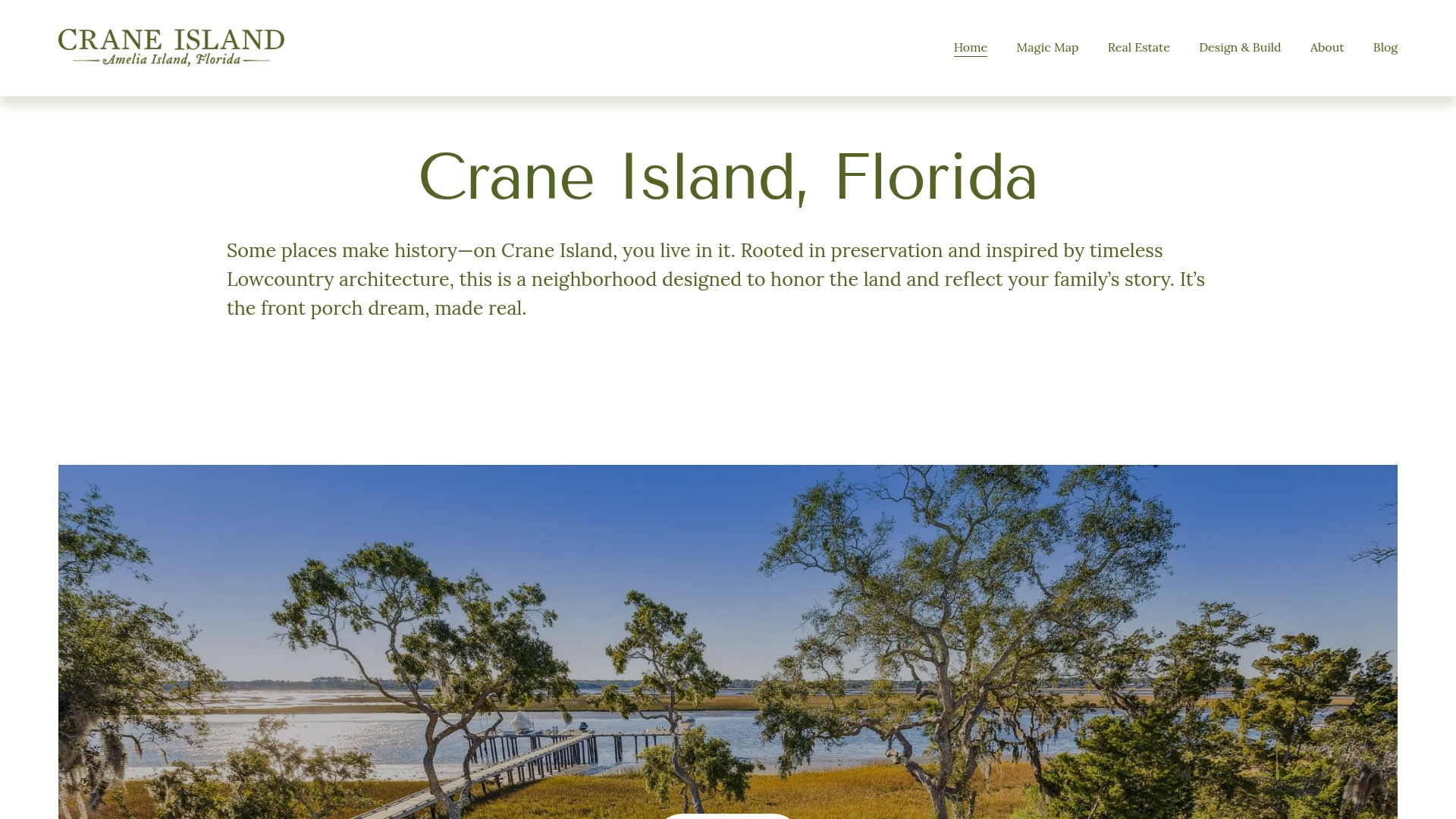
- Homes and homesites give you a starting point, whether you want a move-in ready residence or a custom homesite to design from the ground up.
- A portfolio homes program connects buyers with architects and builders who understand Lowcountry design standards and site-sensitive approaches.
Visit Craneisland to explore available homesites and floorplans, or reach out through our FAQ and local information page with specific questions about the building process here.
FAQ
Can residential homes be LEED certified?
Yes, residential homes can be certified through the LEED for Homes program, which involves registration, on-site verification by a Green Rater, and review by GBCI. Certification levels range from Certified through Platinum based on points earned across several sustainability categories.
How hard is it to get LEED certified?
Difficulty depends heavily on which certification level you target and how early you involve a Green Rater in the design process. Homes pursuing higher tiers like Gold or Platinum need more extensive documentation and often require design changes made before construction begins rather than after.
How to get green building certification?
Start by registering your project with your chosen program during the design phase, then hire a certified rater or verifier to guide inspections and testing throughout construction. Expect a pre-drywall inspection, diagnostic testing such as a blower door test, and a final inspection before documentation is submitted for review.
Sources
- ENERGY STAR Residential New Construction — ENERGY STAR NextGen
- DOE Zero Energy Ready Home Single Family Homes National Rater Checklist Version 2 (Rev. 2)
- Indoor airPLUS Construction Specifications
- Guide to Certification: Residential | U.S. Green Building Council
- NGBS — Certification Types & Levels