
Legacy home communities are master-planned residential developments defined by estate-sized homesites, environmental stewardship, and vibrant social ecosystems built around dedicated lifestyle programming. These are not simply upscale subdivisions. They are intentional places where architecture, land preservation, and community culture work together to create something worth passing down. Estate-sized homesites in these communities typically range from 3 to 5 acres, with land tracts priced around $189,900 as of Q2 2026. That scale sets the tone for everything else: the privacy, the natural buffers, the sense that your home is woven into the land rather than placed on top of it. For homebuyers drawn to sustainable coastal living, active adult communities, or simply a richer quality of daily life, understanding what separates a true legacy community from a standard new home development is the most important first step.
What are the architectural and design standards in legacy home communities?
The physical design of a legacy home community reflects its values. Premium estate homes commonly feature open-concept layouts with ceilings reaching 9 to 10 feet, lot widths of 50 to 60 feet, and luxury finishes that reward long-term ownership. These are not starter homes dressed up with granite countertops. They are residences built to age gracefully alongside their owners.
Architectural standards in these communities typically include:
- Estate lot sizes of 3 to 5 acres, providing natural privacy between neighbors
- Open-concept floor plans with high ceilings designed for both everyday comfort and entertaining
- ADA-adaptable construction elements such as zero-entry stairs, wide doorways, and single-level layouts
- High-efficiency building envelopes with premium insulation and energy-conscious materials
- Low-impact development practices that preserve natural topography and minimize site disturbance
ADA-adaptable features like zero-entry stairs and wide doorways are standard in well-designed 55 plus living communities, with single-level luxury homes typically priced from the low $500Ks to the mid $700Ks. That price range reflects both the quality of construction and the long-term accessibility built into the home from day one.
The best legacy neighborhoods also integrate their homes visually with the surrounding landscape. Porches face preserved tree lines. Windows frame marshland views. The architecture does not compete with nature. It defers to it. Craneisland on Amelia Island exemplifies this approach, where Lowcountry architecture and preserved coastal marshlands create a setting that feels both timeless and deeply personal.
Pro Tip: When touring a legacy community, look past the model home finishes and examine the lot itself. The relationship between the structure and the land tells you more about long-term value than any interior upgrade.
How do legacy home communities foster social connection and community lifestyle?
A legacy community without a strong social culture is just expensive real estate. The defining feature of the best senior lifestyle communities and active adult developments is not the amenity list. It is the daily rhythm of connection they create.
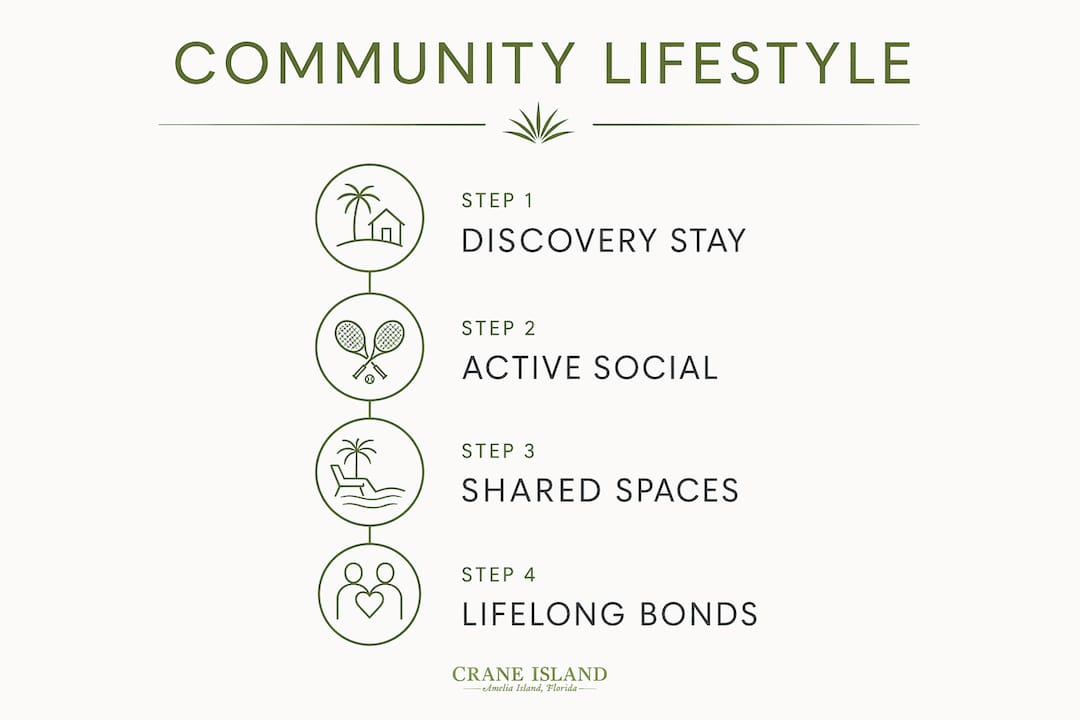
Dedicated Lifestyle Directors organize social calendars that keep residents engaged through event programming, clubs, and shared activities. This is not incidental. It is a core operating function of the community. The difference between a neighborhood and a true community often comes down to whether someone is actively tending the social fabric.
Here is what that looks like in practice:
- Organized social events planned monthly or weekly, from wine tastings to outdoor concerts
- Walking and nature trails that create informal daily encounters between neighbors
- Community gardens and gathering spaces that give residents shared stewardship of the land
- Interest-based clubs covering everything from book groups to kayaking to woodworking
- Playgrounds and multi-generational spaces that welcome visiting grandchildren and extended family
The contrast with a standard retirement home neighborhood is stark. Most conventional subdivisions offer proximity but not community. Legacy communities offer both, because someone is paid to make connection happen.
Pro Tip: Before committing to any community, take advantage of short-term discovery stays of 4 to 7 nights. These programs let you experience the social atmosphere, test everyday convenience, and assess whether the community's rhythm actually fits your life.
What natural and environmental features define legacy home communities?
Environmental preservation is not a marketing feature in a true legacy community. It is a structural commitment that shapes every decision from site planning to long-term maintenance.
Preserving large natural reserves within a community creates lasting value by preventing future urban encroachment and maintaining the irreplaceable character of the land. Communities that protect hundreds of acres of forest, wetland, or coastal habitat give residents something no amenity package can replicate: a living landscape that changes with the seasons and rewards daily attention.
| Environmental Feature | Community Benefit |
|---|---|
| Preserved wetlands and marshlands | Natural privacy buffers and wildlife habitat |
| Low-impact development (LID) | Reduced infrastructure costs and landscape integrity |
| Wooded private lots | Multi-generational appeal and long-term property value |
| Natural topography retention | Minimized erosion and sustainable drainage |
Low-impact development techniques prioritize natural topography preservation, which significantly reduces long-term maintenance costs and environmental disruption. That matters for homebuyers who think in decades, not years.
Craneisland on Amelia Island preserves its surrounding marshlands and coastal forests as a permanent part of the community's identity. Residents have direct access to the Intracoastal Waterway, and the preserved landscape means the views from your porch today will look the same twenty years from now. That kind of permanence is rare. It is also what makes a home a legacy.
What are the practical considerations for homebuyers in legacy home communities?
Understanding the financial and operational structure of a legacy community is as important as falling in love with the setting. The most common mistake buyers make is evaluating the lifestyle without fully understanding the costs that sustain it.
Key practical factors to assess before purchasing:
- Land pricing: Estate homesites are priced around $189,900 for raw land tracts, with finished homes ranging from the low $500Ks to the mid $700Ks for ADA-accessible single-level residences
- HOA fees and scope: HOA fees cover maintenance, amenities, and social programming, but the value depends entirely on what is included and how well the association is managed
- Resident's Association bylaws: These documents govern everything from architectural approvals to pet policies. Reading them before purchase is not optional
- Accessibility planning: If aging in place matters to you, verify that the specific homesite and floor plan support long-term accessibility, not just the community's general reputation
- Amenity fit: A community with a championship golf course adds no value to a buyer who does not golf. Match the amenity mix to your actual lifestyle
Verifying Resident's Association bylaws and budgets is critical. These documents often manage key amenities that define community value well beyond typical HOA enforcement roles. A well-funded association with transparent governance is a strong signal of a healthy community.
Pro Tip: Ask for three years of HOA financial statements before closing. A community that cannot produce them, or one with a pattern of special assessments, carries hidden financial risk that no amount of curb appeal can offset.
For buyers considering private homesites on Amelia Island, the value proposition extends beyond square footage. The combination of coastal access, preserved land, and limited supply creates a different kind of investment calculus than a standard gated retirement village.
How do legacy home communities fit within coastal and active adult living?
Legacy communities and active adult communities share a common foundation: the belief that where you live should actively support how you want to live. The distinction is that legacy communities tend to offer larger lots, stronger environmental commitments, and a multi-generational character that extends beyond the 55 plus living model.
Active adult and 55 plus communities integrate amenities like trails, social clubs, and recreation spaces tailored for healthy, engaged lifestyles. Legacy communities build on that foundation by adding estate-scale privacy and long-term land stewardship.
Coastal legacy communities add another dimension entirely:
- Direct water access via Intracoastal waterways, tidal creeks, or ocean frontage
- Outdoor recreation including kayaking, fishing, paddleboarding, and nature walks
- Architectural character rooted in regional traditions like Lowcountry or Tidewater design
- Climate-conscious construction suited to coastal conditions and long-term durability
- Cultural proximity to historic towns, local markets, and arts communities
Craneisland sits at the intersection of all these qualities. With only 14 homesites available on Amelia Island, it offers the rarest combination in coastal real estate: genuine scarcity, preserved natural beauty, and a community culture built around porch living and shared connection. Buyers interested in Amelia Island real estate will find that the coastal context amplifies everything that makes a legacy community worth choosing.
Key Takeaways
Legacy home communities deliver lasting value when estate-scale design, environmental preservation, and active social programming work together as a unified whole.
| Point | Details |
|---|---|
| Estate-sized homesites | Lots of 3 to 5 acres provide privacy and long-term land value in true legacy communities. |
| ADA-adaptable design | Single-level homes with zero-entry features support aging in place from the low $500Ks. |
| Lifestyle programming | Dedicated Lifestyle Directors create social calendars that build genuine neighborhood culture. |
| Environmental preservation | Protecting natural reserves prevents encroachment and sustains community character for decades. |
| HOA due diligence | Reviewing bylaws and financial statements before purchase protects against hidden costs. |
Why the social layer matters more than the amenity list
I have spent years watching buyers evaluate legacy communities the wrong way. They walk the trails, admire the clubhouse, and compare square footage. What they rarely do is sit on a neighbor's porch at 6:00 PM on a Tuesday and ask what the community actually feels like to live in.
The amenity list is the easiest thing to photograph and the least reliable predictor of daily satisfaction. A community with a mediocre pool but a full-time Lifestyle Director who genuinely knows residents by name will outperform a community with a resort-style aquatic center and no social programming every single time.
The environmental commitment matters just as much, and for a reason most buyers underestimate. When a community preserves its natural landscape, it is making a promise about the future. It is saying that the view from your porch will not become a parking lot. That promise has real financial value, but it also has emotional value that compounds over time.
My honest advice: visit twice. Visit once during a planned community event and once on a quiet weekday morning. The gap between those two experiences tells you everything about whether the community's social culture is real or performed. And if you can arrange a discovery stay before committing, do it. A week of living inside a community is worth more than a dozen sales tours.
— John Hillman
A coastal legacy home worth experiencing firsthand
Craneisland on Amelia Island represents what a legacy community looks like when every element is considered together: preserved marshlands, Lowcountry architecture, porch-centered living, and direct Intracoastal access. With only 14 homesites available, the opportunity to build a custom home here is genuinely limited.
91 Marsh Court in Fernandina Beach is a compelling example of what Craneisland offers: a thoughtfully positioned homesite where the natural setting and community character are already in place. Buyers working with agents who know the coastal luxury market gain a meaningful advantage in understanding how to evaluate and negotiate within this rare segment.
FAQ
What defines a legacy home community?
A legacy home community is a master-planned development featuring estate-sized homesites of 3 to 5 acres, environmental preservation, premium architectural standards, and organized lifestyle programming. These communities are designed for long-term living and multi-generational value.
How much do homes in legacy communities typically cost?
ADA-adaptable single-level homes in 55 plus legacy communities typically range from the low $500Ks to the mid $700Ks, while raw land tracts are priced around $189,900 depending on location and community amenities.
What is a discovery stay and why does it matter?
A discovery stay is a short-term rental of 4 to 7 nights offered by some legacy communities, allowing potential buyers to experience daily life before committing to a purchase. It is one of the most reliable ways to assess social atmosphere, accessibility, and everyday convenience.
How do HOA fees work in legacy communities?
HOA fees in legacy and active adult communities cover maintenance, amenities, and social programming. Buyers should review at least three years of financial statements and the full bylaws to understand what fees include and whether the association is financially stable.
What makes coastal legacy communities different from standard gated retirement villages?
Coastal legacy communities combine estate-scale privacy with direct water access, regional architectural character, and preserved natural landscapes. Standard gated retirement villages typically offer smaller lots and fewer environmental commitments, with a stronger focus on amenity quantity over land quality.