
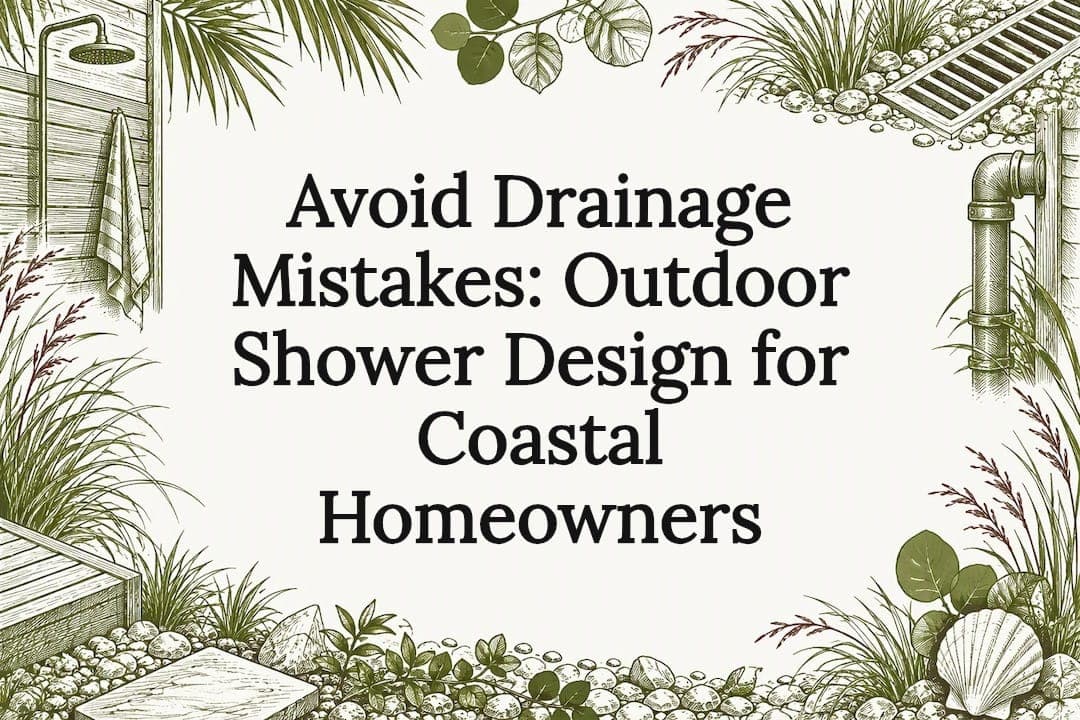
The most practical outdoor shower design pairs weather-resistant materials with thoughtful privacy screening and a site chosen for proper drainage. These two elements, durable fixtures and water management, matter more than style. Most homeowners do well with a prefab kit for simple rinse stations, while anything involving new plumbing lines or hardscaping calls for a licensed professional.
TL;DR:
- Proper site drainage and weather-resistant materials are crucial for outdoor showers to prevent damage and maintain hygiene.
- Coastal environments demand marine-grade fixtures and natural, salt-resistant woods to withstand salt air decay.
- Plumbing complexity and site-specific features, such as hardscaping or existing water lines, mostly influence overall costs.
- Adding safety features like slip-resistant surfaces, grab bars, and anti-scald valves improves accessibility and reduces hazards.
- Drainage and winterization methods, such as drainback valves and insulated supply lines, are essential for year-round outdoor shower use in cold climates.
Table of Contents
- Design Styles and Inspirational Examples
- Materials and Finishes: Pros, Cons, and Coastal Suitability
- Site Planning: Placement, Privacy, Drainage, and Plumbing Basics
- Budget and Cost: Typical Ranges and What Drives Price
- Maintenance and Weatherproofing
- Coastal Considerations and Environmental Approach
- Water Heating Options for Outdoor Showers
- Safety Features and Accessibility Considerations
- Seasonal Use Adaptation and Winterizing Techniques
- Getting the Tradeoffs Right
- Crane Island: A Resource for Coastal Outdoor-Living Design
- Sources
- FAQ
Design Styles and Inspirational Examples
An outdoor shower should feel like a natural extension of your home's character, not an afterthought bolted onto the yard. The style you choose shapes everything from materials to placement, so it helps to settle on a direction before shopping for fixtures.
Coastal and Lowcountry-inspired designs favor cedar slats, breezy open frames, and a wall-mounted layout that echoes the wraparound porches common to shingle-style homes. Rustic wood showers lean into reclaimed lumber and freestanding posts, suited to wooded lots where privacy comes from the trees themselves. Modern metal and stainless designs use clean rectilinear panels and work well against contemporary facades or poolside decks. Stone and minimal showers, often built into a hardscape wall, offer a sense of permanence that suits established gardens. Prefab kits, meanwhile, give renters and first-time builders a fast, budget-friendly entry point.
- Coastal cedar: wall-mounted, open-air, best near porches or beach paths.
- Rustic wood: freestanding posts, ideal for wooded or naturalized yards.
- Modern metal: enclosed stall, suited to pool decks and contemporary homes.
- Stone or minimal: built into existing hardscape, best for permanent installations.
- Prefab kits: freestanding or wall-mounted, quickest to install for small yards.
Scale matters as much as style. A shower tucked beside a pool should feel proportionate to the deck, while a garden shower can afford a taller enclosure for full-body privacy. If accessibility is a concern, a wider stall with a handheld sprayer and a slip-resistant base serves every member of the household better than a compact corner unit.
Materials and Finishes: Pros, Cons, and Coastal Suitability
Material choice determines how long your shower looks good and how much upkeep it demands, especially near salt air. Cedar remains a favorite for its warm color and natural resistance to rot, though it will weather to a soft gray over a few seasons unless sealed. PVC and composite panels trade that warmth for low maintenance and immunity to splitting. Stainless steel fixtures hold up best in salt-heavy environments, while standard chrome or unfinished brass corrode quickly near the ocean.
- Cedar: attractive, naturally rot-resistant, needs occasional resealing.
- PVC and composite: low maintenance, consistent appearance, less character.
- Stainless steel: strong resistance to salt air, higher upfront cost.
- Natural stone: durable and permanent, but the most expensive option.
For fixtures, marine-grade stainless or powder-coated brass resists pitting far better than standard finishes. Avoid untreated steel, standard aluminum, and interior-grade hardware in any coastal setting, since these corrode within a season or two of salt exposure.
Pro Tip: If you're building within a few miles of the coast, specify marine-grade stainless fixtures from the start. Swapping corroded hardware later costs more than paying for the upgrade upfront.
Site Planning: Placement, Privacy, Drainage, and Plumbing Basics
Choosing the right spot for an outdoor shower determines whether it becomes a daily pleasure or a soggy maintenance headache. Walk your yard with a short checklist in mind before committing to a location.
- Confirm proximity to an existing water line to keep plumbing runs short and costs down.
- Check the ground slope: a gentle grade away from the house foundation prevents pooling.
- Note sightlines from neighboring yards, windows, and the street to gauge privacy needs.
- Consider prevailing wind direction so a screen does not turn into a wind tunnel.
- Track sun exposure through the day, since a shaded spot stays cooler in summer but colder in winter.
Privacy is rarely all-or-nothing. Designers often recommend slatted wood panels, bamboo screens, or strategic plantings that block sightlines while keeping air moving through the stall, a better balance than a fully enclosed box that traps humidity. A planted buffer takes longer to mature but blends into the landscape more naturally than a built panel.
Drainage is the detail most first-time builders underestimate. A simple gravel bed with a French drain handles light rinse-water flow in well-draining soil, but heavier use or clay soil may require tying into an existing storm or sewer line, which often triggers a permit review. In freeze-prone climates, plan for a drainback valve or shutoff so supply lines can be emptied before winter. Before you dig, check whether your municipality requires a permit for new plumbing connections or grading changes, since this varies widely by jurisdiction.
Budget and Cost: Typical Ranges and What Drives Price
Outdoor shower costs span a wide range, and the driver is almost always plumbing complexity rather than the shower itself. A basic DIY rinse-only setup using a garden hose fitting and a freestanding frame sits at the low end. A prefab kit with a proper hot and cold hookup lands in the middle. A fully built-in shower with hardscape, tile, and dedicated drainage sits at the top, particularly once a licensed plumber and permit fees enter the picture.
- DIY rinse-only: minimal materials, cold water only, lowest cost.
- Prefab kit with hookup: moderate cost, hot and cold water, faster installation.
- Built-in with hardscape: highest cost, full plumbing, permanent structure.
**Prefab kits are commonly offered as a moderate-cost option between DIY builds and full contractor installs, since they cut down on carpentry time while still requiring proper siting and drainage. The extra cost of hiring a professional is usually justified when a project involves tying into existing sewer lines, navigating permit requirements, or integrating the shower into a larger hardscape plan where mistakes are expensive to undo.
Maintenance and Weatherproofing
A little routine care keeps an outdoor shower looking sharp well beyond its first season. Rinse the structure periodically to clear salt residue and grime, inspect fittings for drips, and reseal wood surfaces as they start to gray. Before the first hard freeze, drain and shut off supply lines to prevent cracked pipes.
- Cedar needs resealing every one to two years to hold its color and resist splitting.
- Stainless fixtures need only occasional wiping to prevent mineral buildup.
- Brass hardware benefits from a protective coating in salty air.
- PVC panels need little beyond an annual rinse and a check for loose fasteners.
Pro Tip: Set aside a small yearly budget for fitting replacement. Washers and shower valves wear out faster outdoors than indoors, and catching a small leak early avoids water damage to the surrounding deck.
Coastal Considerations and Environmental Approach
Salt air changes the calculus on nearly every material and fastener choice, which is why we favor marine-grade hardware and naturally weather-resistant woods in our own coastal work. Anchoring details matter too: exposed screws and brackets corrode fastest, so recessed or coated fasteners extend a structure's life considerably.
- Choose permeable surfaces beneath the shower to let rinse water filter naturally rather than run off toward marsh edges.
- Favor native plantings for screening, which tolerate salt spray better than ornamental species.
- Site the shower away from tidal buffers and preserved wetland areas where runoff could affect sensitive ecosystems.
For more on coastal-ready materials, see our guide to coastal metal roof specs and our take on outdoor living room ideas that pair well with a shower's design language.
Water Heating Options for Outdoor Showers
Hot water turns an outdoor shower from a summer novelty into a year-round feature, and the right heating method depends on how often you'll use it. A tankless electric or gas water heater dedicated to the outdoor line delivers hot water on demand without the standby losses of a full tank, making it a solid choice for showers used daily. Solar water heating, often a simple black-tank or coil system mounted on a sunny roof or wall, works well for warm climates and occasional use, though it depends on sunny days and stored volume rather than instant heat.
For showers used only in warmer months, tying into the home's existing hot water line is the simplest route, provided the run is short enough to avoid long waits for hot water to arrive. Where the shower sits far from the house, a small point-of-use tankless unit installed near the shower itself avoids the heat loss of a long pipe run. Whichever system you choose, insulate exposed supply lines and include a way to drain them before winter, since a frozen line can crack fittings regardless of how the water was heated.

Safety Features and Accessibility Considerations
A shower that looks beautiful but sends someone sliding on wet teak is not doing its job. Start with the shower base: textured stone, slip-resistant composite decking, or a simple gravel bed all outperform smooth tile or sealed wood when wet. Grab bars near the entry help anyone steady themselves, not just those with mobility needs, and cost little to add during construction.

For households with young children, older adults, or anyone with limited mobility, a wider stall entry without a raised threshold makes the shower easier to use safely. A handheld sprayer on an adjustable-height mount gives more control than a fixed shower head, letting each person in the household adjust the spray to their comfort and reach. Anti-scald valves are worth the modest extra cost wherever a tankless or on-demand heater is installed, since outdoor systems can deliver hotter water more quickly than indoor fixtures people are used to. Good lighting matters too: a fixture that casts a soft glow without disturbing neighbors or the night sky pairs well with evening use. Our dark-sky lighting guide covers fixtures that keep an outdoor shower usable after sunset without adding glare.
Seasonal Use Adaptation and Winterizing Techniques
An outdoor shower built for three-season use needs a different plan than one meant to run year-round. In climates with hard freezes, the priority each fall is draining every supply line completely and shutting off the water at a point that will not itself freeze and crack. A simple drainback valve installed during construction makes this a five-minute task rather than a wrestling match with stuck fittings.
If you want to extend the shower into cooler months, a tankless heater paired with insulated, heat-traced supply lines can keep the system usable well past the point a cold-water-only setup would be abandoned. Removable or foldable shower curtains and screens also help: taking down fabric or bamboo screening before winter storms prevents wind damage and lets you store it somewhere dry. Come spring, a quick inspection of fittings, seals, and the drainage bed catches any damage from freeze and thaw before the first warm-weather rinse.
Getting the Tradeoffs Right
Drainage and material durability decide whether an outdoor shower ages gracefully or becomes a repair project. Pick a privacy solution that fits your actual site rather than the most photogenic one online. Prefab kits suit simple rinse stations; built-in designs earn their cost when plumbing or hardscape is already part of the plan. Start with the site, not the fixtures.
— John Hillman
Crane Island: A Resource for Coastal Outdoor-Living Design
We design coastal homes and outdoor spaces to weather salt air and shifting seasons without losing their warmth or character. If you're planning a coastal build and want outdoor living spaces, including a well-placed shower, woven seamlessly into the architecture from day one, our Portfolio Homes Program pairs buyers with design guidance suited to the setting. Explore available homes and homesites to see how thoughtful coastal design comes together.
FAQ
Do I need a permit for an outdoor shower?
It depends on your local building code and whether the project involves new plumbing lines, grading changes, or a tie-in to an existing sewer connection. A simple freestanding kit with a garden hose hookup often needs no permit, while adding hot water lines or hardscape usually does. Check with your local building department before digging.
Are outdoor showers a good idea?
Outdoor showers make sense for beach houses, pool decks, and gardens where rinsing off outdoors saves wear on indoor plumbing and keeps sand and chlorine out of the house. They work best when sited with good drainage and a durable, corrosion-resistant material suited to the local climate.
What is the average cost of an outdoor shower?
Cost depends heavily on plumbing complexity, ranging from a low-cost DIY rinse station to a mid-range prefab kit with hot and cold hookups, up to a higher-cost built-in design with hardscape and permitted plumbing work. Labor and permit fees, not the shower fixture itself, usually account for the biggest jump in price.
What are the must-haves for an outdoor shower?
The essentials are a durable, weather-resistant material, a privacy solution that fits the site, and a drainage plan that keeps water away from the home's foundation. A slip-resistant base and, in colder climates, a way to drain supply lines before winter round out the list.