
A wildlife-friendly neighborhood is a planned residential community where landscaping, governance, and active stewardship are designed together to support native species, ecological corridors, and long-term habitat health. For affluent coastal buyers, that definition carries real weight: communities built on genuine conservation principles tend to offer greater privacy, more resilient landscapes, and a living environment that deepens in beauty over time rather than depreciating into sameness. The National Wildlife Federation and the Florida Fish and Wildlife Conservation Commission both frame habitat quality as an active, measurable commitment, not a marketing label. Craneisland on Amelia Island is one of the clearest examples of how that commitment translates into a luxury residential offering.
Table of Contents
- What makes a neighborhood genuinely wildlife-friendly?
- How active stewardship sustains coastal wildlife communities
- What should you ask before buying in a conservation community?
- Benefits and honest trade-offs for luxury coastal homeowners
- What timelines and costs should you plan for?
- Which legal protections and certifications actually hold up?
- How Craneisland applies these principles on Amelia Island
- Key Takeaways
- Why conservation-led design is the future of coastal luxury
- Craneisland: where conservation and coastal luxury meet
- Useful sources
- FAQ
What makes a neighborhood genuinely wildlife-friendly?
The NWF's Community Wildlife Habitat program defines the standard around four core needs: food, water, cover, and places to raise young. A neighborhood earns certification by accumulating points across individual property certifications and community outreach, with one reporting community reaching nearly all points on the certification scale. That structure matters because it shifts accountability from individual homeowners to the community as a whole.
What separates earnest programs from cosmetic ones is coordination. Individual yards become functional habitat only when they connect across property lines, creating corridors that allow species to move, feed, and reproduce. Observable signs of genuine design include:
- Native-plant palettes selected for local pollinators and songbirds
- Rain gardens and bioswales that manage stormwater while providing water sources
- Connected greenways or trails linking private lots to preserved land
- Reduced or eliminated pesticide and synthetic fertilizer use
- HOA covenants that explicitly permit pollinator meadows and reduced mowing zones
The last point is often overlooked; practical ideas for integrating small habitat structures and wildlife features in private yards can be found in what is a wildlife garden cabin and how does it work. Without HOA bylaw changes that allow native plantings and restrict chemical use, private habitat efforts remain isolated and ineffective.
How active stewardship sustains coastal wildlife communities
Passive preservation, leaving land alone and hoping for the best, rarely delivers lasting ecological value. The Florida Fish and Wildlife Conservation Commission recommends active management objectives: prescribed burning where fire-adapted plant communities exist, invasive species removal on a defined schedule, hydrology restoration, and targeted habitat enhancement for focal species. These are not one-time actions. They require annual planning, seasonal timing to avoid breeding periods, and measurable targets.
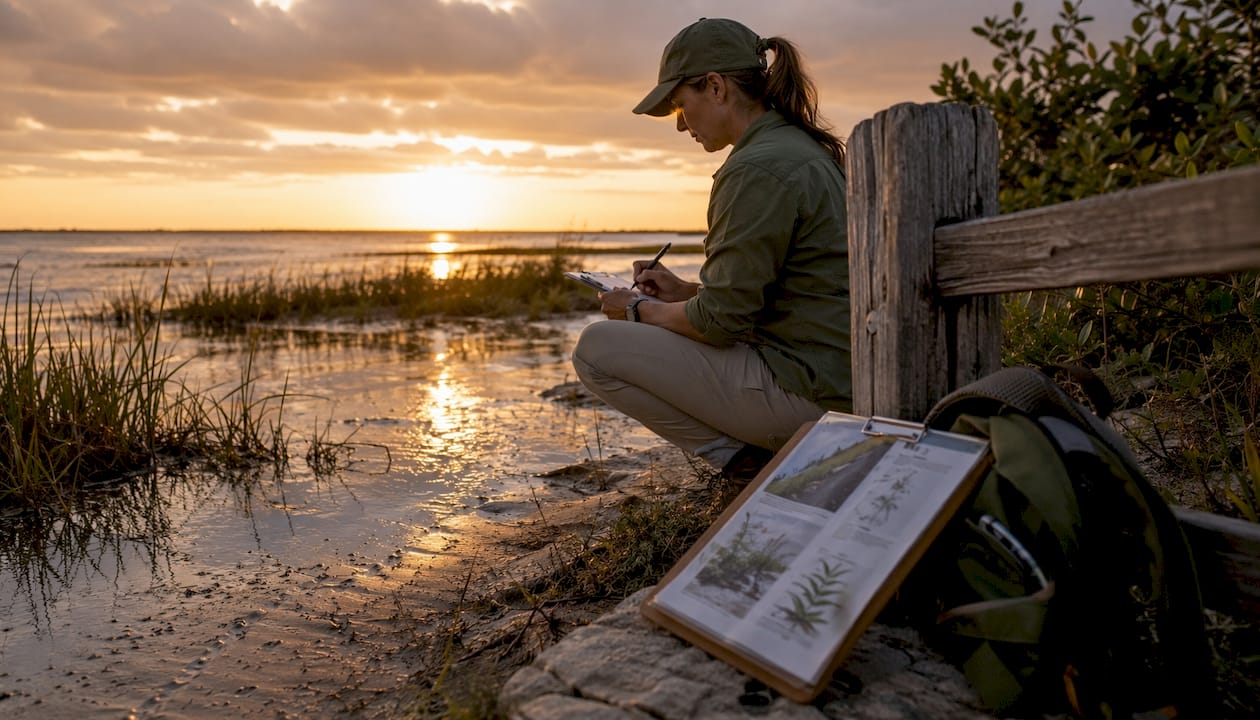
Coastal settings add specific complexity. Saltwater intrusion, dune dynamics, and the narrow range of salt-tolerant native plants mean that species selection and planting placement require local expertise. A developer who cannot name the coastal plant palette or explain the invasive removal schedule is a developer whose conservation commitment lives only on paper.
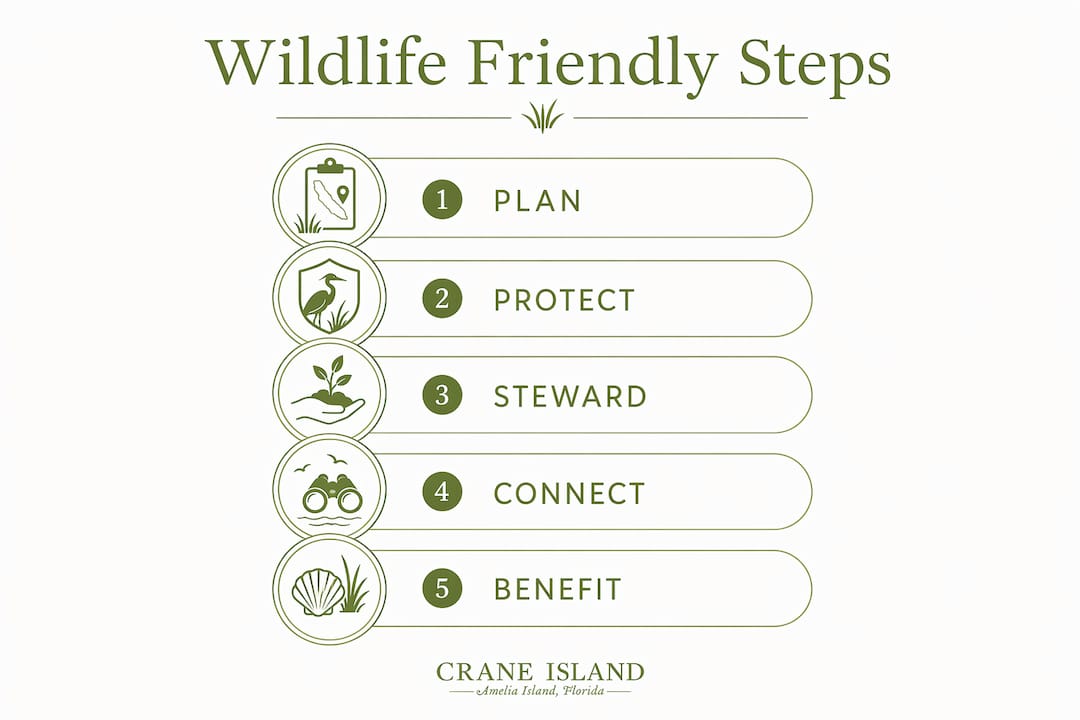
Connectivity is the mechanism that turns good intentions into functioning habitat. Regulatory guidance on Fish and Wildlife Habitat Conservation Areas emphasizes population viability through corridor planning rather than protecting isolated individuals. A single preserved marsh surrounded by manicured turf is a habitat island. A network of connected preserves, trails, and native-planted lots is a living system.
Pro Tip: Ask the developer to show you the stewardship plan before you review the floor plans. If one does not exist in writing, request that a funded management commitment be recorded in the purchase contract before closing.
What should you ask before buying in a conservation community?
Due diligence for a wildlife-friendly homesite goes beyond the standard title search. Work through this sequence before making an offer:
- Request the master plan and confirm it maps habitat corridors, preserved areas, and buffer zones.
- Verify that conservation easements are recorded with the county, not merely promised in marketing materials.
- Confirm the stewardship endowment or HOA reserve fund dedicated to habitat management, and ask for the annual budget.
- Ask for the invasive species removal schedule and the name of the contracted or staff ecologist.
- Review HOA covenants for explicit language permitting native plantings and restricting pesticide use.
| Question | Ask | Why it matters |
|---|---|---|
| Who funds long-term stewardship? | Developer / HOA board | Underfunded programs collapse within a decade |
| What are the monitoring metrics? | Stewardship manager | Measurable targets distinguish real programs from greenwashing |
| What happens if covenants are breached? | HOA attorney | Enforcement mechanisms determine whether protections hold |
| Are easements recorded? | Title company / county records | Recorded easements survive ownership changes |
Red flags worth walking away from: no recorded easements, native plantings limited to entry signage, vague stewardship promises with no budget line, and HOA rules that still prohibit "natural" landscaping.
Benefits and honest trade-offs for luxury coastal homeowners
The upside of a well-executed conservation community is genuine and layered. Native landscapes require less irrigation once established, support pollinators that enrich the sensory experience of outdoor living, and manage stormwater more effectively than turf. Scarcity compounds value: a limited number of homesites within a documented conservation framework is a verifiable differentiator in any coastal market.
The honest trade-offs deserve equal attention. Native landscapes look different from the clipped uniformity many buyers associate with luxury. Seasonal die-back, seed heads left standing for birds, and the occasional gopher tortoise crossing the path are features of the ecosystem, not failures of maintenance. Wildlife encounters, including species that are less welcome, come with the territory. HOA governance in conservation communities also tends to be more prescriptive: what you plant, how you light your exterior, and when you mow may all be regulated. Buyers who understand this going in find it a fair exchange. Those who discover it after closing rarely do.
What timelines and costs should you plan for?
Habitat establishment follows a predictable arc, though the pace varies by site conditions and funding.
- Planning and design (months 1–12): Master plan finalized, species inventories completed, management plan recorded, initial invasive removal begins.
- Establishment (years 1–3): Native plantings installed, hydrology improvements made, monitoring protocols activated, first prescribed burns or invasive treatments conducted.
- Maturation and adaptive management (years 3–10+): Plant communities fill in, wildlife use increases, management adapts to monitoring data, endowment draws begin.
Common funding models include developer-capitalized stewardship endowments, HOA reserve contributions, special assessments for major restoration events, and grant partnerships with state or federal programs. Cost drivers to watch: invasive control cadence (annual in most coastal Florida settings), prescribed burn contracting, habitat monitoring staffing, and the difference between in-house ecologists and contracted services.
| Cost driver | Typical frequency | Negotiation lever |
|---|---|---|
| Invasive species removal | Annual or biannual | Request developer-funded first three years |
| Habitat monitoring | Annual | Require written protocol in purchase contract |
| Prescribed burns | Every 2–5 years | Confirm budget line in HOA reserve study |
| Native plant establishment | One-time, years 1–3 | Negotiate establishment credit at closing |
Buyers with leverage should push for developer-funded monitoring through the establishment phase, with a funded endowment transfer to the HOA at project completion.
Which legal protections and certifications actually hold up?
The documents that matter are recorded, not promised. A Habitat Preservation Area Management Plan at the county level, as Hillsborough County's template illustrates, requires site descriptions, mapped buffers, species inventories, defined objectives, and measurable restoration methods. Buyers should request the equivalent for any community they are considering.
NWF Community Wildlife Habitat certification confirms that a community has met point thresholds for property certification and outreach. It does not guarantee long-term funding or enforce stewardship. Think of it as a credible third-party signal, not a legal protection.
Conservation easements, recorded with the county and held by a land trust or government entity, are the strongest buyer protection available. They survive ownership changes, developer exits, and HOA leadership turnover. Confirm the easement holder, the monitoring party, and the enforcement mechanism before closing.
How Craneisland applies these principles on Amelia Island
Craneisland's model on Amelia Island is built around deliberate scarcity: fourteen homesites woven into a preserved Lowcountry landscape of marshlands, maritime forest, and Intracoastal Waterway frontage. That limited footprint is not incidental. It reflects a conservation-led development philosophy where the preserved land is the primary amenity, and the homes are designed to frame it rather than replace it.
Buyers considering Craneisland should request and review:
- The recorded easement language and the identity of the easement holder
- The native-plant palette and the invasive species management schedule
- Trail and corridor maps showing connections to adjacent preserved land
- Monitoring reports and stewardship plan documentation
- Endowment or reserve fund terms governing long-term habitat management
The resident experience reflects the design. Paddling the Intracoastal at dawn, watching shorebirds work the marsh edge from a Lowcountry porch, and walking connected trails through mature coastal forest are not amenities that can be replicated in a conventional subdivision. They are the direct product of conservation-led planning executed at the site level.
Key Takeaways
Genuine wildlife-friendly communities require recorded legal protections, funded stewardship, and active management, not just native plantings at the entry gate.
| Point | Details |
|---|---|
| Recorded easements are non-negotiable | Conservation easements held by a land trust survive ownership changes and HOA leadership turnover. |
| Active management beats passive preservation | FWC guidance requires invasive removal, prescribed burns, and monitoring, not simply setting land aside. |
| Corridors create function | Connected greenways linking private lots to preserved land are what turn isolated yards into working habitat. |
| Trade-offs are real | Native landscapes look different from manicured turf; buyers should understand HOA governance before closing. |
| Craneisland exemplifies the model | Fourteen homesites, preserved marshlands, and Lowcountry design make Craneisland a documented example of conservation-led coastal luxury. |
Why conservation-led design is the future of coastal luxury
The conventional wisdom in luxury real estate still equates premium living with control: manicured grounds, uniform aesthetics, and nature kept at a comfortable distance. We believe that framing is aging out. The buyers who understand what a functioning coastal ecosystem actually delivers, privacy, resilience, sensory richness, and a landscape that deepens rather than depreciates, are not settling for less. They are choosing more. At Craneisland, we are inspired by the idea that the most enduring luxury is a place that was worth protecting in the first place.
Craneisland: where conservation and coastal luxury meet
Craneisland delivers what most conservation-branded developments only promise: a limited collection of luxury homesites on Amelia Island where preserved marshlands, maritime forest, and Intracoastal access are the foundation of the offering, not the marketing copy. With only fourteen homesites available, documented stewardship, and Lowcountry architecture designed to honor the land it sits on, Craneisland meets every criterion this article describes.
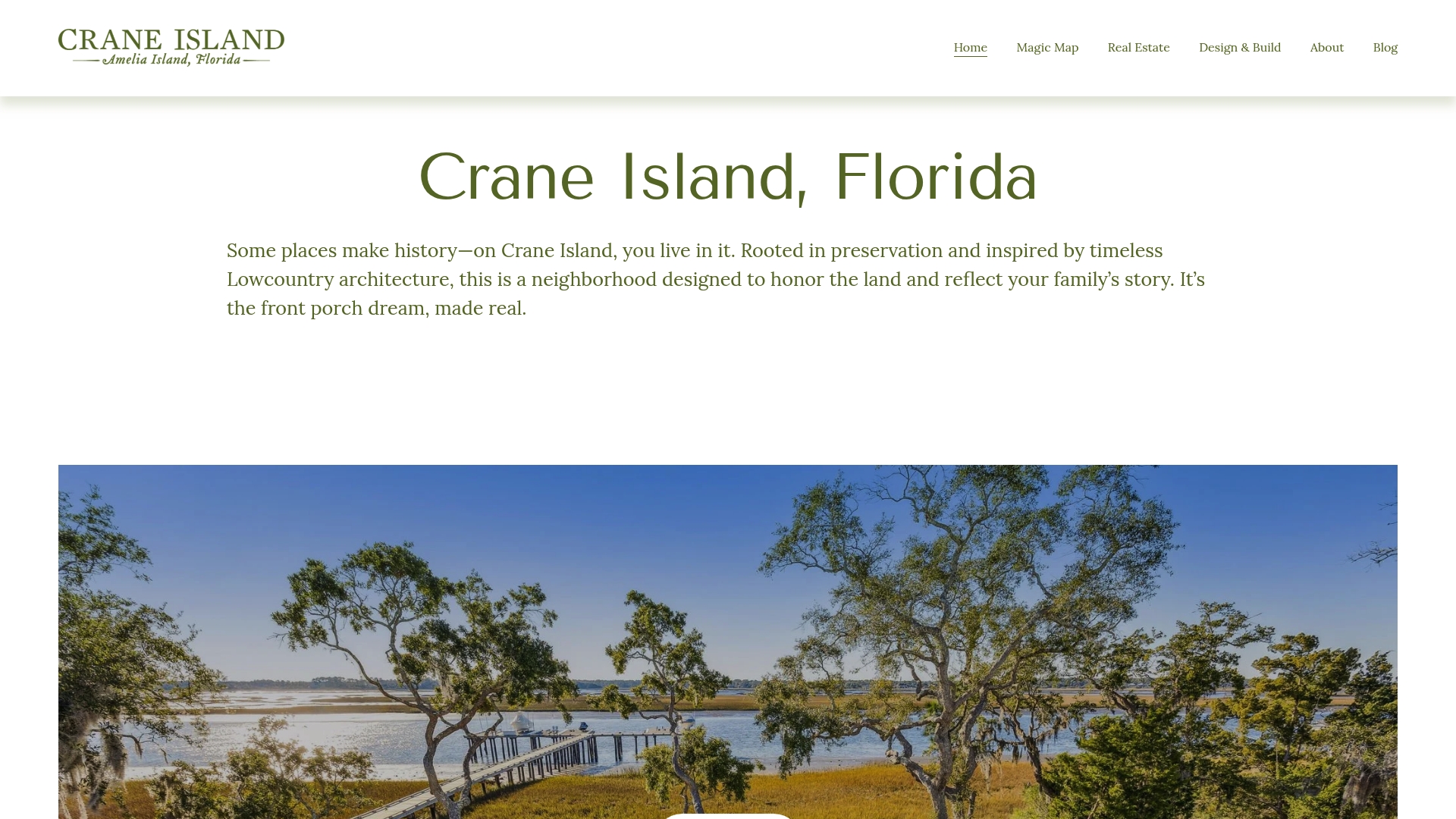
When you inquire, request the master plan, recorded easement language, native-plant palette, stewardship plan, and endowment terms. Then visit the site. Walk the trails, stand at the marsh edge, and let the place speak for itself. Contact the Craneisland team to arrange a site visit and receive the full buyer dossier.
Useful sources
- Community Wildlife Habitat — National Wildlife Federation: Explains the four core habitat criteria and the community certification point system.
- Wildlife Habitat Conservation — Florida Fish and Wildlife Conservation Commission: Outlines active management objectives including prescribed burns and invasive species control for Florida habitats.
- Habitat Preservation Area Management Plan — Hillsborough County, FL: County-level template showing what a complete management plan must include; use as a due-diligence checklist.
- NWF Landscaping Guide — Backyard Habitats: Practical guidance on native plantings, HOA bylaw changes, and the mindset shift required for biodiversity-rich landscapes.
- Fish and Wildlife Habitat Conservation Areas — WAC 365-190-130: Regulatory framework explaining population viability and corridor planning rationale.
FAQ
What is a Community Wildlife Habitat certification?
The NWF's program certifies residential communities that intentionally provide food, water, cover, and places for wildlife to raise young, earning points through property certifications and community outreach.
What documents should I request before buying in a conservation community?
Request the recorded conservation easement, the habitat management plan, the stewardship endowment terms, the invasive species removal schedule, and HOA covenants governing native plantings and pesticide use.
How long does it take for a wildlife-friendly neighborhood to mature?
Establishment typically takes one to three years; full ecological maturation, where plant communities fill in and wildlife use stabilizes, generally requires three to ten or more years of adaptive management.
What makes Craneisland different from other conservation-branded developments?
Craneisland limits its community to fourteen homesites within a preserved Lowcountry coastal landscape on Amelia Island, combining Intracoastal Waterway access with documented stewardship and architecture designed to frame the natural environment rather than displace it.
Are conservation easements legally enforceable in Florida?
Yes. When recorded with the county and held by a qualified land trust or government entity, conservation easements are binding on all future owners and survive changes in HOA leadership or developer ownership.