
A yacht kept on Florida's Intracoastal Waterway is usually insured on an agreed-value policy that combines hull coverage, liability and a separate named-storm deductible. Florida does not require it by law, but marinas and lenders usually do. Premiums are quoted as a share of the boat's insured value, and the hurricane terms matter as much as the price. If you are weighing a home with deep-water access, settle these terms before you close, so the boat and the dock are protected from the first season.
This guide is written for buyers who plan to keep a serious boat at their own dock or a slip nearby. That includes buyers looking at Amelia Island and the northeast Florida coast. It explains the coverage, the cost ranges published by Florida brokers, and the hurricane provisions that decide whether a claim is paid.
TL;DR
- Florida law does not require boat insurance, but marinas and lenders commonly do, so plan on carrying it.
- Florida brokers publish yacht premiums of roughly 1% to 3% of insured value a year, with higher figures in hurricane-exposed areas.
- Most Florida yacht policies carry a separate named-storm deductible, a percentage of hull value, and many tie coverage to a written hurricane plan.
- Check the navigation territory, the agreed-value terms and the liability limits before you sign, not after the first claim.
- A home on deep water changes the boat's storage, dock and storm plan, so decide the insurance together with the property.
Table of Contents
- What a yacht policy covers on the Intracoastal
- Does Florida require yacht insurance?
- What yacht insurance costs in Florida
- The named-storm deductible: read this one twice
- Navigation territory and agreed value
- A pre-purchase checklist for a deep-water home
- Our perspective
- Bringing the boat home to Crane Island
- FAQ
- Sources
What a yacht policy covers on the Intracoastal
A comprehensive yacht policy is a bundle of several coverages. The wording differs by carrier, but a Florida policy for Intracoastal use typically includes the following, as described in one South Florida marine guide:
- Hull and machinery. Damage to the hull, superstructure, engines, generators, electronics and permanently installed equipment from collision, grounding, fire, lightning, theft, vandalism and sinking.
- Protection and indemnity (P&I). This is the liability side: injury to other people, damage to their property, and wreck removal.
- Medical payments for passengers aboard.
- Personal effects such as gear and belongings on the boat.
- Towing and assistance when you break down or run aground.
- Uninsured and underinsured boater protection, which responds when the other boat's owner has no adequate cover.
Other Florida brokers add salvage, wreck removal and fuel spill liability, plus cover for tenders. The same source says what you actually get depends on the carrier, the policy form, the vessel, how it is used and stored, the navigation area, the value and underwriting.
The pollution piece deserves attention at the dock. Under the federal Oil Pollution Act of 1990, vessel owners are strictly liable for oil spills regardless of fault. Most comprehensive marine policies include pollution liability, with varying limits and sublimits. Look for that limit on your declarations page.
The waterway itself shapes the risk. The same guide notes that dense traffic around the Intracoastal, Government Cut and Port Everglades raises collision exposure, and that shallow reef systems in South Florida raise grounding risk. Northeast Florida conditions differ, with tidal marsh creeks and shifting shoals, but the principle holds: your underwriter prices the water you actually run.

Does Florida require yacht insurance?
No. Progressive states that Florida law does not require boat insurance, but that some marinas may require liability coverage and lenders may require comprehensive and collision coverage on financed or leased boats.
In practice that means three situations where you will be asked for proof:
- You finance the boat. The lender will require hull coverage at minimum.
- You rent a slip. A marina typically wants liability coverage. One broker guide puts the usual marina expectation at $300,000 or more.
- You join a yacht club. Clubs commonly ask for a certificate of insurance.
Owning your own dock removes the marina requirement, but not the exposure. A guest injured on your boat, a spill, or a runaway vessel in a storm is your liability. Most owners of a boat in this class carry full coverage regardless of who asks.
A small legal note: Florida did change a related rule in 2023. SB 418, effective July 1, 2023, removed the requirement for boat liveries to buy customer insurance and instead requires them to offer renters the option. That applies to rental businesses, not to private owners.
What yacht insurance costs in Florida
Yacht premiums are quoted against insured hull value, not as a flat fee. Published Florida broker ranges differ, which is itself informative: the final number depends on the boat, where it lives and who drives it.
| Source (published 2026) | Typical annual range | Example |
|---|---|---|
| Fort Lauderdale yacht program | 1.5% to 3% of hull value under 60 ft; 0.5% to 1.5% for 60 to 100+ ft | 50-ft, $500,000 sport cruiser: about $7,500 to $15,000 |
| Miami area guide | 1.0% to 2.0% for well-maintained boats on agreed value with full P&I | 50 to 60-ft motoryacht worth $700,000 to $1.5 million: $9,000 to $22,000 |
| Florida yacht dealer guide | 1% to 3% of insured value | $500,000 boat: $5,000 to $15,000 |
| National yacht program | 1% to 5% of value | Florida and Gulf Coast carry higher rates |
These are published figures for 2026, not quotes. Rates move with the market, so treat the table as a way to sanity-check an offer, and rely on a written quote for your boat.
What moves your premium
The brokers above agree on most of the drivers:
- Hull value, age and construction.
- Length, type and propulsion. Multiple high-horsepower outboards draw extra scrutiny.
- Navigation territory. Inland waterway use generally prices lower than coastal waters, according to Travelers.
- Hurricane plan and haul-out commitments.
- Captain qualifications and crew arrangements.
- Private versus charter use.
- Owner experience and loss history.
- Where the boat is moored, stored and maintained.
That last point is where real estate and insurance meet. A boat lifted out of the water on a private dock or kept in a secured location is a different risk from one sitting in an open slip. Your storage plan is a premium lever.
The named-storm deductible: read this one twice
Florida yacht policies usually carry a separate hurricane deductible. Most Florida yacht policies use a percentage of insured hull value, commonly 2%, 5% or 10%.
The same carrier-side guidance describes how it varies by area, with examples of 2% to 3% in Palm Beach, 3% to 5% in Broward and Miami-Dade, and 5% to 10% in the Keys. It applies per named storm event, and back-to-back storms can trigger more than one deductible.
A worked example makes the stakes clear. On a $1,000,000 yacht with a 5% named-storm deductible, you absorb the first $50,000 of storm damage. At 10% it is $100,000. Compare that with an ordinary deductible of around 1% or a flat sum.

Hurricane plans are a condition, not a courtesy
Many policies tie named-storm coverage to a written hurricane plan. One Fort Lauderdale guide says that failing to follow the plan can lead to a denied claim. Trade press reports the same direction in the market: underwriting around hurricane plans is heavily emphasized, including where the vessel is docked during hurricane season, and the tighter terms are likely to stay even as pricing softens.
So write the plan down before the season starts: where the boat goes, who moves it, by when, and what is secured. Then keep the dates and receipts.
The same logic applies to the house. If you are buying on the water, flood and wind insurance planning for a coastal residence follows the same pattern of percentage deductibles and storm conditions, so line the home policy and the boat policy up against each other. Our own notes on coastal wind mitigation and on securing coastal Florida property insurance cover the home side.
Navigation territory and agreed value
Navigation territory
Every yacht policy defines where you may cruise. Policies usually limit coverage to approved waters, and the Bahamas or Caribbean are not automatically included. If you plan to run from the Intracoastal to the Keys or offshore, ask for the territory in writing. Some insurers ask for a vessel itinerary when an extended area is selected or when owners split time between locations. Owners who winter in Florida and summer elsewhere should expect that question.
Agreed value versus actual cash value
The two valuation methods pay very differently after a total loss:
- Agreed value is a figure you and the underwriter settle at the start. It is paid on a total loss without depreciation.
- Actual cash value is replacement value minus depreciation: the market value at the time of loss.
For a boat that holds value, agreed value is the cleaner promise. Read the fine print, because some policies convert from agreed value to actual cash value after roughly 10 to 15 years, a practitioner perspective reported in 2026. A Fort Lauderdale program describes its agreed-value hull as paying with no depreciation at total loss.
Also expect the application to ask about operator experience. Market commentary notes that many carriers now want training programs or captain sign-off before independent operation, and increasingly GPS tracking in the Southeast and Gulf Coast.
A pre-purchase checklist for a deep-water home
If the yacht is the reason you want the Intracoastal frontage, work through these in order:
- Decide the boat's home. Private dock, lift, or a slip elsewhere. Insurers ask where it is moored and stored.
- Get the dock permitted and built to standard. Our dock permitting checklist covers the state review that can delay owners by weeks. See also what to know about a deepwater dock on Amelia Island.
- Pick a valuation. Agreed value, with the conversion terms in writing.
- Set the liability limit at or above what a marina or club would require, and confirm the pollution sublimit.
- Read the named-storm deductible as a dollar figure for your boat's value.
- Write the hurricane plan and who executes it if you are away.
- Define the cruising range you will actually use.
- Ask for quotes in writing and compare them on deductible, territory and valuation, not on premium alone.
Buyers browsing the wider market can also read our overview of Intracoastal Waterway homes in Florida and what living on the water is really like.
Our perspective
We think about insurance the way we think about a porch: it is part of how a home is meant to be lived in, not an afterthought. The boat, the dock and the house work together, and a family that plans all three at once sleeps better in August.
Crane Island sits on Amelia Island with deep-water Intracoastal access, a feature we preserved and designed around. Nearly half of the land is kept as open space, and homes are built to rigorous Lowcountry-inspired standards. We believe a place like this rewards owners who plan for the long run: the dock, the storm plan, the policy and the house considered as one legacy.
With only 14 homesites available, each owner builds with care, and we encourage every one of them to talk through the boat early, so the home, the dock and the coverage are set up together from the first day on the water.
John Hillman
Bringing the boat home to Crane Island
Crane Island offers custom homesites and move-in ready homes in a private, preserved community on Amelia Island, with access to the Intracoastal Waterway and the culture of historic Fernandina Beach. Only 14 homesites are available.
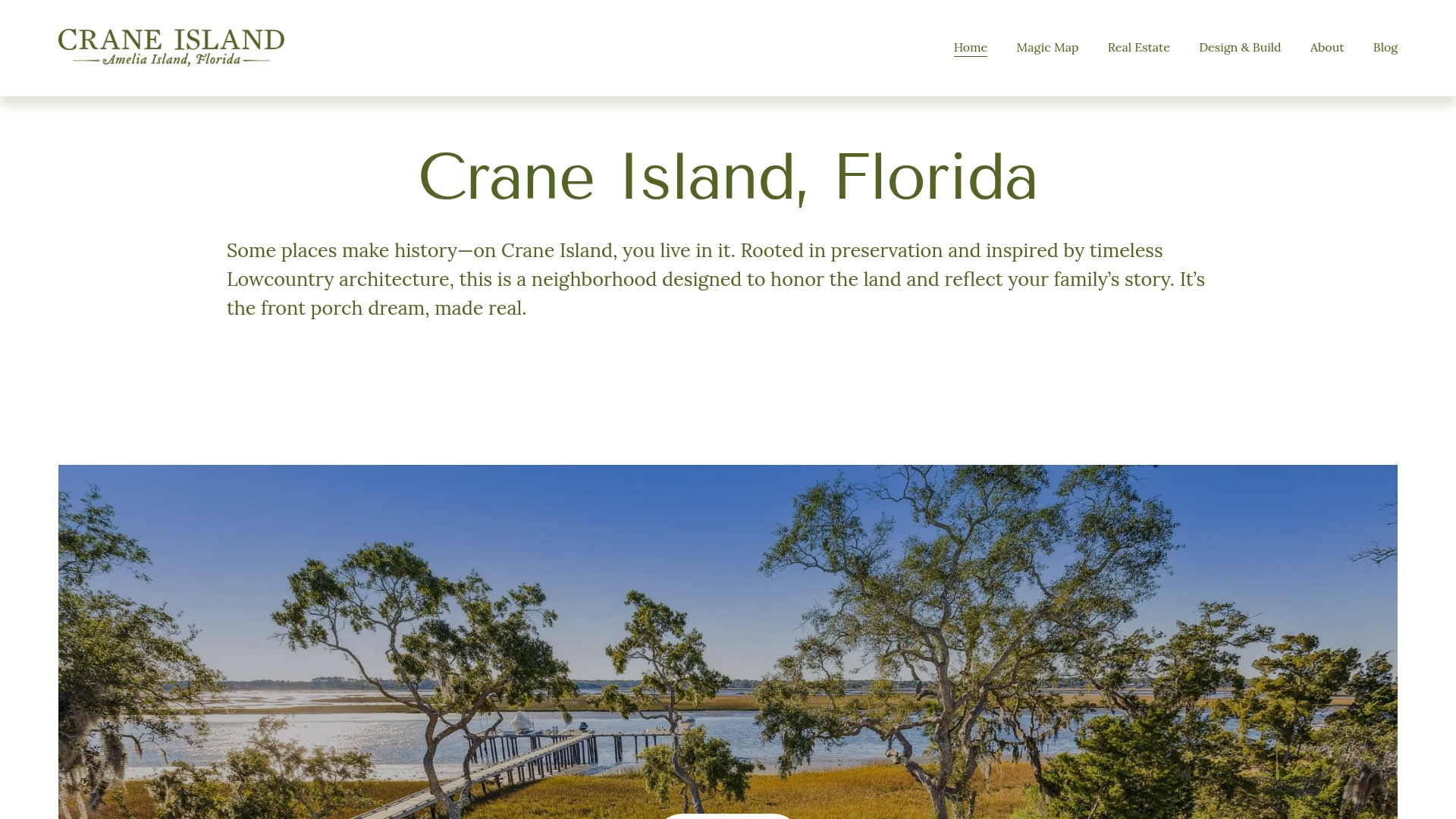
If you are planning around a boat, start with our homes and homesites, or look at The Crane Island Portfolio Homes Program. For land value and the waterway, our piece on the Intracoastal's role in land value is a good next read.
FAQ
Is yacht insurance required in Florida?
Not by state law. Marinas, lenders and yacht clubs commonly require proof of coverage, and a lender will ask for hull coverage on a financed boat. Most owners of larger boats carry full coverage in any case because of the liability exposure.
How much does yacht insurance cost in Florida?
Published Florida broker ranges run from about 1% to 3% of insured value a year, and some programs publish up to 5% for hurricane-exposed areas. A 50-foot, $500,000 sport cruiser was cited at about $7,500 to $15,000 a year in one 2026 guide. Your actual price depends on the boat, storage, territory and experience, so get a written quote.
What is a named-storm deductible?
It is a separate deductible, a percentage of insured hull value, that applies when damage comes from a named storm. Florida examples run from 2% to 10%. On a $1,000,000 yacht at 5%, you would absorb the first $50,000.
Does yacht insurance cover the whole Intracoastal Waterway?
Policies define a navigation territory, and coverage applies within approved waters. Trips beyond that, such as the Bahamas or the Caribbean, are not automatically included and usually need an endorsement.
Sources
- Florida Boat Insurance, Progressive
- Marine & Yacht Insurance in South Florida, SMAART Insurance
- Yacht Insurance Florida Coverage Guide, Atlantis Insurance
- Victory for Boat Dealers: Florida Amends Livery Insurance, MRAA
- Yacht Insurance Fort Lauderdale 2026, NextGuard
- Florida Yacht Insurance: 2026 Coverage & Cost Guide, Miami Premier Insurance
- Yacht Insurance in Florida, Aspire Yacht Sales
- Yacht Insurance Made Simple, United Marine
- Boat and Yacht Insurance FAQ, Travelers
- Yacht Insurance Fort Lauderdale: Complete Guide 2026, NextGuard
- Yacht Hurricane Insurance Florida 2026, NextGuard
- Soft Market Hits Yachts, Boat World, Insurance Journal
- FAQs, AMIG vessel itinerary
- FAQ, Pacific Marine Underwriting Managers
- Most boat owners are underinsured, Insurance Business
- 2026 Yacht Market Trend Insurance, Yachting Experts
- Flood and Wind Insurance for Houston Luxury Condos in 2026