
Coastal homes have a strong record of holding value, but the record belongs to the market as a whole, not to every house on the water. Research on U.S. coastal real estate finds it has appreciated faster than non-coastal property, yet two homes a mile apart can resell very differently. The difference usually comes down to a handful of things you can evaluate before you buy: how scarce the setting is, how the house is built, what it costs to insure and maintain, and who the next buyer is likely to be.
This guide walks through those factors one at a time, with the context a buyer of a luxury coastal home in North Florida, Georgia or South Carolina needs.
TL;DR
- Coastal property has outpaced inland property in appreciation, but performance varies sharply by market, setting and construction.
- Insurance affordability and storm risk now shape buyer demand, so resilient construction and mitigation matter at resale.
- Scarce, protected, well-governed settings tend to support value because supply cannot easily grow.
- Homes with few comparable sales need an appraiser who knows the specific coast and the luxury tier.
- Budget for saltwater wear, storm preparation and community fees as part of the true cost of owning.
Table of Contents
- Why coastal homes have held their value
- The location features that matter most at resale
- Construction and resilience: the hidden resale lever
- Insurance and risk: how buyers now think
- Carrying costs and the long view
- How markets differ across North Florida, Georgia and South Carolina
- Estimating value when there are few comparable sales
- Our perspective
- Bringing it together: a buyer's resale test
- Building on Amelia Island with Crane Island
- FAQ
- Sources
Why coastal homes have held their value
The simplest explanation is limited supply. There is only so much shoreline, marshfront and deep-water frontage, and every new rule on protected land makes the remainder harder to replace. When demand from primary-home buyers, second-home buyers and retirees meets a fixed amount of waterfront, prices tend to find support.
An academic study of the U.S. coastal market, published in 2024, adds a nuance worth knowing. The authors find that coastal-management subsidies, tax advantages for high-income owners, and steady or rising inland values have temporarily dampened the effect of sea-level rise on coastal values. In plain terms, the market has so far been supported by forces that sit outside the shoreline itself. A buyer who understands those forces is better placed to choose a property that does not rely on any single one of them.
That is the first lesson of resale: buy the qualities that will still be attractive to the next buyer, not the ones that are simply fashionable in the current cycle.
The location features that matter most at resale
Scarcity you can actually verify
A coastal address is not automatically scarce. A neighborhood with room for hundreds more houses is competing with its own future inventory. A community with a fixed, small number of homesites, protected land around it and enforceable design rules is a different proposition. When you evaluate a place, ask how many lots remain, who controls what can be built nearby, and whether open space is permanently protected or merely undeveloped for now.
We explore this in more depth in our piece on why private homesites command island premiums.
Access to the water you can use
A view and access are different assets. Deep-water boating access, a walkable shoreline or a private landing each appeal to a distinct buyer. Because many coastal lots look out on marsh or shallow creek, genuine navigable water is a quality that resale buyers notice quickly and cannot easily add later.

Proximity to a real town
Buyers who plan to stay for a decade want more than a beach. Restaurants, a working downtown, healthcare and an airport within reach keep a coastal home useful in every season and in every stage of life. Historic small-town character, in particular, is a draw that does not date. Our overview of coastal communities near historic towns looks at how that pairing plays out for luxury buyers.
Architectural consistency
A house that sits within a coherent design tradition tends to age well, because the neighborhood around it ages well too. Design standards protect against the mismatched additions and style drift that can quietly erode a street's appeal. For buyers drawn to the Lowcountry look, with deep porches, raised foundations and natural materials, consistency is part of what is being bought.

Construction and resilience: the hidden resale lever
On the coast, the building itself is part of the value. Wind, water and salt test every connection, roof and foundation, and buyers know it.
A University of Alabama study of FORTIFIED construction, covering sales from 2004 to the first quarter of 2016, found that FORTIFIED construction can increase resale value and may bring insurance-premium discounts. The specific programs differ by state, but the principle carries: a home built or upgraded to resist storms is easier to insure, easier to finance and easier to explain to the next buyer.
In Florida, documented wind-mitigation features can matter at the insurance stage. We break down the mechanics in how coastal wind mitigation can lower hurricane premiums and lay out a sequence for getting coverage in three moves to secure coastal Florida property insurance.
Elevation belongs in the same conversation. A raised foundation changes flood exposure, can change insurance pricing, and gives the porch-and-pier look that Lowcountry design is known for. Our guide to elevated coastal foundations, with types, codes and costs explains what to ask a builder.
A short resilience checklist for any coastal purchase
- Ask for the elevation certificate and the flood zone designation.
- Request any wind-mitigation inspection report and the roof's age and attachment method.
- Get an actual insurance quote, wind and flood, before you commit.
- Check exterior materials for salt tolerance: fasteners, windows, railings, cladding.
- Confirm what the community or HOA maintains and what you maintain.
Insurance and risk: how buyers now think
A few years ago, many coastal buyers asked first about the view. Today the second question, and often the first, is what it will cost to insure. Cotality's chief economist, Selma Hepp, has noted that buyers are increasingly weighing environmental risks such as future storms and insurance affordability, and that this is reshaping demand even where storm history is minimal.
For a seller, that changes what a strong listing looks like. The homes that stand out are those that arrive with documentation: roof and wind reports, elevation information, a clear insurance history and recent maintenance records. For a buyer, it means the insurance quote is part of the price. A home that is slightly more expensive to buy but meaningfully cheaper to insure can be the better long-term hold.
Carrying costs and the long view
Resale is not only about the sale price. It is also about what you spent between purchase and sale. A financing-focused guide to beachfront ownership lists the costs a buyer should plan for: flood-insurance quotes, faster exterior maintenance from saltwater corrosion, storm preparation, and community or HOA fees. If you plan to rent the home part of the year, it also points to local short-term-rental rules, occupancy limits, permit requirements and property-management and turnover costs.
A realistic annual budget for a coastal home usually includes:
| Cost area | What to ask |
|---|---|
| Insurance | Wind, flood and homeowner's quotes for this exact address |
| Exterior upkeep | Cladding, paint, roofing, windows and hardware suited to salt air |
| Storm readiness | Shutters or impact glazing, generator, post-storm service |
| Community fees | What is covered, and how reserves are managed |
| Rental management | Local rules, permit needs, cleaning and turnover |
Carrying costs tell you how comfortable the next buyer will be. A home with predictable, documented costs is easier to sell than one whose expenses are a mystery.
How markets differ across North Florida, Georgia and South Carolina
The Southeast is not one market. A 2026 regional mortgage commentary describes Florida markets as having seen significant inventory growth, with price moderation and more buyer leverage, especially on the Gulf Coast, while Georgia and South Carolina look steadier. Treat that as a directional read rather than a forecast for any one address.
Charleston gives a useful example of a steadier market. One 2026 local overview reports that the market has settled from its 2021 to 2023 peak, with single-family prices up 3.5% in 2025 and inventory still below long-term averages, which limits supply. Investors who want to compare sales there can use a Charleston comparable-sales guide to see how local comps are built.
For Florida more broadly, an investor-focused look at the best Florida cities for investment property shows how much conditions vary from one metro to the next.
North Florida's Atlantic coast has its own story, built on historic towns, a more measured pace of development and a buyer pool drawn from across the Southeast. We discuss it in why the North Florida coastal market is emerging. For a wider primer, see our complete buyer's guide to coastal living in Florida.
Estimating value when there are few comparable sales
Luxury coastal homes are often one of a kind, which makes pricing harder. Appraisers at a coastal appraisal firm note that valuing such properties calls for someone experienced in the particular geographic location and market, aware of luxury-market complexities and the buyer's priorities. They also point out that many coastal sales are not recorded in the area's multiple listing service, so comparable sales take extra time to find.
In practice, that suggests a few habits:
- Widen the comparison thoughtfully. Look at similar settings, not just similar square footage: marshfront with marshfront, deep water with deep water.
- Adjust for the qualities that differ. Lot size, elevation, view orientation, dock access and construction quality each carry their own weight.
- Use a local appraiser. A professional who knows the specific island or river will know which off-market sales count.
- Look at how long comparable homes took to sell, not only at the price they achieved.
Our perspective
We have spent a great deal of time thinking about what makes a coastal home endure, and we keep arriving at the same answer: the places people hold onto are the ones that are still beautiful, still protected and still themselves twenty years later.
That is why Crane Island was shaped as it is. With only 14 homesites, preserved marshland and forest around us, and nearly half of the island kept as open space, we are building a neighborhood in which the setting cannot be crowded out. Our architectural standards, rooted in Lowcountry tradition, are meant to keep each home in conversation with the next, so the street reads as one coherent place, not a collection of competing statements.
We also believe in the porch as a true living room. Neighbors who gather there, framed by marsh and trees, are building the kind of community that buyers remember and seek out. And deep-water Intracoastal access, unavailable elsewhere on Amelia Island, gives a boating lifestyle that is part of the island's identity.
We cannot promise how any market will move, and we would not trust anyone who did. What we can say is that scarcity, conservation, design discipline and real access to the water are the qualities we would want in any home we meant to keep, and to hand on.
John Hillman
Bringing it together: a buyer's resale test
Before you commit to any coastal home, run it through five questions:
- Is the setting protected? Permanent open space and limited homesites guard against future crowding.
- Is the house built for the coast? Elevation, wind-resistant details and salt-tolerant materials are visible to the next buyer.
- Can you insure it sensibly? Get real quotes for the exact address.
- Are the costs predictable? Know the fees, the upkeep and the rules.
- Who is the next buyer? A home that appeals to families, retirees and second-home buyers alike has a broader pool.
One more point for owners who plan to sell: routine care supports value. Fresh exterior finishes, for example, are a visible signal, and a guide to how painting affects property value covers why curb appeal matters on the market.
Building on Amelia Island with Crane Island
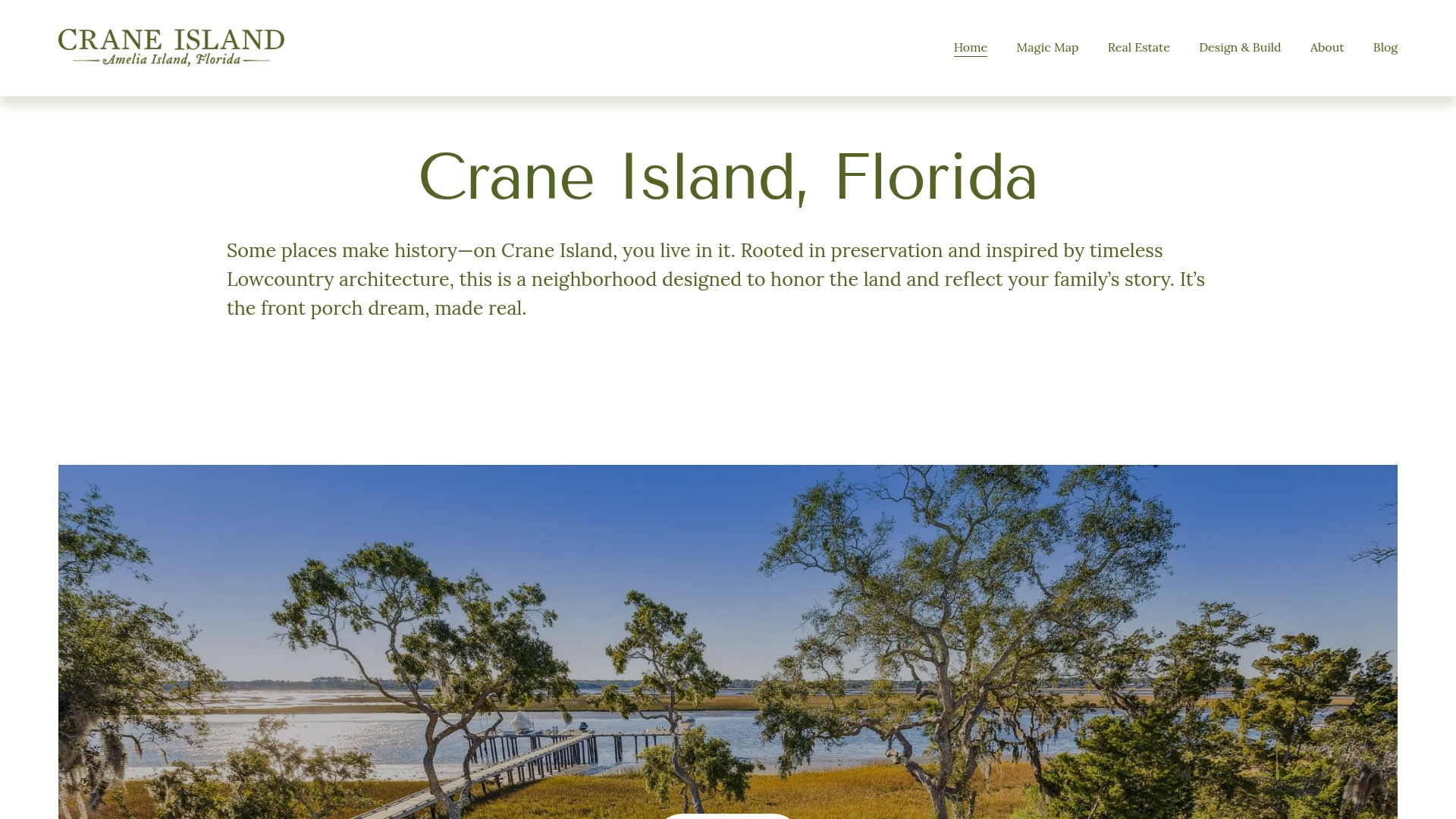
If these qualities are what you are looking for, we invite you to see what Crane Island offers: custom homesites and move-in ready luxury homes in a private, environmentally preserved, Lowcountry-inspired community on Amelia Island, with access to the Intracoastal Waterway and the culture of historic Fernandina Beach. You can explore our homes and homesites or learn about The Crane Island Portfolio Homes Program.
For a side-by-side look at the Lowcountry lifestyle across communities, read our fair comparison of two visions of Lowcountry living, and for the conservation side of the story, see our luxury buyer's guide to sustainable coastal communities.
FAQ
Do coastal homes really appreciate faster than inland homes?
Academic research on the U.S. market finds that coastal real estate has appreciated faster than non-coastal real estate. That is an average across many markets, though. Individual results depend on the town, the lot, the construction and the insurance picture, so evaluate each property on its own merits.
Does storm-resistant construction help resale value?
A University of Alabama study of FORTIFIED construction found it can increase resale value and may bring insurance discounts. Documented resilience also helps buyers feel confident about insuring the home. Keep inspection reports and certificates in one file for the day you sell.
How do I price a coastal home with few comparable sales?
Work with an appraiser who knows the specific coast and the luxury tier, since many coastal sales are not recorded in the local MLS. Compare by setting type, lot, elevation and water access rather than square footage alone.
What ongoing costs should I plan for?
Plan for insurance, accelerated exterior maintenance from salt air, storm preparation and any community fees, as outlined in a beachfront ownership guide. If you intend to rent the home, add local rental rules and management costs.
Sources
- Policy and market forces delay real estate price declines (PMC, 2024)
- FORTIFIED Home construction on home resale value (University of Alabama)
- Hurricane risk 2025: Outpriced and underwater (Cotality)
- Buying a beachfront property as an investment or second home
- The Southeast Split: Navigating Reventure's 2026 price forecast
- Selling Your Home in Charleston, SC (2026)
- Coastal Property Appraisals
- Charleston comps guide for real estate investors
- The 5 best cities to buy an investment property in Florida
- Why painting improves property value: 2026 guide